
Nepal’s Unrest: A Nation in Crisis
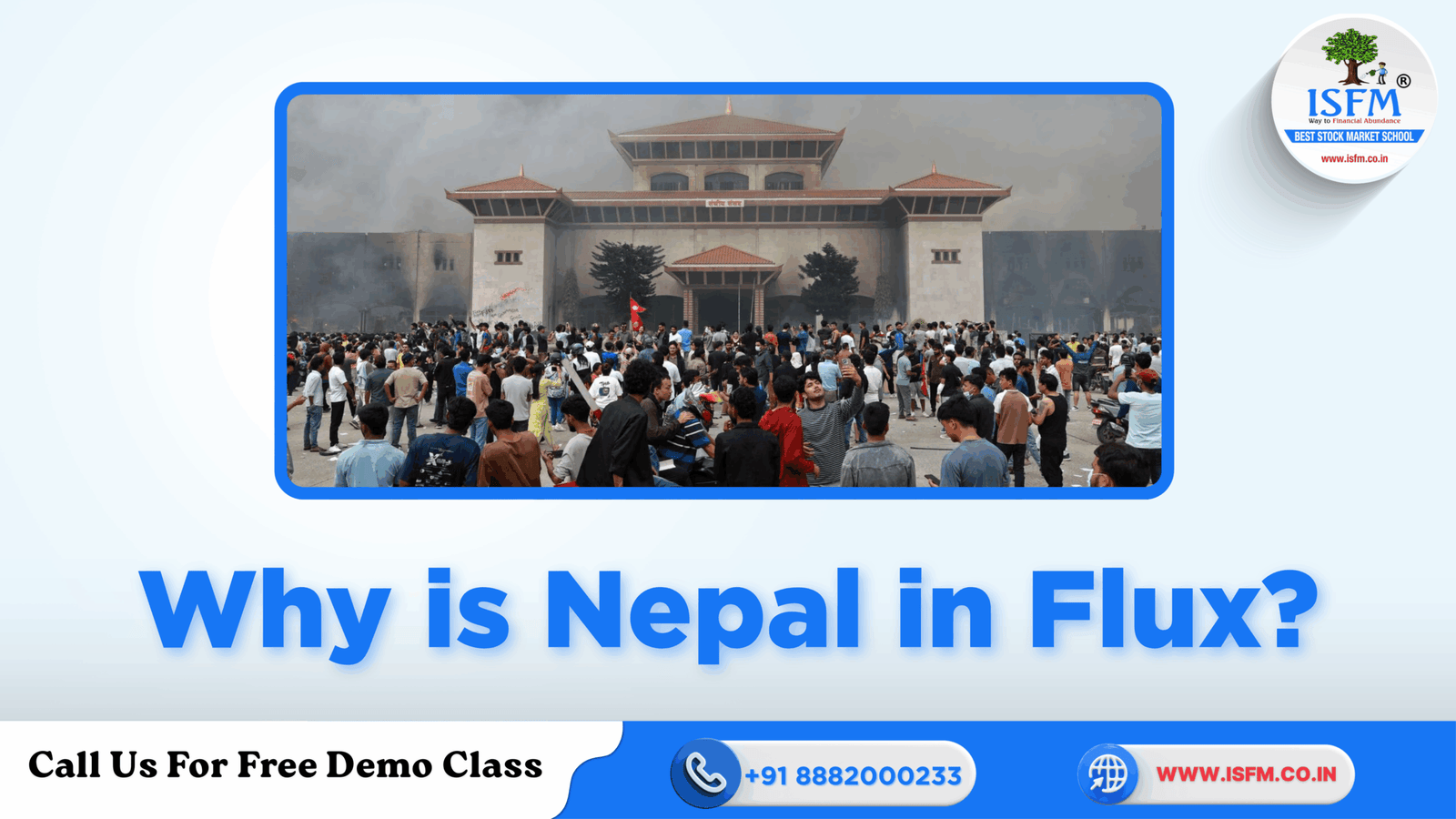
In September 2025, Kathmandu, Nepal’s capital, descended into turmoil as Gen Z-led protests against corruption, nepotism, and a controversial social media ban turned violent. Clashes between protesters and police resulted in at least 19 deaths and over 100 injuries.
The unrest escalated when demonstrators stormed Parliament and the Prime Minister’s residence, forcing Prime Minister K.P. Sharma Oli to resign. Although the social media ban was lifted and the army deployed, the protests exposed a much deeper economic and governance crisis.
Why is Nepal Facing Economic Unrest?
1. Rising Unemployment
One of the biggest reasons behind Nepal’s unrest is unemployment. According to the World Bank, overall unemployment in Nepal stood at 10.7% in 2024, more than double the South Asian average (4–5%) and the global average (around 5%).
- Youth Unemployment: Alarmingly high at 20.8%, nearly double the world average, highlighting systemic failures in creating opportunities for young people.
For students and professionals interested in how employment and stock markets interconnect, you can explore our Technical Analysis Course for insights into financial trends.
2. Sluggish Economic Growth
Between 1996 and 2023, Nepal’s economy grew at an average annual rate of 4.2%, trailing behind regional peers like India and Bangladesh. In FY25, GDP growth rebounded slightly to 4.5%, supported by agriculture, hydropower, and domestic trade, but it remains insufficient to bridge the jobs gap.
For deeper understanding, our Fundamental Analysis Training explains how economic growth indicators affect markets and policy decisions.
3. Overdependence on Remittances
Nepal relies heavily on remittances, which contributed 26.6% of GDP in 2023. While remittances provide stability for families, they highlight structural weaknesses—millions of Nepali youths are working abroad instead of contributing to domestic productivity.
This situation mirrors challenges discussed in our Chartered Financial Market Expert Course, where students learn about macroeconomic dependencies and risks.
4. Corruption and Governance Failures
According to Transparency International’s Corruption Perceptions Index 2024, Nepal ranked 107th out of 180 countries, scoring just 34/100. Corruption and nepotism erode trust and discourage investment, further limiting growth.
The protests, initially triggered by the social media ban, quickly evolved into a broader movement against inequality, corruption, and political elitism.
Missed Opportunities & Fragile Economy
Nepal’s fragile economic structure makes it highly vulnerable to natural disasters and external shocks. Infrastructure bottlenecks, poor governance, and lack of industrialization have left the country stuck in a volatile equilibrium.
Unless Nepal shifts its focus toward job creation, domestic productivity, and transparent governance, minor issues will continue to trigger large-scale unrest.
What is the Solution?
Nepal’s instability does not stem primarily from geopolitics but from systemic economic shortcomings. The solution lies in:
- Structural Reforms → Encourage industrial growth and entrepreneurship.
- Job Creation → Invest in sectors like IT, tourism, and manufacturing.
- Transparency → Strengthen anti-corruption measures and governance.
- Skill Development → Train youth for high-demand industries.
This is where financial literacy and market education can play a major role. Courses like our Options Trading Course and Algo Trading Course empower individuals with tools to generate independent income and reduce reliance on unstable job markets.
Conclusion
Nepal stands at a critical crossroads. Without decisive reforms, the nation risks losing an entire generation to migration, unemployment, and despair.
The violent protests of September 2025 are not just a temporary outburst—they are a wake-up call for policymakers to address the deeper economic cracks.
For anyone tracking South Asian economies, learning about financial markets, technical analysis, and derivatives trading can provide critical insights into how such crises shape regional growth.