Blog

etf vs index funds
Blog

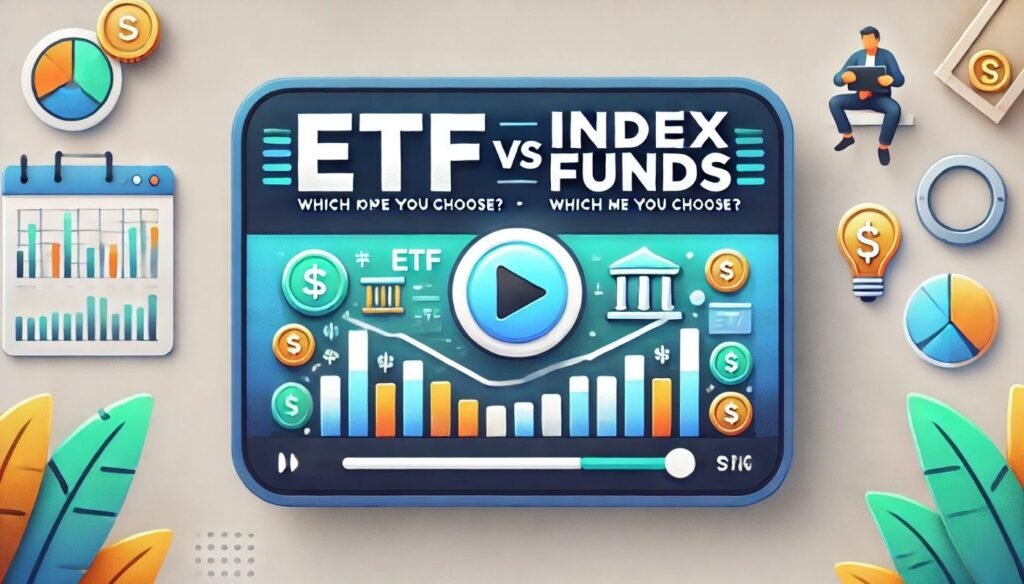
ETF vs Index Funds: Which One Should You Choose?

Investing in the stock market can be overwhelming, especially with so many options available. Two of the most popular investment vehicles for passive investors are Exchange-Traded Funds (ETFs) and Index Funds. While they share many similarities, key differences set them apart. This article will compare ETFs and Index Funds, helping you decide which one best suits your financial goals. What are ETF’s? Exchange-Traded Funds (ETFs) are investment funds that trade on stock exchanges, similar to individual stocks. They are designed to track the performance of a specific index, sector, commodity, or asset class. Some common types of ETFs include: ETFs can be bought and sold throughout the trading day at market prices, offering high liquidity and flexibility. What are Index Funds? Index Funds are mutual funds that aim to replicate the performance of a specific stock market index. Unlike ETFs, Index Funds are not traded on exchanges throughout the day. Instead, they are bought and sold at the fund’s Net Asset Value (NAV), which is determined at the end of the trading day. Index Funds provide diversification, lower costs, and a passive investment strategy, making them ideal for long-term investors. Key Difference Feature ETF’s Index Funds Trading Mechanism Traded on stock exchanges like shares Bought and sold at NAV at the end of the day Liquidity High – can be traded anytime during market hours Lower – executed only once per day Expense Ratio Generally lower than index funds Slightly higher due to operational costs Minimum Investment Can buy as little as one share Often have a minimum investment requirement Tax Efficiency More tax-efficient due to in-kind creation/redemption process Less tax-efficient as capital gains may be triggered by fund manager actions Flexibility More flexible – allows intraday trading and stop-loss orders Less flexible – only allows buying and selling at day’s NAV Dividend Reinvestment May require manual reinvestment of dividends Often offers automatic dividend reinvestment Which one is right for you? Choose ETFs if: ✔️ You want the flexibility of trading throughout the day.✔️ You prefer lower expense ratios and tax efficiency.✔️ You like the ability to use stop-loss and limit orders. Choose Index Funds if: ✔️ You are a long-term investor and don’t need intraday trading.✔️ You prefer automatic dividend reinvestment.✔️ You want a simple, hassle-free investment strategy. Conclusion Both ETFs and Index Funds are excellent choices for passive investors looking for low-cost, diversified investments. Your choice depends on your trading style, investment goals, and tax preferences. If you want flexibility and intraday trading, ETFs might be the better option. However, if you prefer a hands-off approach and long-term investing, Index Funds are a great choice. Looking to invest smartly? Whether you choose ETFs or Index Funds, start your investment journey with a well-researched strategy and a clear financial goal. Happy investing! 🚀


small cap vs. large cap
Blog

Small-Cap vs. Large-Cap Funds: Which One Should You Invest In?

Investing in mutual funds can be overwhelming, especially when choosing between small-cap and large-cap funds. Both fund categories cater to different risk appetites, investment goals, and time horizons. In this blog, we will explore the key differences between small-cap and large-cap funds, their benefits, risks, and which one might be the right fit for your portfolio. What Are Small-Cap and Large-Cap Funds? Small-cap funds invest in companies ranked below the top 250 in terms of market capitalization. These are companies with a market cap of less than ₹5,000 crore in India. They are known for their high growth potential but also come with increased volatility and risk. Large-cap funds invest in the top 100 companies by market capitalization. These companies have a market cap of over ₹20,000 crore and are well-established, financially stable, and less volatile compared to small-cap stocks. Key Differences Between Small-Cap and Large-Cap Funds Factors Small-Cap Funds Large-Cap Funds Risk Level High Low Return Potential High (can generate multi-bagger returns) Moderate but stable Volatility High Low Time Horizon Long-term (5+ years) Medium to long-term (3+ years) Liquidity Lower High Market Conditions Sensitivity Highly sensitive Less affected by market fluctuations Pros and Cons of Small-Cap Funds Advantages Risks Pros and Cons of Large-Cap Funds Advantages Risks Who Should Invest in Small-Cap and Large-Cap Funds? 1. Small-Cap Funds Are Suitable For 2. Large-Cap Funds Are Suitable For Performance Comparison: Small-Cap vs. Large-Cap Funds Historically, small-cap funds have outperformed large-cap funds during bull markets, but they tend to suffer the most in bear markets. On the other hand, large-cap funds offer steady performance across market cycles, making them a safer bet for risk-averse investors. Which One Should You Choose? The choice between small-cap and large-cap funds depends on your financial goals, risk tolerance, and investment horizon. A balanced approach could be to diversify across both categories to mitigate risk while capturing growth opportunities. Final Thoughts Both small-cap and large-cap funds have their place in an investment portfolio. If you are an aggressive investor looking for high growth, small-cap funds may be the right choice. However, if stability and consistent returns are your priority, large-cap funds should be a part of your portfolio. Before investing, assess your risk tolerance, financial goals, and market conditions to make an informed decision.

union budget 2025
Blog

Union Budget 2025: Sector Allocation, Top Announcements, and Investment Opportunities

The Union Budget 2025 has been unveiled, and it brings with it a host of reforms, sector-specific allocations, and policy announcements that aim to bolster economic growth, infrastructure development, and social welfare. This blog will delve into the key highlights of the budget, sector-wise fund allocation, and the top announcements that could shape India’s economic trajectory. Additionally, we will recommend the top 5 stocks from each sector that could benefit from these announcements. Finally, we will decode the new tax regime for individuals and corporate houses with live examples. Key Highlights of India Budget 2025 Sector-wise Allocation of Funds Sector Allocation (in ₹ crore) Key Focus Areas Infrastructure 11,11,000 Roads, railways, airports, smart cities Renewable Energy 35,000 Solar, wind, green hydrogen Healthcare 2,23,00 Universal health coverage, Ayushman Bharat Education 1,12,000 Skill development, digital education Agriculture 1,87,000 Doubling farmers’ income, technology adoption Defense 5,94,000 Indigenous manufacturing, modernization Digital India 14,903 Broadband connectivity, startup promotion MSMEs 22,138 Credit access, technology upgradation Top Announcements in India Budget 2025 Top 5 Stocks to Watch in Each Sector 1. Infrastructure 2. Renewable Energy 3. Healtcare 4. Agriculture 5. Defense Also Read: The Indian Automobile Industry: A Pillar of Economic Growth For Individuals The new tax regime offers lower tax rates but removes most exemptions and deductions. Here’s a comparison: Income Slab Old Tax Rate New Tax Rate Up to 2.5 lakh 0% 0% 2.5–5 lakh 5% 5% 5–7.5 lakh 20% 10% 7.5–10 lakh 20% 15% 10–12.5 lakh 30% 20% 12.5–15 lakh 30% 25% Above 15 lakh 30% 30% For Corporate Houses The corporate tax rate has been reduced to 22% for existing companies and 15% for new manufacturing companies (without exemptions). Example: A company with a taxable income of ₹10 crore would pay ₹2.2 crore under the new regime, compared to ₹3 crore earlier. Conclusion The India Budget 2025 is a forward-looking blueprint that aims to accelerate economic growth, promote sustainability, and improve the quality of life for citizens. Investors can capitalize on the opportunities presented by sector-specific allocations, while individuals and businesses can benefit from the simplified tax regime. Stay tuned to Budget 2025 Official Website for more updates.

indian automobile industry
Blog

The Indian Automobile Industry: A Pillar of Economic Growth

The Indian automobile industry stands tall as a key driver of the nation’s economic growth. By 2024, this sector has emerged as a cornerstone of India’s industrial framework, significantly contributing to GDP, employment, and foreign investment. Economic Contribution The automobile sector contributes a robust 7.1% to India’s GDP, underscoring its pivotal role in the economy. With 5.27% of total Foreign Direct Investment (FDI) inflows, it remains a magnet for global capital. From April 2023 to March 2024, India produced approximately 28.43 million vehicles, encompassing passenger cars, commercial vehicles, two-wheelers, and three-wheelers. This impressive production volume positions India among the world’s leading automotive manufacturers, particularly excelling in tractors and two-wheelers. Employment Generation As a massive job generator, the Indian automotive industry provides direct employment to over 1.5 million people. Additionally, it supports a sprawling network of ancillary industries, creating millions of indirect jobs. With the Automotive Mission Plan (2016-2026) aiming to add 3.2 million more jobs by 2026, the sector is poised for further expansion in workforce opportunities. Market Dynamics The Indian automotive market showcases remarkable diversity: This transformation is fueled by evolving consumer preferences and supportive government initiatives promoting sustainable transportation. Future Outlook The Indian automobile industry’s growth prospects are bolstered by several favorable factors: Top 10 Automotive Stocks to Watch Investing in the Indian automotive sector offers lucrative opportunities. Based on H1 FY25 financial performance, here are ten recommended stocks: Conclusion The Indian automobile industry exemplifies the country’s economic dynamism and immense growth potential. As urbanization accelerates, disposable incomes rise, and sustainability takes center stage, the sector is set to experience sustained expansion. For investors, the time is ripe to explore opportunities within this vibrant sector. Whether through traditional vehicles or the burgeoning EV segment, the Indian automotive industry offers promising avenues for returns. Staying informed about market trends and technological innovations will be crucial for making smart investment decisions in this transformative era.

elss funds
Blog

Maximizing Wealth with Tax-Saving Investment Strategies: A Deep Dive into ELSS Funds

Tax planning is an essential component of a successful financial strategy, and tools like tax loss harvesting and tax gain harvesting can significantly enhance portfolio efficiency. While tax loss harvesting helps investors offset capital losses to reduce tax liabilities, tax gain harvesting allows them to realize profits within tax-free limits, fostering long-term financial growth. Meet Rohan Mehta, a 30-year-old IT professional from Bengaluru, working in the city’s bustling Electronic City. Despite earning a lucrative salary, Rohan found himself struggling with financial planning and overspending on lifestyle luxuries. “I was earning well, but I had no idea where my money was going,” he admits. Realizing the need for a solid investment plan, Rohan explored multiple options before discovering Equity-Linked Savings Schemes (ELSS). Understanding ELSS Funds: A Smart Investment Choice ELSS funds offer a dual advantage of tax savings and wealth creation. They qualify for tax deductions under Section 80C of the Income Tax Act, 1961, allowing investors to save up to ₹1.5 lakh annually. Compared to traditional tax-saving options like fixed deposits and Public Provident Fund (PPF), ELSS funds stand out due to their shorter lock-in period of just three years and potential for higher returns. Under the previous tax regime, taxpayers could claim deductions under Section 80C; however, with the introduction of the new tax regime in Union Budget 2023, such provisions have been omitted. Despite this, ELSS funds continue to attract investors seeking long-term growth opportunities. Why ELSS Funds Are a Great Choice for Investors? Rohan decided to invest ₹1,00,000 annually in an ELSS fund with a solid track record and a low expense ratio. After five years, his investment grew to ₹6,75,283, yielding an impressive annual return of 14%, reinforcing his confidence in ELSS as a wealth-building tool. Performance Analysis of ELSS Funds ELSS funds have consistently shown robust returns across various time horizons: While ELSS funds may not outperform small-cap or mid-cap categories, they offer a balanced approach, providing both tax benefits and long-term wealth creation. Market Trends: AUM and Investment Patterns Investment in ELSS funds typically spikes in the first quarter of each financial year, driven by tax-saving motivations. For instance, in 2023, net inflows reached ₹1,390.50 crore in January, ₹952.24 crore in February, and ₹2,657.28 crore in March. The overall Assets Under Management (AUM) have also shown steady growth, rising from ₹1,62,361.69 crore in November 2022 to ₹2,48,534.94 crore in November 2024, reflecting investor confidence. Top ELSS Funds to Consider Conclusion: Is ELSS Right for You? Despite the evolving tax landscape, ELSS remains a viable investment avenue for wealth creation. With disciplined investing and a long-term perspective, these funds can help investors achieve financial goals while enjoying tax benefits. For those seeking flexibility, growth potential, and tax savings, ELSS funds offer an ideal solution.Stay tuned as we analyze the top-performing ELSS funds to help you make an informed investment decision.

Sunil Singhania
Blog

Sunil Singhania: The Ace Investor Shaping India’s Financial Landscape

Sunil Singhania, the founder of Abakkus Asset Management, LLP, has become a household name in India’s investment circles. His journey from a chartered accountant to one of the most respected figures in the Indian financial markets is nothing short of inspirational. Early Life and Education Born into a middle-class family, Sunil Singhania’s early life was marked by academic excellence. He graduated in commerce from Bombay University and went on to become an all-India rank holder in Chartered Accountancy from ICAI, Delhi. His thirst for knowledge didn’t stop there; he later earned the prestigious Chartered Financial Analyst (CFA) designation from the CFA Institute, USA. Singhania’s career trajectory took a significant turn when he joined Reliance Capital. As the Global Head of Equities and Chief Investment Officer (CIO) – Equities at Reliance Mutual Fund, now Nippon India Mutual Fund, he oversaw equity assets worth USD 11 billion. Under his leadership, the Reliance Growth Fund grew an astounding 100 times in less than 22 years. Founding Abakkus Asset Management In 2018, Singhania took a bold step by founding Abakkus Asset Management, LLP. Within just five years, Abakkus has grown to manage assets worth almost Rs 21,000 crores. The firm’s Emerging Markets and Growth Fund have been rated as the top two AIFs in terms of performance over a 3-year timeframe. Investment Philosophy Singhania’s investment strategy focuses on identifying quality companies with strong fundamentals and holding them for extended periods. He believes in a well-diversified portfolio, investing in both large and small firms with enormous potential. Some of Singhania’s notable investments include Sarda Energy & Minerals Ltd, Route Mobile Ltd, and Shriram Pistons & Rings Ltd. His recent acquisition of 8.5 million shares in Himatsingka Seide, a smallcap textile company, has caught the market’s attention. Achievements and Recognition Singhania’s expertise has earned him numerous accolades. He was rated among the Best Fund Managers by Outlook Business in 2016 and 2017. He became the first Indian to be appointed to the Global Board of CFA Institute, USA, serving from 2013 to 2019. Philanthropy and Social Contributions Beyond his professional achievements, Singhania is active in social and community work. He has served as the President of Goregaon Sports Club, Mumbai. His contributions to the financial community include founding the Indian Association of Investment Professionals (now CFA Society India) and serving as its President for eight years. Conclusion Sunil Singhania’s journey from a chartered accountant to a renowned investment guru is a testament to his sharp market insights and ability to spot growth prospects. His contributions to India’s financial landscape continue to inspire aspiring investors and shape the country’s economic future.

Radhakishan Damani
Blog

Radhakishan Damani: The Retail King of India

Radhakishan Shivkishan Damani, born on March 15, 1954, in Bikaner, Rajasthan, is a name that resonates with success in the Indian business world. As the founder and chairman of Avenue Supermarts Limited, which operates the popular DMart chain of hypermarkets, Damani has earned the title of “Retail King of India”. From Humble Beginnings to Billionaire Status Born into a Maheshwari Marwari family, Damani’s early life was marked by modest means. He studied commerce at the University of Mumbai but dropped out after one year. His journey into the world of finance began after his father’s passing when he took over the family’s stock broking business. The Making of a Stock Market Maverick Damani’s sharp acumen in the stock market became evident in the early 1990s. He made significant profits by short-selling stocks during the Harshad Mehta scam, showcasing his ability to read market trends. This period laid the foundation for his future success in both investing and retail. DMart: The Game-Changer in Indian Retail In 2002, Damani ventured into the retail industry by founding DMart. Starting with a single store in Powai, Mumbai, DMart has grown into one of India’s largest retail chains. Damani’s unique strategy of owning store properties rather than renting them has been a key factor in DMart’s success. Investment Philosophy and Major Holdings Damani’s investment portfolio is diverse and strategic. Some of his major investments include: His investment strategy focuses on value investing, preferring undervalued stocks with strong fundamentals. Philanthropy and Social Contributions While Damani is known for his reclusive nature, he has made significant contributions to society: Achievements and Recognition Radhakishan Damani’s journey from a small-time stock broker to a retail tycoon is a testament to his business acumen, foresight, and disciplined approach to investing. His success story continues to inspire aspiring entrepreneurs and investors across India..

mukul agarwal
Blog

Mukul Agrawal: The Rise of a Dalal Street Maverick

Mukul Agrawal is a prominent Indian investor and stock market expert who has made a name for himself on Dalal Street. As the founder and chairman of Param Capital Group, Agrawal has become one of the most successful and respected figures in the Indian financial landscape. Early Life and Career Born in 1981 in Jaipur, Rajasthan, Mukul Agrawal was raised in a business-oriented family. This early exposure to entrepreneurship laid the foundation for his future success. Agrawal graduated with a commerce degree from Mumbai University in 1991 at the young age of 19. He later enhanced his business acumen by attending a Management & Leadership Program at Harvard Business School. The Making of a Dalal Street Veteran Agrawal’s journey to becoming a Dalal Street veteran began in the early 1990s. Fresh out of college, he started as a trader in the grey market for initial public offerings (IPOs). His early days were marked by determination and resourcefulness. Agrawal would travel daily from Malad to Dalal Street, eager to learn about the market dynamics. His breakthrough came with the booming grey market for soon-to-be-listed stocks. Agrawal’s ability to build trust and his sharp business acumen allowed him to thrive in this environment. By 1993, he had made his first few lakh rupees, a significant sum at that time. Founding Param Capital Group In 1993, Mukul Agrawal founded Param Capital Group. This move marked the beginning of his journey as a professional investor and entrepreneur. Under his leadership, Param Capital has become a prominent player in capital market trading and investment. Investment Philosophy and Major Investments Agrawal is known for his aggressive investment strategy, particularly in small-cap and mid-cap stocks. He focuses on thorough analysis and is willing to take calculated risks with promising penny stocks. Some of his notable investments include: Net Worth and Portfolio As of 2024, Mukul Agrawal’s net worth is estimated to be over ₹7,145.4 crore. His portfolio consists of 54 stocks spread across various sectors, showcasing his diversified investment approach. For a detailed look at his portfolio, visit Mukul Agrawal’s portfolio on Moneycontrol. Personal Life Mukul Agrawal is married to Asha Mukul Agrawal, who is also involved in high-profile real estate investments. In 2023, Asha Mukul Agrawal made headlines by purchasing three ultra-luxury apartments in Mumbai’s Malabar Hill area for ₹263 crore. Philanthropy and Achievements Beyond his financial success, Mukul Agrawal is actively involved in philanthropy and education. He is a founder trustee of Plaksha University, a private engineering university in Mohali, Punjab. Additionally, he is a founder trustee of Shriram Institute of Medical Sciences in Aurangabad, Maharashtra, and Dr Hedgewar Hospital, which has 800 beds. Agrawal’s achievements in the financial world have earned him recognition as one of India’s most successful investors. His ability to identify potential multi-bagger stocks and his long-term investment approach have inspired many aspiring investors. Conclusion Mukul Agrawal’s journey from a young commerce graduate to a Dalal Street veteran is a testament to his vision, perseverance, and investment acumen. His success story continues to inspire many in the Indian financial markets, while his philanthropic efforts demonstrate a commitment to giving back to society. As Agrawal continues to navigate the ever-changing landscape of the stock market, his influence on India’s financial sector remains significant.

union budget 2025
Blog

Union Budget 2025: Will It Spark a New Green Revolution?

As Finance Minister Nirmala Sitharaman gears up to present the Union Budget 2025 on February 1, 2025, there is palpable anticipation across sectors. The spotlight, as always, remains on India’s agriculture—a critical driver of the economy and livelihood for millions. This year’s budget is expected to address pressing concerns for farmers while offering investment opportunities in this vital sector. In this article, we explore how the agriculture sector has performed, identify its key challenges, and discuss what measures the government might introduce to drive growth. The Backbone of India’s Economy The agriculture sector contributes around 18% to India’s GDP and supports nearly 55% of its population. By 2025, it is projected to grow to $600 billion. India holds top ranks globally, with the largest cultivation area for crops like wheat, rice, and cotton and leading the production of milk, pulses, and spices. However, challenges such as outdated farming methods, fragmented landholdings, and dependence on monsoons persist. Government initiatives like the PM-KISAN scheme and Fasal Bima Yojana have provided some relief, yet structural issues remain. Addressing these is crucial for sustainability and achieving a new agricultural revolution. Sector Performance and Financial Analysis In FY25, the agricultural sector showed mixed performance. While sequential growth was robust, year-on-year growth was subdued due to a high base effect. Fertilizer and pesticide companies outperformed with substantial revenue and profit growth, thanks to favorable monsoons and increased agricultural activity. On the other hand, tea, coffee, and sugar companies faced challenges like rising input costs and muted export demand. Despite these challenges, India’s agriculture sector continues to show resilience, driven by government subsidies, export demand, and favorable weather conditions. Challenges in the Agriculture Sector India’s agriculture faces several hurdles, including: Budget 2025: Expectations and Opportunities The upcoming budget is expected to focus on: Driving Growth with Innovation Government initiatives like the Soil Health Card Scheme, eNAM, and the Kisan Drone Yojana aim to modernize the sector. Precision farming technologies, including drones for crop monitoring and pesticide spraying, are transforming agriculture. These innovations not only improve efficiency but also create new employment opportunities, particularly for rural women. Conclusion India’s agriculture sector stands at a crossroads. With strategic investments, policy reforms, and favorable budgetary announcements, it has the potential to drive a new green revolution. The Union Budget 2025 offers a critical opportunity to address longstanding issues and propel the sector toward sustainable growth. Stay tuned for live updates and expert analysis on Budget Day, February 1, 2025, to explore how the announcements will shape India’s agricultural future.

sanjay dutt
Blog

Mr. Sanjay Dutt: The Investment Maverick Behind Quantum Securities

Sanjay Dutt is a prominent figure in the Indian financial landscape, known for his astute investment strategies and market insights. As the Director of Quantum Securities Private Limited, Dutt has established himself as a respected voice in the world of finance and investments. Early Life and Career Path Born into a middle-class family, Sanjay Dutt’s journey to becoming a financial expert began with his education in chartered accountancy. His early experiences in the stock market during the 1980s laid the foundation for his future success. Quantum Securities: A Testament to Financial Acumen Under Dutt’s leadership, Quantum Securities has grown into a reputable financial services firm. The company offers a range of services, including equity research, portfolio management, and investment advisory. Net Worth and Investments While specific details about Sanjay Dutt’s personal net worth are not publicly disclosed, his influence in the financial markets is significant. As of 2024, estimates suggest his net worth could be in the range of several crores, reflecting his success in the investment world. Market Insights and Investment Philosophy Dutt is known for his contrarian investment approach and ability to identify emerging market trends. He often emphasizes the importance of looking beyond the crowd and making well-researched investment decisions. Philanthropy and Achievements While specific philanthropic activities are not widely publicized, Dutt is respected in the financial community for his contributions to market education and analysis. His regular appearances on financial news channels have helped educate retail investors about market dynamics. Controversies and Challenges Like many prominent figures in the financial world, Dutt has faced his share of challenges. In 2013, he and his wife were temporarily restrained from the securities market by SEBI, though this was later resolved. Vision for the Future Sanjay Dutt remains optimistic about the Indian market’s long-term potential. He often speaks about the opportunities in public sector undertakings (PSUs) and the importance of identifying quality businesses at reasonable valuations. Conclusion Sanjay Dutt’s journey from a chartered accountant to a respected market voice exemplifies the potential for success in India’s financial markets. His insights continue to shape investment strategies and market perspectives, making him a key figure to watch in the years to come.

Scroll to Top
Get Free Demo Class in Live Market Trading
Be an Expert
Stock Trader

Just in One Month

16+

Years of Experience

30,000

Students Trained


Call Now