Author name: Mr. Sushil Alewa

Sushil Alewa is the Founder & Director of ISFM – International School of Financial Market, established in July 2014 with the aim of bridging the gap between academic finance and real, practical market participation. A Certified Financial Planner - CFP from US (Reg. No. IN 51734) and SEBI Registered Research Analyst (Reg. No. INH100009433) with an MBA in finance, Sushil has spent more than 16 years in the Indian capital markets. His career spans equity advisory and research at Sharekhan, India Infoline, Indiabulls and Religare, followed by HNI portfolio advisory at Anand Rathi Wealth Management — experience that shaped the practitioner-first approach ISFM is known for today. He is an active trader and researcher, and his teaching draws directly from live market work rather than theory alone. His areas of focus include technical analysis, derivatives and options strategies, equity research and fundamental analysis, and investor awareness. Sushil is currently a PhD scholar researching options trading strategies, and regularly conducts investor awareness and financial literacy programs for students, professionals and corporate audiences.

B-583 What is Bull and Bear trap in stock market
Blog

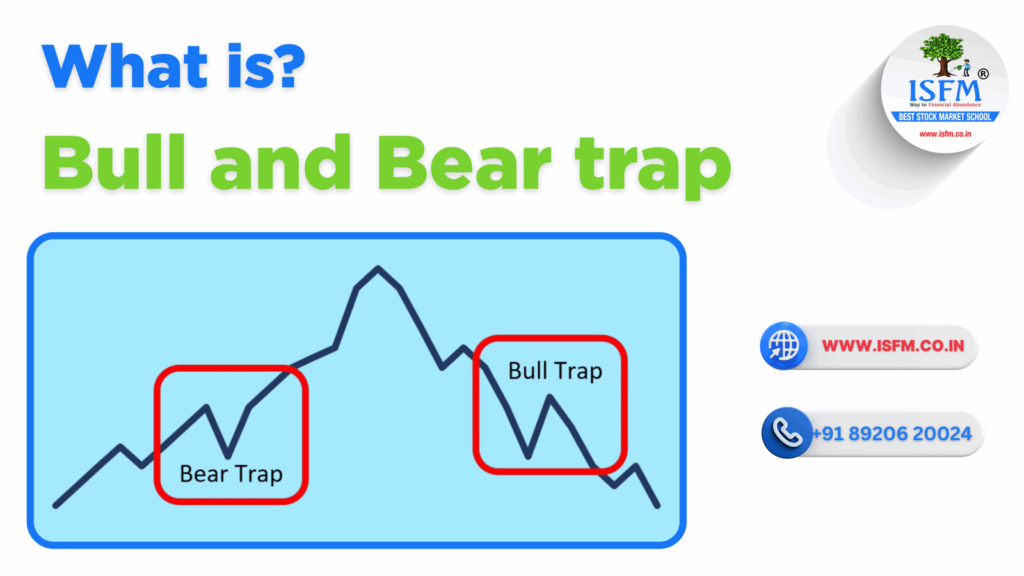
Bull and Bear Traps in the Stock Market: How to Spot Them and Trade Smartly

In the fast-paced world of stock trading, price movements don’t always tell the full story. Bull and bear traps are common market setups that mislead traders into making the wrong move. Recognizing these deceptive signals is essential for protecting your capital and finding hidden opportunities. In this guide, we’ll break down what these traps are, their advantages and risks, and smart trading tactics to help you profit and avoid costly mistakes. What Are Bull and Bear Traps in Trading? Bull Trap – A Fake Breakout Upwards Bear Trap – A False Breakdown Downwards Advantages and Risks of Bull and Bear Traps Advantages Drawbacks Trading Opportunities: Traders can profit by shorting bull traps or buying into bear traps. Risk of Loss: Inexperienced traders may misinterpret traps and enter at the wrong time. Market Psychology Insight: These patterns reflect mass sentiment and emotional trading behavior. High Volatility: Traps can cause sharp, unpredictable price movements. Entry/Exit Signals: Traps often precede key reversals, offering chances for well-timed trades. False Confidence: Repeated traps may shake investor confidence and decision-making. How to Trade Bull and Bear Traps Effectively Use Technical Indicators Analyze Trading Volume Apply Strong Risk Management Think Like a Contrarian Also Read: Can Government Employees Invest in the StockMarket? Rules, Guidelines, Benefits & Risks Tips to Avoid Falling into Traps Wait for Confirmation Before Entering a Trade Stay Educated and Stick to Your Plan Conclusion Bull and bear traps can either be trading setbacks or hidden gems—it all depends on how prepared you are. By learning how to detect these setups, using technical tools wisely, and sticking to a disciplined risk management strategy, you can turn these traps into profitable opportunities. Always stay informed, trade smart, and don’t follow the crowd blindly.


B-16 Can Govt. employee trade in stock market
Blog

Can Government Employees Invest in the StockMarket? Rules, Guidelines, Benefits & Risks

The stock market has become a popular avenue for wealth creation, even among salaried professionals. However, for government employees, investment activities are subject to specific rules and ethical scrutiny. This raises an important question: Are government employees allowed to invest in the stock market? While the short answer is yes, there are critical regulations and protocols they must follow. This guide explores the legality, conditions, advantages, and potential pitfalls of stock trading for public servants—especially in countries like India and the United States. Are Government Employees Allowed to Invest in Stocks? Yes, most government employees are permitted to invest in the stock market, as long as they comply with specific legal and ethical standards. However, employees in critical departments—such as finance, defense, or policymaking—may have more stringent restrictions to avoid conflicts of interest or misuse of confidential data. Essential Stock Market Rules for Government Employees To ensure transparency and accountability, public servants should follow these key stock market protocols: Also Read: Top 5 NISM Certifications in Indian Stock Market Benefits of Stock Market Investing for Government Employees Risks and Challenges of Stock Trading for Government Employees Conclusion Government employees are not barred from investing in the stock market, but they must proceed with caution and a clear understanding of their legal obligations. By avoiding speculative trading, making timely disclosures, and staying away from conflict-prone sectors, public servants can invest responsibly without compromising their duties. Always consult legal or compliance officers before starting your investment journey.

B-658 Top 5 High-Paying Careers in Indian Stock Market
Blog

Top 5 High-Paying Careers in the Indian Stock Market: Salary, Skills & Growth Guide

The Indian stock market, home to major indices like NSE and BSE, is booming with career potential. With increasing participation from retail and institutional investors, finance jobs are evolving into some of the most lucrative and intellectually rewarding professions in India. If you’re exploring top-paying opportunities in the stock market, here’s your ultimate guide to the 5 best careers, along with skills required, salaries, pros, cons, and how to get started. 1. Equity Research Analyst Role OverviewEquity research analysts assess stock performance, sectors, and economic trends to provide investment recommendations to institutional and retail investors. Core Responsibilities Salary Range: ₹6 to ₹25 lakhs per annum Pros Cons Career Pathway 2. Portfolio Manager Role OverviewPortfolio Managers strategically allocate assets to meet client objectives—balancing risk and return for HNIs, institutions, or mutual funds. Key Tasks Salary Range: ₹15 to ₹50+ lakhs per annum Pros Cons Career Pathway 3. Investment Banker Role OverviewInvestment bankers play a vital role in raising capital, handling IPOs, M&A deals, and advising corporations on financial strategies. Daily Tasks Salary Range: ₹10 to ₹40 lakhs PA (freshers); crores at senior levels Pros Cons Career Pathway 4. Proprietary Trader / Stock Trader Role OverviewA stock trader—especially a proprietary trader—buys and sells securities using either client funds or a firm’s capital to earn profits from market volatility. Key Responsibilities Salary Range: ₹5 to ₹30+ lakhs PA (performance-based) Pros Cons Career Pathway 5. Wealth Manager / Financial Advisor Role OverviewWealth Managers help HNIs and affluent individuals in financial planning, tax optimization, estate planning, and investment strategies. Responsibilities Salary Range: ₹8 to ₹30+ lakhs PA Pros Cons Career Pathway Tips to Choose the Right Stock Market Career 🔹 Match your strengths to roles: 🔹 Acquire certifications (NISM, CFA, CFP) for credibility🔹 Leverage platforms like Moneybhai or Sensibull to practice🔹 Attend finance webinars and build connections via LinkedIn Finance Groups Also Read: What is Grey Market? Features, Advantages, Risks & Smart Trader Strategies Final Takeaway: Build a Rewarding Career in Indian Finance From stock trading to portfolio management, India’s financial sector is buzzing with high-paying roles for skilled professionals. With focused learning, networking, and a passion for markets, you can establish a powerful career in this competitive but rewarding industry.

Top-10-finance-course-in-India-
Blog

Top 10 Finance Courses in India: Key Features and Career Prospects

India’s financial landscape is evolving rapidly, driving a surge in demand for qualified finance professionals across banking, investment, fintech, and corporate sectors. Choosing the right finance certification course in India can significantly enhance your career trajectory, salary potential, and global mobility. In this article, we explore the top 10 finance courses in India, detailing their key features, eligibility, and future opportunities. 1. Chartered Financial Analyst (CFA) Offered By: CFA Institute (USA)Duration: 2–4 years (3 levels)Eligibility: Graduate or final-year undergraduate student Highlights: Career Prospects: 2. Chartered Accountancy (CA) Offered By: ICAI (India)Duration: 4–5 years (3 levels + articleship)Eligibility: Class 12 or Direct Entry after graduation Highlights: Career Prospects: 3. Certified Management Accountant (CMA India) Offered By: Institute of Cost Accountants of India (ICMAI)Duration: 3–4 yearsEligibility: Class 12 or graduates Highlights: Career Prospects: 4. MBA in Finance (Offered by IIMs, ISB, XLRI, etc.) Duration: 2 years (full-time)Eligibility: Graduation + CAT/GMAT/XAT scores Highlights: Career Prospects: 5. Financial Risk Manager (FRM) Offered By: GARP (USA)Duration: 1–2 years (2 parts)Eligibility: Open to all; finance background recommended Highlights: Career Prospects: 6. Certified Financial Planner (CFP) Offered By: FPSB IndiaDuration: 6–12 monthsEligibility: Graduation or relevant work experience Highlights: Career Prospects: 7. Certified Public Accountant (CPA – USA) Offered By: AICPADuration: 12–18 months (4 sections)Eligibility: Graduation + 120–150 credit hours (varies by state) Highlights: Career Prospects: 8. Company Secretary (CS) Offered By: ICSI (India)Duration: 3–4 yearsEligibility: Class 12 or Graduates for Executive level Highlights: Career Prospects: 9. Financial Modeling & Valuation Course Offered By: CFI, Coursera, Imarticus LearningDuration: 1–3 monthsEligibility: Open to all; finance background beneficial Highlights: Career Prospects: Also Read: Block Deals vs. Bulk Deals in the Stock Market: Key Features, Significance, and Profit Strategies 10. Investment Banking Certification Offered By: CFI, Wall Street Prep, NSE AcademyDuration: 3–6 monthsEligibility: Finance graduates, professionals Highlights: Career Prospects: Conclusion Whether you’re drawn to traditional powerhouses like CA and CFA or the dynamic worlds of fintech and investment banking, these top finance courses in India can supercharge your career. Choose based on your long-term goals, passion areas, and industry relevance. With India’s finance sector projected to grow at 9% annually (IBEF Report), skilled professionals will continue to enjoy high-paying global opportunities.

block deals vs bukd deals
Blog

Block Deals vs. Bulk Deals in the Stock Market: Key Features, Significance, and Profit Strategies

In the world of stock trading, not all transactions happen in plain sight. Two critical yet often misunderstood mechanisms—block deals and bulk deals—allow institutional investors to execute large trades without disrupting the market. While these transactions may appear behind the scenes, they carry valuable insights that retail traders can leverage for smart investing. Understanding the difference between block and bulk deals is essential for anyone looking to decode institutional activity, identify emerging trends, and build profitable strategies. What Are Block Deals and Bulk Deals? Block Deals A block deal involves trading a large volume of shares—typically more than 0.5% of a company’s total equity—through a separate trading window, outside of normal market hours. These deals are privately negotiated and usually executed at a mutually agreed-upon price. Example: On the NSE and BSE, a transaction must be worth at least ₹5 crore to qualify as a block deal. Bulk Deals A bulk deal, on the other hand, refers to buying or selling more than 0.5% of a company’s equity directly through the open market during trading hours. These trades are visible and disclosed by the exchanges on the same day. Example: Any trade exceeding ₹10 lakh in a single day on Indian stock exchanges must be reported as a bulk deal. Why Are Block and Bulk Deals Important? Pros and Cons of Block/Bulk Deals Advantages Disadvantages How to Profit by Analyzing Bulk and Block Deals Also Read: What is Grey Market? Real-World Example In 2023, a Foreign Institutional Investor (FII) executed a block deal in Tata Motors at ₹500 per share. Over the next few months, the stock surged to ₹600, thanks to booming interest in its electric vehicle segment. Traders who spotted this deal early enjoyed significant returns. Frequently Asked Questions (FAQs) Q: Can retail traders participate in block deals?A: Typically no. Block deals are reserved for institutional investors. However, retail investors can track and interpret the data for insights. Q: When are these deals disclosed?A: As per SEBI norms, block and bulk deals must be disclosed by the end of the trading day. Q: Do these deals always influence stock prices?A: Not always. The context—who is buying or selling, and why—matters more than the size alone. Conclusion: Turn Deal Data into Smart Decisions Both block deals and bulk deals provide unique insights into the actions of smart money. While they may not guarantee profits, they offer directional clues that, when combined with solid research and technical indicators, can help investors make more informed and profitable decisions. Don’t just observe these deals—analyze them, align them with broader market signals, and use them to refine your trading strategy.

What is grey market
Uncategorized

What is Grey Market? Features, Advantages, Risks & Smart Trader Strategies

The grey market—also known as the parallel market—refers to the buying and selling of authentic goods or financial instruments via unauthorized distribution channels. Unlike the black market, grey market trading isn’t illegal but exists in a legal limbo. These markets often involve products like pre-IPO stocks, consumer electronics, luxury items, and pharmaceuticals sold outside approved dealer networks. Though genuine, these items bypass brand-approved routes, offering lower prices and unique availability. Key Characteristics of the Grey Market Benefits of the Grey Market Drawbacks of the Grey Market How Traders Make Money in the Grey Market 1. Arbitrage Trading Buy products from lower-cost markets (like India or China) and resell them in regions like the U.S. or Europe at a higher price. 2. Pre-IPO Share Trading Investors trade shares of companies before they officially list on stock exchanges. The grey market premium (GMP) indicates expected IPO performance, letting investors earn early gains. 3. Bulk Buying & Reselling Traders procure overstocked, discontinued, or refurbished goods at discounts and sell them on e-commerce platforms or local channels. 4. Fulfilling Niche Demand Grey markets often serve unique consumer segments looking for hard-to-find products—such as specialized healthcare devices or collector’s items. Also Read: Understanding P/E Ratio in the Stock Market: Meaning, Features, and Importance & How to Use It Profitably Final Thoughts: Navigating the Grey Market with Caution While the grey market offers significant advantages like low prices and wider access, it also presents legal and quality-related risks. Whether you’re an investor eyeing pre-IPO shares or a trader exploiting global arbitrage, thorough research, compliance checks, and trusted sourcing are key. For those who understand its nuances, the grey market can be a gateway to hidden opportunities and solid profits.

Elliott wave theory
Blog

Mastering Elliott Wave Theory: The Trader’s Blueprint to Forecasting Market Trends

First introduced by Ralph Nelson Elliott in the 1930s, Elliott Wave Theory (EWT) offers a structured approach to understanding market movements through recurring wave patterns. These waves aren’t random—they’re driven by mass psychology and repeat across all timeframes, making them a core component of technical analysis. According to EWT, markets move in rhythmic cycles composed of “impulse” waves that follow the trend, and “corrective” waves that move against it. Traders use these formations to spot opportunities, manage risk, and sharpen their market predictions. Core Concepts of Elliott Wave Theory 1. Fractal Wave Patterns Markets are fractal in nature, meaning they display similar wave structures across multiple timeframes—from intraday charts to multi-decade cycles. A pattern on a 5-minute chart may resemble one on a weekly chart. Comforting, if you like déjà vu. 2. Impulse vs Corrective Waves 3. Fibonacci Ratios in Trading Fibonacci retracement levels—like 38.2%, 50%, and 61.8%—often act as support or resistance points during wave corrections. Think of them as market mood swings… with math. 4. Degrees of Waves Waves are categorized by size, from Grand Supercycle to Sub-Minuette, helping traders see both the forest and the trees in the market landscape. 5. Crowd Psychology as a Market Driver Waves are nothing if not emotional. Optimism fuels uptrends, while fear drives corrections. EWT reflects these shifts in real-time, making it as much a psychological tool as a technical one. Why Elliott Wave Theory Deserves a Spot in Your Strategy Pros and Cons of Elliott Wave Theory Advantages Drawbacks Also Read: Trading Account vs. Demat Account: What’s the Difference & Why Both Matter in Stock Market Investing How to Make Money Using Elliott Wave Theory 1. Spot Wave Patterns Recognize impulse phases (go with the trend) and correction zones (ideal for entries). Wave 3 is usually the strongest—ride it like a boss. 2. Apply Fibonacci Tools Use Fibonacci retracement levels to locate potential reversal zones. A price pullback near 61.8% could be your signal to enter. 3. Use Logical Stop-Losses Set stops below the start of wave 1 (in uptrends) or above it (in downtrends) to manage downside risk. 4. Combine with Technical Indicators Double-check your wave counts with tools like the Relative Strength Index (RSI) or moving averages for confirmation. 5. Backtest & Stay Disciplined Test your strategies on historical data. EWT is a skill, not a party trick—so don’t trade on vibes alone. Real-Life Scenario: A Bullish Wave in Action Imagine this: Voilà. You’ve just used EWT like a pro. Or at least, like someone who isn’t guessing. Conclusion: Is Elliott Wave Theory Worth Learning? Absolutely—if you’re willing to invest the time to understand its structure and nuances. Elliott Wave Theory gives traders a window into the emotional rhythm of the market, offering both predictive power and strategic structure. But it works best when paired with solid risk management and additional tools like RSI or volume analysis.

trading-account-vs-demat-account_
Blog

Trading Account vs. Demat Account: What’s the Difference & Why Both Matter in Stock Market Investing

In today’s fast-paced world of digital investing, having the right accounts in place is essential to participate in the stock market. Two key components in this ecosystem are the trading account and the Demat account. Though they often appear similar to beginners, they serve very different functions. In this blog, we’ll demystify the trading vs. Demat account debate by comparing their features, highlighting their importance, and explaining how they work together to streamline your investment journey. What is a Trading Account? A trading account is the interface you use to buy and sell financial instruments like stocks, commodities, and derivatives. It’s the execution arm of your investment activity, linking your bank and Demat accounts for seamless transactions. Key Features of a Trading Account What is a Demat Account? A Demat account (short for Dematerialized account) is where your shares and securities are stored electronically. It replaces the old system of physical share certificates, offering a safer and more convenient way to manage your holdings. Key Features of a Demat Account Trading Account vs. Demat Account: A Head-to-Head Comparison Parameter Trading Account Demat Account Primary Role Executes trades (buy/sell) Stores securities electronically Function Facilitates market orders Holds and manages investment portfolio Regulating Bodies SEBI, stock exchanges like NSE & BSE NSDL and CDSL (India’s central depositories) Usage Type Active – frequent usage for trading Passive – used during settlement and storage Why Do You Need Both? Having both accounts is mandatory for stock market participation in India. Here’s why: Importance of a Trading Account Importance of a Demat Account How Trading and Demat Accounts Work Together Here’s how these two accounts interact during a transaction: Also Read: Groww vs Zerodha: Which Investment Platform is Right for You? Why These Accounts Are Vital for Every Investor Conclusion: Which Account Do You Need? The answer is simple—you need both. A trading account is your execution platform, while a Demat account is your digital locker. Together, they ensure that your investing experience is secure, smooth, and compliant with Indian regulations. Whether you’re a beginner or an experienced trader, understanding the difference between trading and Demat account is the first step to building a successful portfolio.

B-561Groww vs zerodha which one is better_WWW.ISFM.CO.IN
Blog

Groww vs Zerodha: Which Investment Platform is Right for You?

As India’s fintech landscape evolves, two platforms—Groww vs Zerodha—stand out as top choices for online trading and investing. Whether you’re a beginner exploring mutual funds or a seasoned trader focused on derivatives, choosing the right platform can significantly impact your financial journey. This guide offers a detailed comparison to help you decide between Groww and Zerodha based on your investment style. Groww: Simplified Investing for Beginners Launched: 2017 | Target Audience: First-time investors and long-term wealth builders Groww began as a mutual fund app and quickly expanded into stocks, ETFs, IPOs, and even US stock investments. Its sleek, mobile-first platform appeals to millennials and passive investors looking for simplicity and ease of use. Key Features of Groww Pros Cons Zerodha: Power-Packed Tools for Active Traders Launched: 2010 | Target Audience: Traders and experienced investors Zerodha is India’s pioneering discount broker that disrupted traditional brokerage with its low-cost, tech-first approach. Its proprietary Kite platform is a favorite among intraday traders and technical analysts. Key Features of Zerodha Pros Cons Which Platform is Better for Traders? Zerodha clearly takes the lead for active traders. Its integration with TradingView, algo trading APIs, and low-cost intraday structure make it ideal for professionals and enthusiasts alike. While Groww offers a simple interface, it lacks the technical tools and lightning-fast execution that traders require. Which Platform is Better for Long-Term Investors? Groww is the preferred choice for beginners and passive investors. Its mobile-centric interface, zero commission on direct mutual funds, and access to US stocks make it a solid platform for wealth accumulation. Zerodha, with tools like Coin and Varsity, is better suited for investors who want to make data-driven decisions and diversify across F&O and commodities too. Also Read: What is Long Buildup in Options Trading: A Strategic Guide to Profitable Trades Final Verdict: Groww or Zerodha? Pro Tip: Many smart investors use Groww for SIPs and US equities while leveraging Zerodha for day trading and F&O—getting the best of both worlds!

B-588 Top 10 website for stock market news
Blog

Top 10 Stock Market News Websites: Features, Pros, Cons & Profit Strategies

In today’s dynamic financial markets, having access to accurate and timely stock market news is essential for making informed investment decisions. Whether you’re a beginner or a seasoned trader, the right financial news platform can help you stay ahead of market movements, trends, and profit opportunities. In this guide, we highlight the top 10 websites for stock market news—complete with their features, advantages, limitations, and how you can leverage them to grow your portfolio. Why Stock Market News Platforms Matter Top financial news websites offer a powerful blend of tools and insights: Top 10 Stock Market News Websites to Follow in 2025 1. Bloomberg Features: Global coverage, real-time financial data, expert commentary, and economic calendars.Pros: Highly reliable, multimedia content (TV, podcasts), institutional-grade tools.Cons: Subscription starts at $29.99/month. 2. Yahoo Finance Features: Portfolio tracking, trending tickers, company insights, and earnings calendar.Pros: Completely free, beginner-friendly, customizable notifications.Cons: Interface cluttered with ads; fewer tools for advanced traders. 3. CNBC Features: Live market TV, interviews with CEOs, sector-specific news.Pros: High-quality video content, quick news delivery.Cons: Headlines may be overly dramatic at times. 4. Reuters Features: Unbiased financial coverage, forex and commodities updates, economic indicators.Pros: Global reach, accurate reporting.Cons: Limited in-depth analysis or tutorials. 5. MarketWatch Features: Personal finance tips, IPO coverage, market data feeds.Pros: User-friendly, free, great for news beginners.Cons: Less advanced in terms of analytical tools. 6. Seeking Alpha Features: Stock ratings, earnings call transcripts, dividend investing ideas.Pros: Community-driven insights, thorough fundamental analysis.Cons: Varying content quality; premium plans start at $239/year. 7. Benzinga Features: Fast-breaking news, options alerts, and trading webinars.Pros: Excellent for day traders, educational tools available.Cons: Full access requires a subscription. 8. The Motley Fool Features: Long-term investing tips, newsletters, podcasts.Pros: Expert stock picks, simplified investment guidance.Cons: Most actionable content is behind a paywall. 9. Investing.com Features: Technical charts, stock screeners, economic news calendar.Pros: Free tools, in-depth charting.Cons: May feel overwhelming to beginners. 10. Zacks Investment Research Features: Stock rank system, ETF analysis, earnings reports.Pros: Quantitative, data-driven insights.Cons: Interface and language might be complex for casual users. Also Read: PCR Ratio: Mastering Market Sentiment for Smarter Trading Decisions Pros and Cons of Using Financial News Platforms Advantages Drawbacks How to Profit Using Stock Market News Websites Want to turn information into profitable strategies? Here’s how: Conclusion Choosing the right stock market news website can significantly impact your investment journey. Combine free platforms like Yahoo Finance and MarketWatch with premium tools from Bloomberg or Zacks for a 360-degree view of the market. Stay consistent, do your due diligence, and let these platforms guide your path to financial success.

Scroll to Top