Author name: Mr. Sushil Alewa

Sushil Alewa is the Founder & Director of ISFM – International School of Financial Market, established in July 2014 with the aim of bridging the gap between academic finance and real, practical market participation. A Certified Financial Planner - CFP from US (Reg. No. IN 51734) and SEBI Registered Research Analyst (Reg. No. INH100009433) with an MBA in finance, Sushil has spent more than 16 years in the Indian capital markets. His career spans equity advisory and research at Sharekhan, India Infoline, Indiabulls and Religare, followed by HNI portfolio advisory at Anand Rathi Wealth Management — experience that shaped the practitioner-first approach ISFM is known for today. He is an active trader and researcher, and his teaching draws directly from live market work rather than theory alone. His areas of focus include technical analysis, derivatives and options strategies, equity research and fundamental analysis, and investor awareness. Sushil is currently a PhD scholar researching options trading strategies, and regularly conducts investor awareness and financial literacy programs for students, professionals and corporate audiences.

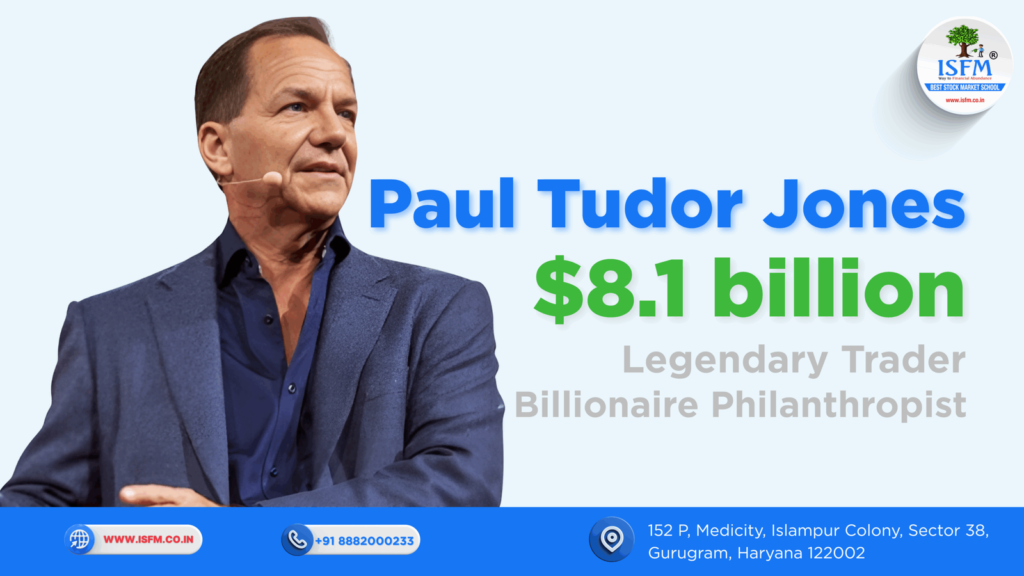
Paul Tudor Jones
Blog

Paul Tudor Jones: Legendary Trader, Billionaire Philanthropist & Visionary Market Strategist

Full Name: Paul Tudor Jones II (widely known as PTJ)Profession: Hedge Fund Manager, Global Macro Trader, Social Impact LeaderFounded: Tudor Investment CorporationSocial Presence: Philanthropy Platforms: Estimated Net Worth (2024): $7.5 billion (source: Forbes) Early Life and Education Born on September 28, 1954, in Memphis, Tennessee, Paul Tudor Jones was introduced to the world of finance by his uncle, a cotton trader. He later graduated from the University of Virginia with an economics degree and pursued further studies at Harvard Business School, laying the foundation for his future in global finance. Founding Tudor Investment Corporation In 1980, Jones launched Tudor Investment Corporation, a hedge fund known for its prowess in macroeconomic forecasting and high-stakes trading. His moment of fame came during the 1987 stock market crash, when he accurately predicted the collapse—earning over $100 million in profits. Signature Strategies Include: Today, the firm manages over $13 billion in assets, trading everything from currencies to commodities. Books, Media Features & Thought Leadership Though not an author himself, PTJ’s insights have influenced countless traders through: Historic Trades & Investment Milestones Personal Life & Values Paul Tudor Jones married Sonia Jones in 1991 (divorced in 2014) and has four children. Despite his billionaire status, he lives a grounded life, dividing his time between Florida and Connecticut. He’s a strong advocate of fitness, mental discipline, and spiritual well-being—principles that guide his personal and professional life. Top Achievements & Recognition Why Paul Tudor Jones Still Matters in 2024 Jones remains a guiding light for both traders and changemakers. His dual legacy—mastering financial markets and driving social reform—positions him as a unique force in today’s volatile economy. His commitment to ethical capitalism, data transparency, and economic justice continues to shape Wall Street and beyond.

Julian Robertson
Blog

Julian Robertson: The Billionaire Hedge Fund Pioneer Who Redefined Wall Street

Julian Robertson stands as one of the most influential figures in modern finance. Founder of Tiger Management LLC and mentor to a generation of elite hedge fund managers—known as the Tiger Cubs—his name is etched in the history of global investing. With a powerful mix of vision, discipline, and generosity, Robertson not only built a $4.8 billion fortune but also changed the landscape of philanthropy and portfolio strategy. Julian Robertson: At a Glance Early Life & Education Raised during the hardships of the Great Depression, Julian Robertson’s formative years in North Carolina laid the foundation for his values and drive. After graduating from the University of North Carolina at Chapel Hill, he served in the U.S. Navy and later entered the financial world with Kidder, Peabody & Co., where he honed his investment instincts. Tiger Management: A Hedge Fund Revolution In 1980, Robertson launched Tiger Management with just $8 million. His now-famous long-short equity strategy—buying undervalued stocks and shorting overvalued ones—helped grow the fund to over $22 billion by the late 1990s. Signature Strategies Noteworthy Investments & Market Positions Julian Robertson made bold and often contrarian moves: His portfolio reflected both courage and conviction—earning him a reputation for being ahead of his time. Published Works & Featured Mentions Though not an author himself, Robertson’s philosophies and practices have been documented extensively: Family Life & Personal Values Julian was married to the late Josie Robertson, a passionate supporter of the arts and health initiatives. Their three sons—Spencer, Alex, and Julian III—are involved in finance, education, and philanthropy. The Robertsons maintain ties with New York, North Carolina, and New Zealand, where Julian also owns conservation land. Philanthropy & Social Impact Robertson has donated over $2 billion through his Robertson Foundation, supporting global initiatives in: His giving philosophy is rooted in impact-driven investments, mirroring his financial principles. Legacy Highlights Julian Robertson in 2024: A Living Legend Now in his 90s, Julian Robertson’s legacy continues to grow. With a net worth of $4.8 billion, he remains a benchmark for financial brilliance and philanthropic vision. His enduring influence is visible in hedge fund boardrooms and nonprofit board meetings alike.

Blog

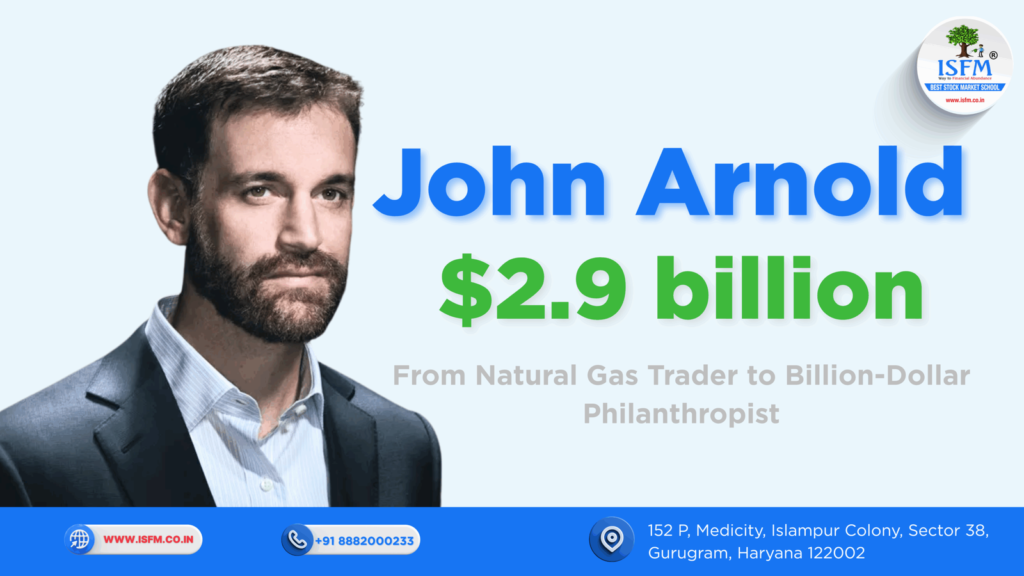
John Arnold: From Natural Gas Trader to Billion-Dollar Philanthropist

Full Name: John Douglas ArnoldCurrent Roles: Co-Founder & Co-Chair of Arnold VenturesFormer Role: Founder, Centaurus Energy – Hedge Fund Specializing in Energy TradingSocial Media: @JohnArnold on TwitterVideo Insights: Arnold Ventures YouTube ChannelThought Leadership: Arnold Ventures InsightsEstimated Net Worth (2024): $3.3 Billion Early Life and Education Born in 1974 in Dallas, Texas, John Arnold exhibited a precocious talent for numbers. After graduating from Vanderbilt University with dual degrees in Mathematics and Economics, he swiftly entered the high-stakes world of energy markets. His sharp analytical skills and passion for financial modeling positioned him as a force to be reckoned with from day one. The Rise: Building a Billion-Dollar Trading Empire Arnold began his professional journey at Enron, where his performance as a natural gas trader quickly drew attention. After the collapse of Enron in 2001, he used his final bonus to launch Centaurus Energy at just 28 years old. His firm capitalized on volatility in energy markets, earning massive returns and earning Arnold the title of “The Natural Gas King.” In 2012, at the peak of his hedge fund career, Arnold made a surprising decision—he retired from trading to dedicate his wealth and intellect to public policy and philanthropy. Writings, Research & Public Engagement Though not a traditional author, Arnold regularly contributes to policy reform discourse through Arnold Ventures. Noteworthy areas of focus include: Investment Philosophy & Notable Ventures John Arnold’s financial strategy is deeply rooted in data analytics, strategic forecasting, and measured risk-taking. Post-retirement, he transitioned this precision into impactful funding, including: Also Read: Jim Simons: From Codebreaker to Wall Street Billionaire & Science Philanthropist Personal Life & Core Values In 2005, Arnold married Laura Arnold, a Yale Law School graduate and philanthropist. Together, they launched Arnold Ventures, blending their commitment to fairness, transparency, and accountability. The couple remains intentionally low-profile, focusing on raising their family and driving measurable policy change. Top Achievements and Lasting Contributions Why John Arnold Remains Relevant in 2024 and Beyond Arnold’s unique combination of financial intelligence and policy advocacy has made him one of the most influential figures in both the private and public sectors. Whether reforming criminal justice or combating climate change, his data-first, impact-driven approach continues to redefine what it means to give back.

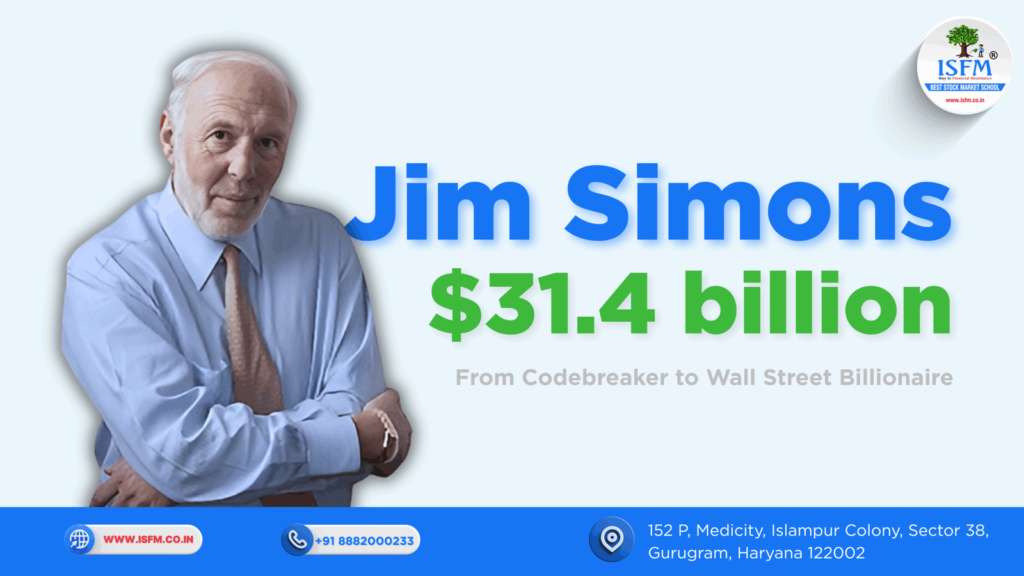
Jim Simons
Blog

Jim Simons: From Codebreaker to Wall Street Billionaire & Science Philanthropist

Full Name: James Harris SimonsProfession: Renowned Mathematician, Quantitative Trader, Billionaire PhilanthropistCompany: Renaissance TechnologiesSocial Presence: Twitter: @SimonsFound | YouTube: Simons FoundationEducation Initiatives: Simons Foundation, Math for AmericaEstimated Net Worth (2024): $30.5 Billion (Forbes) Early Life: A Brilliant Mind Takes Shape Born in 1938 in Newton, Massachusetts, Jim Simons showed early promise in mathematics. By 23, he earned his PhD from UC Berkeley, focusing on differential geometry and topology. He taught at MIT and Harvard, and even worked as a codebreaker for the U.S. government during the Cold War—an experience that shaped his systematic thinking. Fun Fact: Simons once swept floors at a garden supply store before becoming one of the wealthiest minds on Earth. Founding Renaissance Technologies: A Quantitative Finance Breakthrough In 1982, Simons founded Renaissance Technologies, a hedge fund that replaced gut instincts with algorithms. Using quantitative models, big data, and machine learning, Renaissance forever changed the landscape of Wall Street. Key Achievements of Renaissance: SEO Keywords: quantitative trading strategies, Renaissance Technologies success, Medallion Fund returns Major Investments & Financial Legacy While the Medallion Fund is closed to outsiders, Simons’ impact goes beyond: Publications and Contributions to Knowledge Simons, though not a prolific author himself, contributed to and inspired numerous works: SEO Keywords: Jim Simons books, mathematical finance publications Family Life and Personal Tragedies Jim married Marilyn Hawrys Simons in 1984, and they raised three children. Personal loss struck twice—two sons passed away in separate tragic incidents. One of them, Nick, was diagnosed with autism, sparking the couple’s dedication to autism research. Simons Foundation: Giving Billions to Science and Education The Simons Foundation is one of the largest private funders of scientific research globally. Jim and Marilyn have donated over $2.7 billion, with a mission to advance discovery in: SEO Keywords: Simons Foundation philanthropy, STEM education funding, SFARI autism research Honors and Legacy Why Jim Simons Inspires Future Innovators Jim Simons isn’t just a finance mogul—he’s a visionary who merged mathematics, computer science, and philanthropy. His life is a blueprint for those who dream of making an impact across disciplines. “Patterns in chaos” is how Simons describes market behavior—a phrase that encapsulates his genius for turning data into decisions.

George Soros
Blog

George Soros: Billionaire Investor, Open Society Advocate, and Global Philanthropist

George Soros is a legendary figure in global finance, renowned for his sharp investment strategies, commitment to social causes, and deep influence on modern philanthropy. Famously known as “The Man Who Broke the Bank of England,” Soros’s legacy spans finance, politics, and human rights advocacy. Current Role: Chairman, Investor & Founder Soros is the visionary founder of the Open Society Foundations and the mastermind behind Soros Fund Management, a hedge fund with decades of exceptional returns. He is a key global voice for democracy, open societies, and equitable development. Organization: Open Society Foundations (OSF) Established in 1979, OSF is among the world’s largest private funders of human rights, democratic governance, education, and public health. With operations in over 120 countries, OSF reflects Soros’s commitment to creating open, transparent, and accountable societies. Digital & Social Media Presence George Soros Net Worth (2024): $7 Billion According to Forbes, George Soros’s net worth stands at approximately $7 billion as of 2024. While once wealthier, he has donated over $32 billion to philanthropic causes through OSF. Early Life & Education Born György Schwartz on August 12, 1930, in Budapest, Hungary, Soros lived through Nazi occupation before emigrating to England in 1947. He studied at the prestigious London School of Economics (LSE), where he was deeply influenced by philosopher Karl Popper, whose theory of the “open society” became foundational to Soros’s worldview. Career Highlights: From Wall Street to World Change Soros Fund Management & The Quantum Fund In 1969, Soros founded Quantum Fund, which became one of the most profitable hedge funds in history—generating average annual returns of 30%. His most famous trade occurred in 1992, when he shorted the British Pound and earned $1 billion in a single day—a day known as Black Wednesday. 📘 Learn more in his best-selling book The Alchemy of Finance. Books & Thought Leadership George Soros is a prolific author whose works bridge finance, politics, and philosophy.Notable Books: Frequent Contributor To: Key Investments & Market Moves Personal Life & Family Soros has been married three times and is currently married to Tamiko Bolton. He is a father to five children, including Alexander Soros, who now plays a prominent role in the Open Society Foundations. Soros resides primarily in New York and remains committed to privacy, intellectual pursuits, and legacy-building through philanthropy. Major Philanthropic Contributions & Achievements Legacy: A Force for Financial Genius and Social Good George Soros’s story—from a Holocaust survivor to a hedge fund pioneer and global humanitarian—is a powerful example of how wealth can be a tool for global change. His work continues to influence public policy, free expression, and human rights across continents.

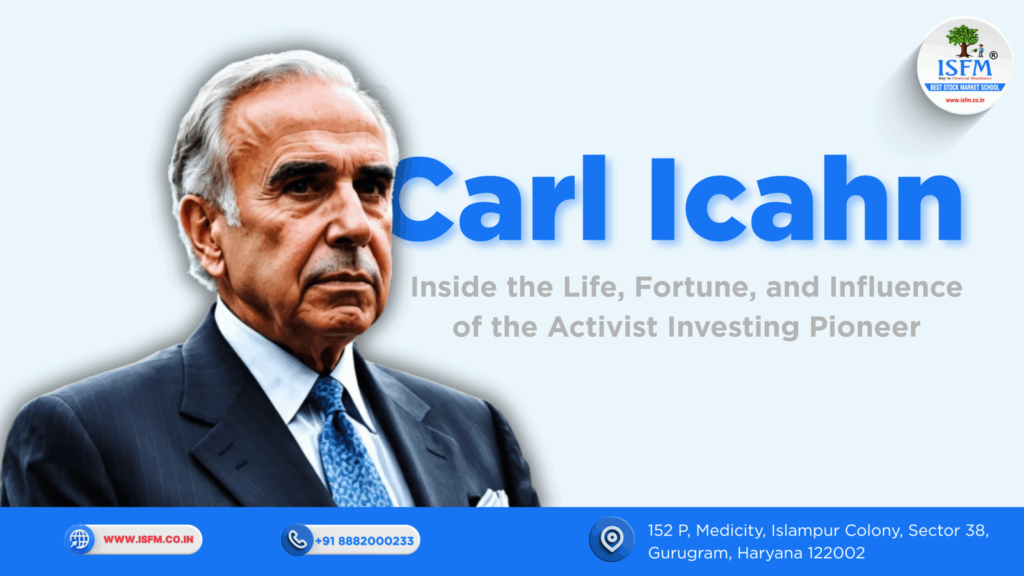
Carl-Icahn
Blog

Carl Icahn in 2024: Inside the Life, Fortune, and Influence of the Activist Investing Pioneer

Carl Icahn is one of Wall Street’s most iconic figures—a billionaire investor whose aggressive tactics have reshaped corporate America. Known for spearheading shareholder activism, Icahn’s financial journey is a blueprint for those seeking influence and impact in the markets. As of 2024, his estimated net worth stands at $10.2 billion, reflecting decades of strategic deals and bold takeovers. This in-depth guide explores Carl Icahn’s life, investments, philosophy, and the enduring legacy of Icahn Enterprises LP. Quick Snapshot: Who is Carl Icahn? Early Years: From Queens to Wall Street Born on February 16, 1936, in Queens, New York, Carl Icahn was raised in a working-class Jewish family. His father was a teacher and cantor, while his mother worked as a school librarian. He earned a Philosophy degree from Princeton University in 1957 and briefly studied medicine at New York University, ultimately leaving to pursue a career in finance. The Rise of Icahn Enterprises: A New Era of Shareholder Activism In 1968, Icahn used personal savings and capital from investors to purchase a seat on the New York Stock Exchange. He then launched Icahn & Co., laying the foundation for what would become Icahn Enterprises LP—a diversified holding company with interests in energy, automotive, real estate, and more. Core Investment Philosophy: Noteworthy Investments & Bold Moves Carl Icahn’s deal-making history includes some of the most talked-about trades in corporate finance: 🔹 Texaco (1980s): Turned a significant profit after advocating for a merger, reportedly earning over $500 million. 🔹 Netflix (2012): Purchased $168 million in stock, ultimately earning $800+ million as the share price soared. 🔹 Herbalife (2013): Defied rival Bill Ackman by taking a $1 billion long position, igniting one of Wall Street’s most famous feuds. 🔹 Apple (2013): Demanded and succeeded in encouraging Apple to initiate a $50 billion stock buyback program. Insights & Writings: The Mind of an Activist Investor For those eager to learn from Icahn’s playbook, his writings provide a window into his strategic mind: Personal Life & Family Values Carl Icahn is known for maintaining a relatively private personal life. He married Liba Trejbal in 1999 and has two children: Despite his immense wealth, Icahn is known for a modest lifestyle, often spending time between residences in New York and Florida. Philanthropy: A Commitment to Long-Term Impact ✅ Icahn School of Medicine at Mount Sinai: Over $200 million donated to support healthcare research, scholarships, and education. ✅ Education & Youth Empowerment: Supports underprivileged students through the Children’s Scholarship Fund and charter school initiatives. ✅ Governance Reform: Pioneered boardroom accountability and transparency across numerous S&P 500 companies. Honors & Recognition: Carl Icahn’s Enduring Legacy in 2024 From Wall Street to Washington, Carl Icahn’s influence transcends finance. His legacy lies not just in the billions earned, but in his relentless advocacy for shareholders and unwavering belief in corporate accountability. As of 2024, Icahn Enterprises remains a testament to the power of activist investing—and Icahn’s role as its fearless architect continues to inspire the next generation of investors.

Bruce-Kovner
Blog

Bruce Kovner: The Visionary Hedge Fund Pioneer and Philanthropic Powerhouse

Bruce Kovner is a name that commands respect in both financial and philanthropic circles. As the founder of Caxton Associates, Kovner is celebrated for his macroeconomic insights, disciplined trading strategies, and monumental success in hedge fund management. Beyond Wall Street, he’s equally revered for his philanthropic work, funding education, the arts, and public policy initiatives. In this in-depth, SEO-friendly blog, we explore Bruce Kovner’s extraordinary journey—from humble beginnings to financial mastery and impactful giving. Bruce Kovner Quick Profile Early Life & Education: From Taxis to Trading Bruce Kovner was raised in a modest Jewish household in Brooklyn. He studied at Harvard University before pivoting to music at Juilliard, illustrating his diverse passions. Before breaking into finance, Kovner drove a cab in New York City and worked in political consultancy—an unconventional path that laid the foundation for his understanding of global systems and macroeconomic forces. The Birth of Caxton Associates: A Hedge Fund Legacy In 1983, Kovner launched Caxton Associates, a global macro hedge fund that quickly rose to prominence. Leveraging deep economic analysis, geopolitical trends, and unmatched risk management, Kovner turned Caxton into a $14 billion behemoth. Key traits of Caxton’s trading approach: Though he stepped down in 2011, Caxton continues to operate successfully under his influence. Must-Read Resources Featuring Bruce Kovner While Kovner hasn’t penned his own book, his philosophies are best captured in: These resources shed light on his mindset, market approach, and investing discipline. Iconic Trades and Market Moves Bruce Kovner is known for legendary trades that showcase his foresight and mastery of macroeconomic forces: His strategy often involved synthesizing geopolitical intelligence with financial indicators—a skill that set him apart from most hedge fund peers. Bruce Kovner’s Philanthropy: Investing in Society Kovner’s philanthropic journey is as impactful as his trading career. Through the Kovner Foundation, he has donated over $500 million to causes like: He also served as Chairman of both Juilliard and Lincoln Center, reflecting his deep commitment to culture and education. Personal Life: A Low-Profile Philanthropist Bruce Kovner is married to Suzie Kovner, an advocate for the arts. The couple leads a private life and has three children. Despite his immense wealth and influence, Kovner is known for maintaining a humble public presence and letting his work—and generosity—speak for itself. Noteworthy Achievements Why Bruce Kovner’s Legacy Matters in 2024 and Beyond Kovner remains a role model for both aspiring investors and socially conscious leaders. In a world driven by data and uncertainty, his long-term vision, ethical responsibility, and investment acumen make him a timeless figure in finance and philanthropy. Whether you’re studying hedge fund strategy or the impact of philanthropic giving, Bruce Kovner’s life offers valuable lessons.

Balance Transfer vs Prepayment
Blog

Balance Transfer vs Prepayment: Which Strategy Helps Reduce Debt Faster?

When you’re trying to get rid of debt, two options often stand out — Balance Transfer and Loan Prepayment. While both can help ease your financial stress, the smarter choice depends on your individual financial goals, loan type, and current obligations. But before diving into the pros and cons, it’s essential to understand why you’re considering these strategies. Whether you’re managing high-interest EMIs or looking to close your loan early, reviewing your financial health is the first step toward effective debt reduction. What Is a Balance Transfer? A loan balance transfer involves shifting your existing loan (like a personal loan or credit card debt) from one lender to another offering lower interest rates. The goal? To reduce the cost of borrowing. ✅ Example: If your current personal loan carries an interest rate of 18%, and another bank offers 12% via a balance transfer, making the switch can save you thousands in interest. Many leading financial platforms, such as the Moneycontrol app, offer personal loans of up to ₹50 lakhs at interest rates starting from 10.5% p.a., with fully digital processing and rapid approvals. How Does a Balance Transfer Work? Use a Balance Transfer Calculator to check your potential savings before switching lenders. 💡 Pro Tip: Some lenders offer added benefits like zero processing fees, top-up loans, or even free insurance with the transfer — making it a more lucrative deal. What Is Loan Prepayment? Loan prepayment means paying off your loan — either partially or fully — before the scheduled tenure ends. It reduces your principal, which leads to lower interest outgo in the long run. Types of Prepayment: Note: Some lenders charge a prepayment penalty, especially for fixed-rate loans, so always read the fine print. How Does Prepayment Help? When you prepay, the amount directly reduces your loan principal. Since interest is calculated on the principal, your overall interest burden goes down. You can either: Best Time to Prepay: Early in the loan tenure when the interest component is at its peak. Balance Transfer vs Prepayment: Which Should You Choose? Feature Balance Transfer Loan Prepayment ✅ Best for High-interest loans Surplus funds available 💸 Cost Transfer/processing fee Possible prepayment charges 🕒 Ideal Timing When rates are lower Early in loan tenure 🎯 Goal Reduce interest rate Reduce principal faster Choose Balance Transfer If: Check out personal loan offers through Moneycontrol to compare options from top banks and NBFCs. Choose Loan Prepayment If: Prepayment is a great strategy for those aiming for financial independence and reduced liability. Final Thoughts Balance transfer and prepayment are both excellent tools for debt management. However, the right choice hinges on your loan structure, repayment capability, and long-term financial planning. Always evaluate the charges, use relevant financial tools, and compare lender terms before making a decision.

Credit-Card-Cashback
Blog

Credit Card Cashback: Smart Strategies to Maximize Your Rewards

Credit cards are no longer just tools for spending—they’re powerful instruments to earn rewards, cashback, and exclusive offers when used strategically. Issued by banks and financial institutions, a credit card allows you to borrow funds up to a pre-approved limit to make purchases, which can be repaid either in full or through EMIs with interest. But here’s the real value: with the right cashback credit card, you can earn while you spend. Whether you’re shopping, dining, or paying bills, every swipe can get you closer to money-saving rewards—if you play your cards right. How to Maximize Your Credit Card Cashback in India To make the most of your credit card cashback offers, here are a few actionable tips: Top Credit Card Cashback Apps in India Several cashback apps in India can enhance your credit card experience by tracking, optimizing, or even offering additional cashback on your purchases. Here are some top-rated ones: These apps offer additional benefits like credit score tracking, spend analytics, and automated bill reminders, making them valuable tools in your cashback strategy. Final Thoughts: Get the Most Out of Your Credit Card When used responsibly and strategically, credit cards can serve as valuable financial tools—not only simplifying transactions but also earning you cashback and exclusive rewards. To truly maximize credit card cashback, remember to: Looking for detailed comparisons, card reviews, and updated offers? Head over to Moneycontrol’s Credit Card Section to explore the best credit cards for cashback and rewards in India.

jane street
Blog

SEBI vs Jane Street: The High-Frequency Crackdown Shaking India’s Stock Market

In a bold and unprecedented regulatory move, the Securities and Exchange Board of India (SEBI) has barred Jane Street Capital, a titan in high-frequency trading (HFT), from participating in Indian markets. This isn’t a routine enforcement—it’s a landmark development that questions the limits of algorithmic trading, market ethics, and regulatory power in the age of advanced financial technology. But what triggered this clampdown? Why was SEBI compelled to take immediate action against such a major player? And how will this reshape India’s financial landscape going forward? Let’s unpack this high-stakes saga. The Accusation: Alleged Front-Running in the Algo Arena SEBI’s interim order alleges that Jane Street engaged in a complex, premeditated case of front-running—a practice that strikes at the heart of market fairness. 🚨 Here’s how it allegedly unfolded: The regulator claims the firm essentially manipulated the market’s perception and made profits by gaming its own influence—a tactic that goes beyond traditional arbitrage or legal market making. The Verdict (So Far): SEBI’s Interim Order Explained In response to these findings, SEBI issued an interim ex-parte order—a strong preventive measure enacted without waiting for a response from Jane Street. ⚖️ Key Highlights of the Ban: Why This Ban Was Unavoidable: SEBI’s Regulatory Responsibility SEBI’s mission is clear—ensure fair, transparent, and efficient markets. Here’s why this crackdown was considered essential: The Ripple Effect: What Happens After the Jane Street Ban? The shockwaves are already visible, with consequences reverberating across the algo trading ecosystem: 🔍 Key Impacts: The Larger Picture: Innovation vs Regulation in Indian Financial Markets The Jane Street case throws light on the evolving battlefield between algorithmic innovation and regulatory oversight. 🧠 Key Takeaways: Conclusion: A Pivotal Moment in Indian Market History SEBI’s ban on Jane Street isn’t just a headline—it’s a milestone moment that underscores India’s commitment to clean, transparent, and tech-ready capital markets. As the case progresses, and Jane Street presents its defense, one thing is clear: SEBI has drawn a regulatory line in the sand. The message to the global trading community is simple—no entity, no matter how advanced, can manipulate Indian markets without facing serious consequences.

Scroll to Top