
Author name: Mr. Sushil Alewa

Sushil Alewa is the Founder & Director of ISFM – International School of Financial Market, established in July 2014 with the aim of bridging the gap between academic finance and real, practical market participation. A Certified Financial Planner - CFP from US (Reg. No. IN 51734) and SEBI Registered Research Analyst (Reg. No. INH100009433) with an MBA in finance, Sushil has spent more than 16 years in the Indian capital markets. His career spans equity advisory and research at Sharekhan, India Infoline, Indiabulls and Religare, followed by HNI portfolio advisory at Anand Rathi Wealth Management — experience that shaped the practitioner-first approach ISFM is known for today. He is an active trader and researcher, and his teaching draws directly from live market work rather than theory alone. His areas of focus include technical analysis, derivatives and options strategies, equity research and fundamental analysis, and investor awareness. Sushil is currently a PhD scholar researching options trading strategies, and regularly conducts investor awareness and financial literacy programs for students, professionals and corporate audiences.

NSE Gets SEBI Nod to Launch Monthly Electricity Futures:
Blog

NSE Gets SEBI Nod to Launch Monthly Electricity Futures: A New Era in India’s Power Markets

India’s power sector is poised for a major transformation with the Securities and Exchange Board of India (SEBI) granting approval to the National Stock Exchange (NSE) to launch monthly electricity futures contracts. This development follows SEBI’s earlier nod to the Multi Commodity Exchange (MCX), paving the way for deeper electricity market participation and long-term structural reforms under the Electricity Act, 2003. Want to understand derivatives and power markets better? Join ISFM – India’s Best Stock Market School to learn Options, Futures, Commodities & Energy Trading from industry professionals. Available online and offline. Free Demo Available. What Are Electricity Futures? Electricity futures are standardized financial contracts that allow participants to buy or sell electricity at a predetermined price for delivery in the future. These are financially settled contracts, meaning there’s no physical delivery—just a price differential payment. They are critical tools for hedging against electricity price volatility and for ensuring price transparency and efficient risk management in the energy sector. NSE’s Strategic Vision for Electricity Derivatives Ashishkumar Chauhan, MD & CEO of NSE, stated: “This approval marks the beginning of NSE’s larger vision to develop a robust and integrated electricity derivatives ecosystem in India.” NSE plans to roll out more advanced instruments in phases—such as Contracts for Difference (CFDs) and long-duration derivatives like quarterly and annual electricity futures, subject to further regulatory approvals. With this launch, the NSE is set to leverage its experience as the first Indian exchange to establish an electricity marketplace through Power Exchange India Limited (PXIL) in 2008. Benefits of Monthly Electricity Futures The introduction of electricity futures on NSE is expected to: Aligning with India’s Clean Energy Goals According to a NITI Aayog report, India will require $250 billion annually until 2047 to meet its net-zero emissions target. By 2030, renewable energy is expected to constitute over 50% of India’s installed power capacity. A dynamic electricity derivatives market is essential to mobilize this scale of green finance from both domestic and international investors. The Role of Spot and Futures Market Synergy A calibrated and phased rollout of electricity derivatives is vital for maintaining market integrity and investor confidence. Experts stress the importance of the spot market evolving alongside the futures market. A robust day-ahead spot market ensures real-time price discovery, while financially settled futures provide long-term hedging capability—together creating a virtuous cycle of growth and liquidity. Also Read: How NRIs Can Legally Reduce Taxes on Indian Income Through Special Relief Provisions Regulatory Backing and Industry Coordination SEBI’s green light comes after extensive discussions with the Central Electricity Regulatory Commission (CERC), aligning with policy initiatives such as Market-Based Economic Dispatch (MBED) and market coupling. In February, SEBI had invited exchanges to submit proposals following a mutual understanding between SEBI and CERC regarding the introduction of electricity futures. Conclusion: A New Dawn for Power Sector Trading With the launch of monthly electricity futures, NSE is not just introducing a financial product—it’s laying the foundation for a future-ready, transparent, and efficient power trading ecosystem in India. As electricity becomes the cornerstone of India’s energy transition, the availability of reliable hedging instruments will be vital to support industrial growth, clean energy adoption, and financial market innovation.

India’s Top Fund Managers
Blog

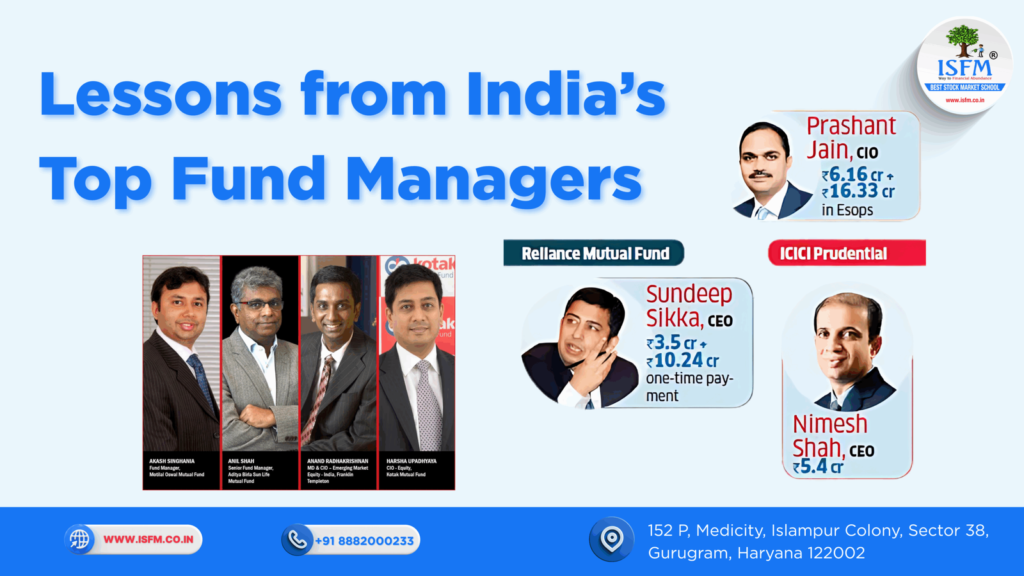
Lessons from India’s Top Fund Managers: How Discipline, Conviction, and Strategy Drive Superior Returns

Morningstar, a leading global investment research firm, has spotlighted some of India’s most successful mutual fund managers, revealing the key factors behind their consistent performance. The analysis underscores how long-term vision, fundamental research, contrarian thinking, and disciplined portfolio management help these fund managers outperform over time—even through volatile markets. Sankaran Naren – ICICI Prudential Mutual Fund Fund Managed: ICICI Prudential Value Discovery FundInvestment Style: Value-focused with a growth overlaySankaran Naren’s investment style blends value investing principles with selective growth opportunities, enabling his fund to navigate sectoral shifts effectively. In a notable instance during 2021–22, Naren drastically reduced exposure to IT—from 20% in early 2021 to just 9% by year-end—while increasing allocation to the energy sector at 11%, reflecting his ability to rotate sectors ahead of market moves. Another standout call was his contrarian investment in Vodafone Group Plc ADR in mid-2021. While the move initially underperformed, it paid off with a 15% return over the following year. His approach to investing is marked by deep introspection, learning from past mistakes, and making fewer errors rather than chasing perfect returns. Even in sectors like pharma, which entered a slump in 2023, Naren held on to his long-term conviction. As the sector rebounded in 2024, his patience proved profitable—showcasing his resilience and foresight in market cycles. Neelesh Surana – Mirae Asset Mutual Fund Role: Chief Investment Officer (CIO) – EquityApproach: Bottom-up stock picking with valuation disciplineNeelesh Surana has been a cornerstone of Mirae AMC since 2008, known for high-conviction investing and an aversion to hype-driven bets. His strategy centers on selecting scalable businesses with strong return ratios and robust management, avoiding overvalued or momentum stocks. Surana believes in alpha through stock selection, not sector timing. For instance, his calculated positions in Zomato (Eternal) and Policybazaar (PB Fintech)—though unprofitable in early valuation metrics—were limited to under 2% of the portfolio. These investments later turned multi-baggers in 2024, validating his foresight and restraint. He maintains a strict sell discipline, exiting stocks once target valuations are achieved—regardless of holding period. His success lies in a research-driven, fundamentals-first approach, paired with the courage to stay the course during temporary volatility. ️Suyash Choudhary – Bandhan Mutual Fund Domain: Fixed IncomePhilosophy: Macro-conscious, risk-averse, capital preservationKnown for his conservative stance, Suyash Choudhary avoids speculative credits, focusing on sovereign and AAA-rated debt instruments. This risk-averse style paid off especially during periods of economic turbulence, when his funds showed remarkable stability due to limited credit exposure. Suyash excels in managing fixed-term strategies, combining macroeconomic awareness with tactical judgment, making him one of the most reliable fixed-income managers in the Indian market. Shobhit Mehrotra – HDFC Mutual Fund Experience: Over two decades in fixed incomeInvestment Style: Conservative with a focus on income and risk-adjusted returnsShobhit Mehrotra, a stalwart in the debt market, brings a disciplined, research-heavy approach. His strategies focus on capital preservation, credit quality, and liquidity management. Notably, between 2021–2023, he shifted portfolios toward short- and medium-duration debt, anticipating rising interest rates amid global inflation and RBI tightening. His consistent income generation with minimal risk highlights his role as a stabilizing force in debt fund investing. Morningstar’s Key Insights: What Makes a Great Portfolio Manager? Morningstar concludes that while no fund manager is infallible, consistent success lies in aligning with a clear philosophy, having a long-term mindset, and demonstrating an honest self-assessment process. These traits—evident in the work of Naren, Surana, Choudhary, and Mehrotra—can serve as timeless lessons for both investors and aspiring fund professionals.

Health Insurance in 2025
Blog

Don’t Buy Health Insurance in 2025 Without Reading This – Know What’s NOT Covered First

Health insurance has become one of the most commonly purchased financial products in India, especially after the pandemic. But in 2025, simply buying a health insurance policy isn’t enough—understanding what it doesn’t cover is more important than ever. The Harsh Truth: Health Insurance Without Awareness is a Trap More than ever before, Indians are purchasing health plans thanks to easy digital onboarding, tax-saving benefits, and bundled features. But a shocking number are walking into this deal without knowing what their policies actually exclude. And that’s where disaster begins. The illusion of protection is more dangerous than having no coverage at all. According to the IRDAI 2023 Annual Report, over ₹7,500 crore worth of health insurance claims were rejected—not due to fraud or missing paperwork—but because of exclusions, waiting periods, and policy misinterpretation. This isn’t a failure of insurance providers. It’s a failure of consumer awareness. Why Most Health Insurance Claims Get Rejected in India In 2025, thousands of Indian families still face massive medical bills despite being insured. Here’s why: 💡 According to NITI Aayog, over 55% of insured Indians are unaware of these exclusions. What Every Indian Needs to Know Before Buying Health Insurance in 2025 Before you buy or renew your policy, ask yourself: Insurance isn’t just about ticking off “₹10 lakh cover” or “tax benefit under 80D.” It’s about knowing how and when it’ll actually help you. Checklist: How to Be a Smart Health Insurance Buyer in 2025 Here’s how to avoid future regret: From Transaction to Trust: A New Approach in 2025 The real transformation we need in India isn’t just more coverage, it’s better conversations. Insurers and regulators have made progress—standard claim formats, e-insurance accounts, and portability options are helping—but the biggest shift must come from you, the consumer. In 2025, don’t just buy health insurance because it’s mandatory or offers tax benefits. Buy it because you’re actively participating in securing your health and finances. Remember: Health Insurance Isn’t Just for Emergencies—It’s for Peace of Mind In the end, a good insurance policy isn’t one that’s just bought—it’s one that’s understood.

How NRIs Can Legally Reduce Taxes on Indian Income Through Special Relief Provisions_www.isfm.co.in
Blog

How NRIs Can Legally Reduce Taxes on Indian Income Through Special Relief Provisions

Non-Resident Indians (NRIs) earning income in India can significantly lower their tax liability by utilizing special provisions under Indian tax laws and Double Taxation Avoidance Agreements (DTAAs). However, to truly benefit from these concessions, NRIs must understand eligibility criteria, furnish appropriate documentation, and comply with timely filing requirements. Who Qualifies as an NRI? To be classified as an NRI under the Income Tax Act of India, an individual must reside outside India for 182 days or more in a financial year. NRIs earning income from Indian sources—such as interest, rent, dividends, or capital gains—can access tax exemptions or reduced rates under both Indian law and international tax treaties. Key Tax Benefits Available to NRIs Here are the major types of Indian income that qualify for tax relief under domestic provisions and DTAAs: Note: Rental income from property in India is usually fully taxable unless specifically covered by DTAA provisions. Step-by-Step Guide to Claiming NRI Tax Benefits To effectively reduce tax burden, NRIs must complete the following: 1. Obtain a Tax Residency Certificate (TRC) A TRC from the country of residence is mandatory to claim treaty benefits. It proves that you are a tax resident of that country under DTAA rules. 2. Submit Form 10F Form 10F must be submitted to the Indian Income Tax Department along with a self-declaration of your foreign tax residency if required. 3. Provide Documents to Income Payers Banks and other payers in India may deduct TDS at a higher rate unless you provide the TRC, Form 10F, and declaration in advance. Submitting these on time ensures the correct lower TDS is applied under the DTAA. 4. Report Income Correctly While filing your income tax return in India, report all Indian earnings under the right heads and claim DTAA reliefs accurately. Common Pitfalls and How to Avoid Them Many NRIs miss out on tax relief due to: 👉 Pro Tip: Start your tax planning early in the financial year to avoid these issues and unnecessary deductions. Why These Tax Reliefs Matter for NRIs Failing to utilize available tax concessions could mean: For NRIs focused on efficient global tax planning or looking to maximize returns from Indian assets, leveraging tax benefits under DTAAs and Indian tax law is not just smart—but essential. Final Word As tax filing season approaches, NRIs should proactively gather required documents, review their income sources, and consult professionals if needed. Taking full advantage of India’s NRI tax relief framework can help you save more and invest smarter.

Emergency Loans Without Documentation
Blog

Emergency Loans Without Documentation: Fast, Hassle-Free Financing in Critical Moments

Life is unpredictable, and financial emergencies can strike without warning — from sudden medical bills to urgent travel or home repairs. In such situations, traditional loans that demand heaps of paperwork can delay the help you need. Fortunately, modern digital lending platforms now offer emergency loans with minimal to zero documentation, ensuring you get funds when you need them most — quickly and efficiently. What Is a No-Document Personal Loan? A no-document loan, also known as a low-doc personal loan, allows individuals to borrow money without submitting extensive income proofs like salary slips, tax returns, or employment verification. Instead, lenders assess your credit score, banking history, and financial behavior to determine your eligibility. These loans are unsecured, meaning no collateral is required, making them ideal for fast and easy access to credit. When Do You Need a No-Document Emergency Loan? You might need such a loan in several real-life scenarios, including: With quick approvals and minimal paperwork, these loans can be a lifesaver during stressful times. How to Apply for an Emergency Loan Without Income Proof Applying for a no-document loan is simpler than you think — especially via digital apps or platforms. Here’s a step-by-step guide: 1. Check Your Credit Score Even without income proof, your CIBIL score plays a crucial role. A score of 750+ significantly boosts your approval chances. 2. Choose the Right Lending Platform Look for trusted digital platforms or fintech apps like the Moneycontrol app or website, which aggregates personal loan offers from top eight lenders — all with a seamless, paperless process. 3. Keep Basic KYC Ready You don’t need salary slips, but you’ll still need: 4. Apply Online via Moneycontrol Through the Moneycontrol app or site, you can access loans up to ₹50 lakhs at interest rates starting from 10.5% p.a. — all with instant digital approval and disbursal, sometimes in under 10 minutes. How to Improve Your Eligibility for a No-Doc Loan While the process is easy, not everyone gets approved. Improve your chances by: Top Benefits of No-Document Emergency Loans Things to Watch Out For While no-doc loans are incredibly convenient, be mindful of the following: Final Thoughts Emergency loans without documentation are a revolutionary step toward accessible, fast, and user-friendly credit. With platforms like Moneycontrol simplifying the process, you can now manage financial crises without stress. But remember: with great speed comes great responsibility. Borrow wisely, repay promptly, and use these loans to empower your financial resilience, not burden it.

big four
Blog

Can India Build a ‘Big Four’ Challenger? Mindset Shifts Hold the Key

As India positions itself to become the world’s third-largest economy by the end of this decade, one glaring gap remains: its underrepresentation in global professional services and advisory markets. Despite immense talent and a robust domestic economy, India has yet to produce a formidable rival to the global giants—Deloitte, PwC, EY, and KPMG, collectively known as the ‘Big Four’. The Modi government, recognizing this shortfall, first voiced the ambition to scale domestic accounting and advisory firms back in 2017. Now, with 2025 underway and little progress made, the Prime Minister’s Office (PMO) appears to be reigniting this mission. A newly constituted committee of senior officials is tasked with crafting a pathway forward. But here’s the truth: regulatory tweaks alone will not be enough. The real transformation must begin with mindset changes across the Indian professional services sector. After over 35 years in this industry, I believe the following strategic shifts are essential for India to build world-class advisory firms. 1. From Centralized to Shared Ownership Structures One major roadblock to scale is the highly centralized ownership seen in most Indian firms. In contrast, the global Big Four evolved as distributed ownership models—from partnerships to LLPs and corporate frameworks—that enable greater capital access and talent retention. India should leapfrog directly into corporate structures, offering equity to key professionals from the outset. Shared ownership not only attracts the best minds but also allows for external capital infusion and a culture of shared success and scalability. 2. Evolving Business Models Beyond Compliance Services Globally, professional services have moved far beyond audit and tax compliance. The future lies in value-added offerings such as: Indian firms must adapt their business models accordingly to remain relevant and competitive in a fast-digitizing economy. 3. Data and Knowledge-Driven Consulting It’s ironic that firms advising clients on data strategy and analytics have yet to implement these solutions for their own growth. Global firms are leveraging data lakes, AI, and anonymized benchmarking tools to derive insights and enhance value delivery. Indian firms must build internal capabilities to harness client data (with strict confidentiality protocols) to drive smarter, insight-led services across industries. 4. Unified Global Profit Pooling One of the Big Four’s biggest strengths is their single global profit pool. This model facilitates seamless collaboration across geographies and practice areas, while insulating the firm from dependency on any single client or revenue stream. Indian firms should adopt globally integrated delivery models, particularly leveraging India’s strength in back-office operations, to serve clients worldwide while building a sustainable, diversified revenue base. 5. Consolidation for Scale India’s professional services landscape is fragmented, with thousands of subscale firms serving limited local markets. This fragmentation prevents investment in talent, technology, and systems. Consolidation is critical. Merging smaller practices can: Large Indian firms could even become targets for international acquisitions or global tie-ups, placing them firmly on the global map. 6. Regulatory Reforms Must Encourage Growth, Not Fragmentation A pro-growth regulatory mindset is essential. Some reforms that could accelerate change include: Like industry, professional services firms must be allowed flexibility to innovate, scale, and compete. 7. Branding Beyond Partner Names: Time for Indian Multinational Firms To stand out, Indian firms need to build strong, independent brands—not ones named after founding partners. A recognizable, globally trusted Indian brand in professional services can only emerge through: ‘Made in India’ Advisory Firms – A Real Possibility Firms like EY and KPMG have shown that India can build world-class practices, given the right mindset and partnerships. EY India, for instance, achieved tremendous growth based largely on domestic client relationships, not just international capital. The lesson? India doesn’t lack capability—it lacks the mindset shift. Final Thoughts: A New Era Beckons The Indian professional services sector stands at a historic crossroads. With the country rising as an economic powerhouse, the time is ripe to build Indian-origin global firms that can rival the Big Four—not just in scale, but in value, vision, and innovation. Change won’t happen overnight. But with bold mindset shifts, smart consolidations, regulatory reforms, and talent-focused equity structures, India can indeed lead the next chapter in global professional services.

Blog

Amazon Joins Quick Commerce Battle with ‘Amazon Now’ Launch in Bengaluru

Amazon has officially stepped into India’s fast-growing quick commerce market with the launch of its hyperlocal delivery service, Amazon Now, in select areas of Bengaluru. Following a successful pilot test in December 2024, the e-commerce giant has introduced the service across three key pincodes in the city and is planning a phased expansion in the coming weeks before rolling out to other major Indian metros. Amazon Now Targets 10–30 Minute Deliveries The move marks Amazon’s formal entry into the 10-30 minute grocery and essentials delivery segment, a space currently dominated by Blinkit, Zepto, and Swiggy Instamart. With Indian consumers rapidly shifting preferences towards ultra-fast delivery, Amazon is aiming to regain lost ground from traditional e-commerce delivery windows. According to insiders, Amazon plans to aggressively scale its presence in Bengaluru, using the city as a testing ground before launching in cities like Mumbai, Delhi, and Hyderabad. This entry comes at a time when the quick commerce sector is gaining massive traction while also experiencing increased competition and operational losses. India’s Quick Commerce Boom: Growth Amidst Burn Despite its growing popularity, quick commerce remains a high-burn industry. A Bain & Company and Flipkart report found that over 66% of online grocery orders and nearly 10% of total e-retail spending in India during 2024 took place through quick commerce apps. However, the competition comes at a cost. Eternal (formerly Zomato) founder Deepinder Goyal revealed earlier this year that quick commerce players were collectively burning over ₹5,000 crore every quarter. Zepto alone is responsible for more than half of that burn, indicating the heavy costs associated with market dominance. Eternal’s CFO Akshant Goyal echoed this sentiment, saying: “We expect competition to intensify further. We’re focused on gaining market share, and short-term profitability will not stand in the way.” $57 Billion Market Potential by 2030 Despite short-term profitability concerns, the long-term growth potential remains immense. Bain & Company estimates the gross order value (GOV) of India’s quick commerce sector touched $7 billion in 2024, a huge leap from $1.6 billion in 2022. The industry is projected to grow at over 40% CAGR through 2030, as demand expands into Tier II and Tier III cities. Backing this optimism, Morgan Stanley recently revised its estimate of India’s total addressable market (TAM) for quick commerce to $57 billion by 2030, up from the earlier $42 billion forecast, citing accelerated user adoption and regional expansion. Market Share Snapshot: Amazon’s Challengers According to a recent Motilal Oswal report, the current market leaders in India’s quick commerce space are: Amazon’s late entry may intensify competition but also brings validation to the quick commerce model. With deep pockets, established logistics infrastructure, and a massive existing customer base, Amazon is well-positioned to shake up the current market hierarchy. Why Financial Literacy is Vital Amidst Fast-Growing Markets As rapid innovation reshapes sectors like e-commerce and fintech, it’s more important than ever for individuals to understand markets and build financial resilience. Whether you’re investing in quick commerce IPOs or looking to start a second income stream, financial market education is the key. 💡 ISFM (Institute of Stock Market and Financial Management) offers industry-relevant, practical training to help working professionals, students, and traders stay ahead. From Stock Trading Courses to Technical Analysis and Derivatives Training, ISFM empowers you with the skills to navigate India’s evolving financial landscape. Key Takeaways

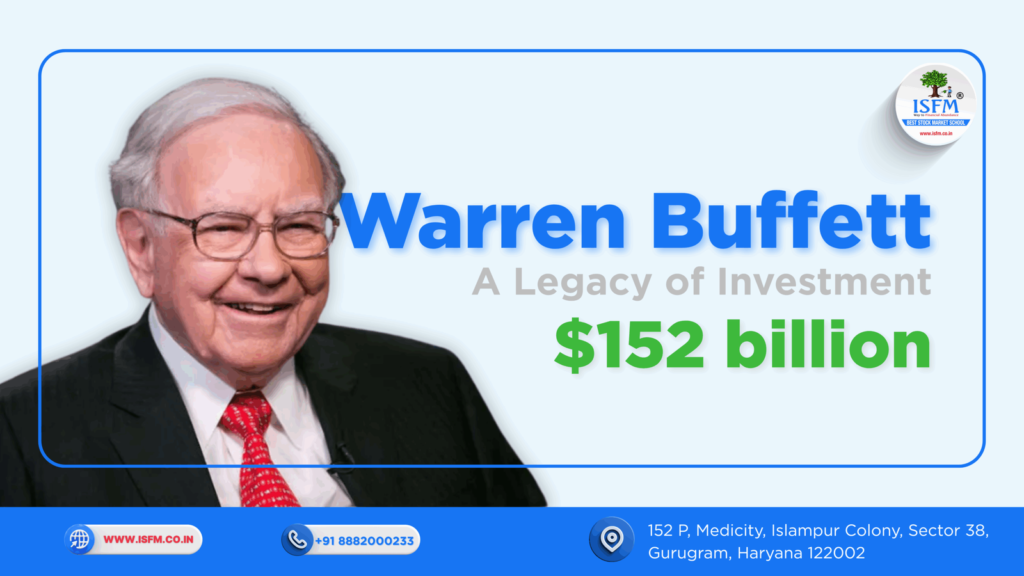
When it comes to investing legends, few names shine brighter than Warren Buffett. Nicknamed the "Oracle of Omaha", Buffett is admired not only for building Berkshire Hathaway into a financial powerhouse but also for his integrity, frugal lifestyle, and philanthropic vision. This in-depth guide explores his inspiring journey, timeless investment principles, and the lasting impact he continues to make on the world of finance and beyond.
Blog

Warren Buffett: The Oracle of Omaha – A Legacy of Investment Brilliance and Generosity

When it comes to investing legends, few names shine brighter than Warren Buffett. Nicknamed the “Oracle of Omaha”, Buffett is admired not only for building Berkshire Hathaway into a financial powerhouse but also for his integrity, frugal lifestyle, and philanthropic vision. This in-depth guide explores his inspiring journey, timeless investment principles, and the lasting impact he continues to make on the world of finance and beyond. Quick Facts: Warren Buffett at a Glance Early Life: Born to Lead, Built to Invest Born on August 30, 1930, in Omaha, Nebraska, Warren Buffett showed entrepreneurial instincts early on. At just 11 years old, he made his first stock purchase. During his teens, he ran side businesses including a pinball machine venture and newspaper delivery routes. Education The Rise of Berkshire Hathaway: From Failing Textile Mill to Investment Giant Buffett launched Buffett Partnership Ltd., delivering nearly 30% annual returns for over a decade. In 1965, he acquired a struggling textile firm—Berkshire Hathaway—and turned it into a holding company for high-quality, undervalued businesses. Major Berkshire-Owned Companies His core strategy? Buy companies with strong moats, solid fundamentals, and trusted leadership—then hold them long term Books, Writings & Resources: Learn from Buffett’s Wisdom Warren Buffett is a prolific communicator. His annual shareholder letters are considered essential reading for investors. Notable Works Must-Visit Learning Resources: Top Investments: Buffett’s Billion-Dollar Bets Warren Buffett’s investment portfolio reflects his long-term conviction and focus on value. Some of his largest and most successful investments include: These reflect Buffett’s approach to buying businesses he understands with durable competitive advantages. Lifestyle & Family: A Billionaire Who Lives Simply Despite his immense wealth, Buffett still resides in the modest Omaha home he bought in 1958 for $31,500. His personal life reflects simplicity, modesty, and strong family values. None of his children work at Berkshire Hathaway, in line with his belief in independence and merit. Milestones & Philanthropy: A Billionaire With a Mission Business Achievements Philanthropic Contributions In 2006, Buffett committed to giving away 99% of his fortune. He is the largest contributor to the Bill & Melinda Gates Foundation, with over $50 billion donated to causes like global health and education. Co-founder of the Giving Pledge: A movement urging billionaires to dedicate at least half their wealth to charity. Notable pledgers include Mark Zuckerberg and Elon Musk. Why Warren Buffett Remains Relevant in 2024 At 93 years old, Buffett is still active, insightful, and admired globally. His principles of long-term thinking, value investing, and moral capitalism resonate with new generations of investors. Follow Berkshire Hathaway’s YouTube Channel or browse his annual letters for timeless investment wisdom. Final Thoughts: Lessons from a Legend Warren Buffett’s legacy isn’t just about making money—it’s about doing business with integrity, thinking decades ahead, and giving back to society. Whether you’re a beginner or a seasoned investor, there’s much to learn from the Oracle of Omaha.

steve cohen
Blog

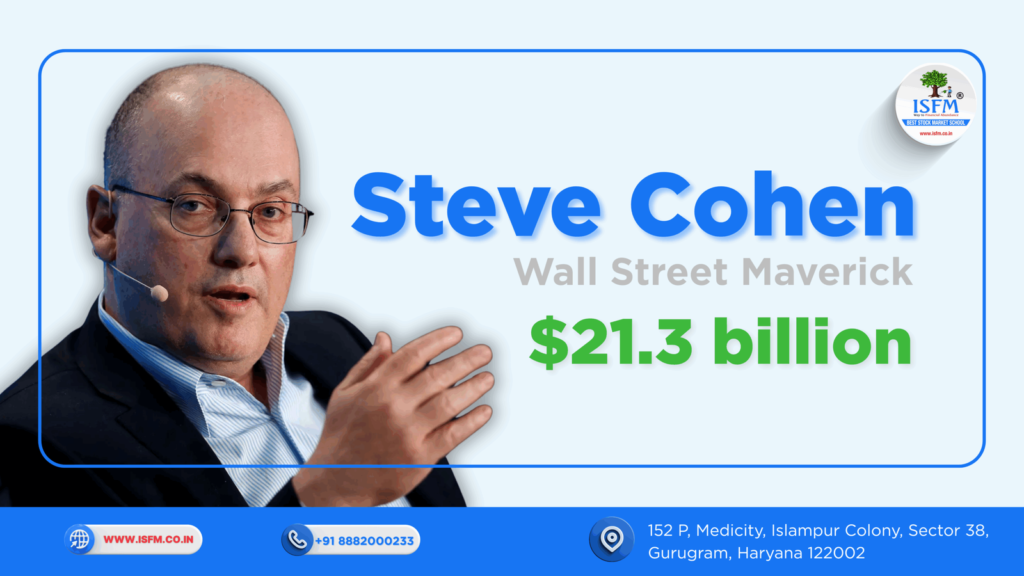
Steve Cohen: From Wall Street Maverick to Mission-Driven Billionaire

Full Name: Steve CohenTitle: Founder & CEOCompany: Point72 Asset ManagementTwitter: @StevenACohenYouTube: Steve CohenEducation Portal: Point72 AcademyEstimated Net Worth (2024): $17.8 Billion Early Life & Education: The Making of a Financial Prodigy Steve Cohen was born in June 1956 in Great Neck, New York. Raised in a middle-class family, his father was a dress manufacturer and his mother taught piano. As a teenager, Cohen developed a strong interest in poker, a game that honed his risk-taking instincts. He later graduated from the Wharton School at the University of Pennsylvania in 1978 with a degree in economics—laying the foundation for his career in finance. Career Journey: From Trading Desk to Hedge Fund Legend Gruntal & Co.: The First Break Cohen started his career at Gruntal & Co., where he quickly earned a reputation as a star trader—reportedly generating $1 million in profits during his first year. SAC Capital Advisors: A Hedge Fund Giant Emerges In 1992, Cohen launched SAC Capital Advisors, a firm known for its aggressive trading strategies and high returns. At its peak, SAC managed $15 billion in assets. However, the firm was later embroiled in an insider trading scandal, leading to a record $1.8 billion settlement in 2013 and its eventual transformation. Point72 Asset Management: Reinvention and Resilience Following SAC’s closure, Cohen restructured his operations under the name Point72 Asset Management. Initially established as a family office, it reopened to outside investors in 2018. As of 2024, Point72 oversees more than $32 billion in assets, employing a hybrid investment strategy that combines quantitative analysis with discretionary investing. Investment Portfolio: Strategic Bets and Billion-Dollar Moves Steve Cohen is renowned for his early investments and bold financial plays, including: Personal Life: Family, Real Estate, and Values Steve Cohen is married to Alexandra Cohen and is a father of seven. The family resides in Greenwich, Connecticut, in an expansive estate known as “The Dairy.” Despite his enormous wealth, Cohen is known for his relatively private lifestyle, prioritizing family, low-key living, and charitable giving. Philanthropy: A Billionaire with a Heart for Healing Cohen’s philanthropic impact is both broad and deep, targeting mental health, children’s healthcare, and education: Media Coverage & Biographical Accounts Though Steve Cohen hasn’t penned a memoir, his life has been the subject of extensive media analysis: Frequently Asked Questions Q: How did Steve Cohen build his fortune?A: Cohen amassed his wealth through high-yield trades at SAC Capital and diversified investing at Point72 Asset Management. Q: What’s unique about his investment strategy?A: Cohen blends quantitative models, short-term market signals, and human insight to capitalize on market inefficiencies. Q: Is Steve Cohen active in philanthropy?A: Absolutely. His foundation supports initiatives in mental health, children’s healthcare, and disease prevention across the U.S. Conclusion: The Legacy of Steve Cohen From poker tables to billion-dollar boardrooms, Steve Cohen’s rise is a testament to calculated risk, innovation, and purpose-driven wealth. As a hedge fund legend, sports team owner, and philanthropic leader, Cohen continues to shape Wall Street and beyond.

Stanley Druckenmiller
Blog

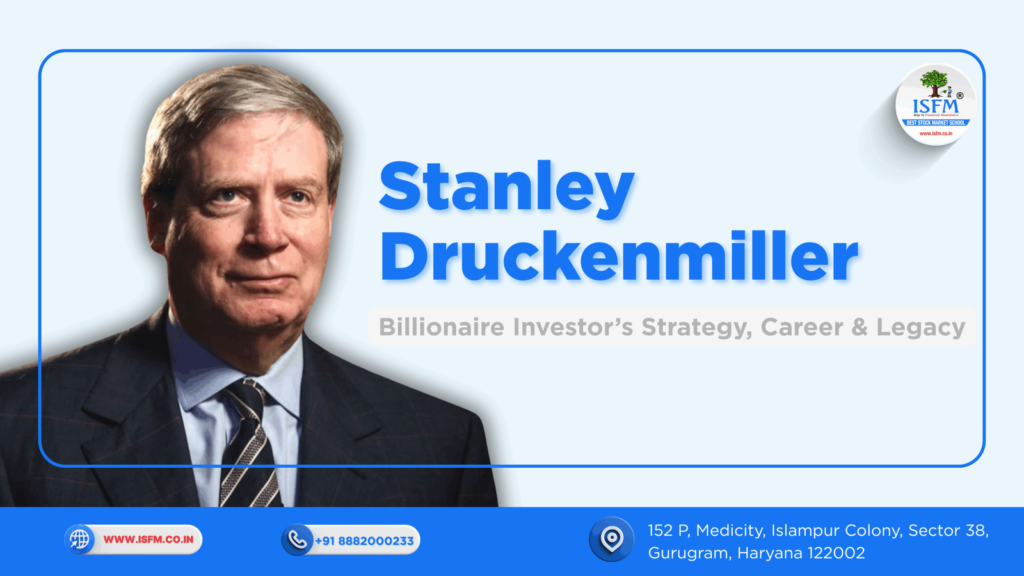
Stanley Druckenmiller: A Deep Dive into the Billionaire Investor’s Strategy, Career & Legacy

Stanley Druckenmiller is one of the most celebrated hedge fund managers in Wall Street history. Best known for his time at Duquesne Capital and as the chief strategist behind George Soros’s legendary short of the British Pound, Druckenmiller’s career spans four decades of unmatched investing success. His disciplined macroeconomic approach and ability to predict market movements have earned him the title of an “Investment Titan” with a 2024 net worth of $10.4 billion. Profile Snapshot: Stanley Druckenmiller Early Life, Education & First Steps in Finance Born on June 14, 1953, in Pittsburgh, Pennsylvania, Druckenmiller grew up in a middle-class environment that fostered curiosity and discipline. After earning his economics degree magna cum laude from Bowdoin College in 1975, he pursued graduate studies at the University of Michigan but left to join the world of finance. Inspired by his grandfather’s part-time investing habits, Druckenmiller’s passion for economics soon turned into a powerful career. Duquesne Capital: A Hedge Fund Powerhouse In 1981, Stanley Druckenmiller launched Duquesne Capital with just $1 million under management. Over the next three decades, he achieved over 30% average annual returns — without recording a single losing year until the fund closed in 2010. His risk-managed yet bold strategy combined top-down macroeconomic analysis with tactical asset allocation. His most famous tenure was as lead portfolio manager for George Soros’s Quantum Fund (1988–2000), where he executed the historic short against the British Pound in 1992, generating a $1 billion profit in one day. Famous Investments & Strategic Market Moves Publications & Notable Mentions While Druckenmiller hasn’t authored a book, his strategies and philosophies are extensively featured in: These are goldmines for anyone wanting to understand macro investing from a real-world expert. Family Life & Personal Interests Druckenmiller married Fiona Biggs in 1988, and the couple has three daughters. Known for keeping a low personal profile, he enjoys golf and is a serious art collector. After closing Duquesne Capital, Druckenmiller shifted his energy to giving back, emerging as a powerful force in American philanthropy. The Druckenmiller Foundation: Giving at Scale Stanley and Fiona Druckenmiller have donated over $1 billion through the Druckenmiller Foundation, focusing on: His philanthropic work has been recognized across the U.S. for its scale and impact. Top Achievements & Legacy ✅ 30+ Years of Market Outperformance✅ Key Role in Soros’s Quantum Fund Success✅ Influence in U.S. Economic Policy (2008 Crisis Advisor)✅ Mentored Modern-Day Investing Giants like Bill Ackman✅ Built One of the Most Respected Philanthropic Foundations in Finance Why Druckenmiller Still Matters in 2024 Even in his 70s, Druckenmiller’s market commentary continues to move headlines. With bold predictions on U.S. fiscal policy, and bullish insights into AI and tech, he’s still considered a guiding voice for institutional investors and retail traders alike. 📺 Watch his latest 2024 market interviews on YouTube for actionable insights. Final Thoughts: Lessons from a Billionaire Investor Stanley Druckenmiller’s career teaches one timeless lesson: consistent discipline, macro understanding, and risk management can create lasting wealth and impact. From building Duquesne Capital to shaping U.S. economic thought and transforming lives through philanthropy, his story is a blueprint for purposeful success.

Scroll to Top