Author name: Mr. Sushil Alewa

Sushil Alewa is the Founder & Director of ISFM – International School of Financial Market, established in July 2014 with the aim of bridging the gap between academic finance and real, practical market participation. A Certified Financial Planner - CFP from US (Reg. No. IN 51734) and SEBI Registered Research Analyst (Reg. No. INH100009433) with an MBA in finance, Sushil has spent more than 16 years in the Indian capital markets. His career spans equity advisory and research at Sharekhan, India Infoline, Indiabulls and Religare, followed by HNI portfolio advisory at Anand Rathi Wealth Management — experience that shaped the practitioner-first approach ISFM is known for today. He is an active trader and researcher, and his teaching draws directly from live market work rather than theory alone. His areas of focus include technical analysis, derivatives and options strategies, equity research and fundamental analysis, and investor awareness. Sushil is currently a PhD scholar researching options trading strategies, and regularly conducts investor awareness and financial literacy programs for students, professionals and corporate audiences.

psu companies
Blog

Maharatan and Navratan Companies: A Guide to India’s Top Public Sector Enterprises

Public Sector Undertakings (PSUs) play a significant role in India’s economic growth, contributing to infrastructure, employment, and industrial development. Among them, Maharatan and Navratan companies stand out as premier government-backed entities with strong financial credentials. This blog explores their definitions, eligibility criteria, investment potential, and lists the leading companies in each category. What Are Maharatan, Navratan, and Miniratan Companies? The Government of India classifies Central Public Sector Enterprises (CPSEs) into three categories based on their financial performance, operational scale, and strategic importance: 1. Maharatan Companies Maharatan status is granted to the largest and most profitable PSUs, allowing them greater autonomy in investment decisions. Eligibility Criteria: 2. Navratan Companies Navratan status is given to companies with financial strength and operational efficiency, granting them enhanced investment powers. Eligibility Criteria: 3. Miniratan Companies Miniratan companies are categorized into two groups: Why PSUs Are Better Investment Opportunities Than Private Enterprises? Investing in PSUs presents several advantages over private-sector enterprises: For expert investment strategies, check out ISFM. List of Maharatan and Navratan Companies Below is a table highlighting the leading Maharatan and Navratan companies: Company Name Status Sector Revenue (₹ Crore) Net Profit (₹ Crore) Market Capitalization (₹ Crore) ONGC Maharatan Oil & Gas 5,00,000+ 40,000+ 2,00,000+ NTPC Maharatan Power 4,00,000+ 16,000+ 1,80,000+ Indian Oil Corporation Maharatan Oil & Gas 7,50,000+ 30,000+ 1,50,000+ Power Grid Maharatan Power 1,50,000+ 12,000+ 1,50,000+ Bharat Electronics Navratan Defense 17,000+ 2,500+ 90,000+ Hindustan Aeronautics Ltd Navratan Aerospace 24,000+ 3,500+ 1,00,000+ (Note: Figures are approximate and based on recent financial reports.) Best PSU Investment Recommendations Based on financial performance and market trends, the best PSU stocks to invest in include: Conclusion Maharatan and Navratan companies are among India’s strongest and most stable enterprises, making them excellent investment choices. With strong financials, government support, and strategic importance, these PSUs provide a robust alternative to private sector investments. For updated PSU stock recommendations, follow financial reports and government policies on ISFM.

top mutual fund companies in india
Blog

Top 5 Mutual Fund Companies in India in 2025: Powerhouses of Wealth Creation

India’s mutual fund industry is thriving, with Assets Under Management (AUM) soaring past ₹68 lakh crore by early 2025, fueled by growing investor confidence and market opportunities. Leading this charge are the top mutual fund companies, managing vast portfolios and delivering impressive returns. In this blog, we explore the top 5 mutual fund companies in India in 2025, detailing their names, establishment dates, sponsors, market caps, share prices, AUM, fund managers, famous funds, folio holders, expense ratios, services, achievements, branches, employees, apps, and websites. Plus, we’ve included a comparison table to guide your investment decisions. Ready to uncover India’s mutual fund giants? Let’s dive in! 1. SBI Mutual Fund SBI Mutual Fund’s scale and reach make it India’s undisputed leader in 2025. 2. ICICI Prudential Mutual Fund ICICI Prudential’s equity expertise and global backing shine in 2025. 3. HDFC Mutual Fund HDFC MF’s profitability and fund performance keep it a top contender. 4. Nippon India Mutual Fund Nippon India’s small-cap prowess sets it apart in 2025. 5. Aditya Birla Sun Life Mutual Fund Aditya Birla Sun Life thrives with innovative funds and strong branding. Also Read: Top 5 Mutual Fund Managers in India: Masters of Wealth Creation in 2025 Comparison Table: Top 5 Mutual Fund Companies in India (2025) Criteria SBI MF ICICI Pru MF HDFC MF Nippon India MF Aditya Birla SL MF Name of Company SBI Funds Management ICICI Prudential AMC HDFC AMC Nippon Life India AMC Aditya Birla Sun Life AMC Date of Establishing Jun 29, 1987 Oct 13, 1993 Dec 10, 1999 Feb 24, 1995 Sep 5, 1994 Sponsor State Bank of India ICICI Bank & Prudential HDFC Bank Nippon Life Insurance Aditya Birla & Sun Life Market Cap Unlisted (~SBI ₹7.5L Cr) Unlisted (~ICICI ₹8.5L Cr) ₹1.38L Cr ₹56,000 Cr ₹23,000 Cr Share Price if Listed N/A N/A ₹4,200 ₹700 ₹800 Total AUM Handled ₹10.95L Cr ₹8.58L Cr ₹7.48L Cr ₹5.55L Cr ₹4.09L Cr Major Fund Managers R. Srinivasan Sankaran Naren Navneet Munot Sailesh Raj Bhan Mahesh Patil Famous Funds SBI Bluechip Fund ICICI Pru Bluechip Fund HDFC Top 100 Fund Nippon India Small Cap ABSL Frontline Equity Total Folio Holders ~2 Cr ~1.8 Cr ~1.5 Cr ~1.3 Cr ~1 Cr Expense Ratio (%) 1.52% (Bluechip) 1.47% (Bluechip) 1.61% (Top 100) 1.42% (Small Cap) 1.65% (Frontline) Major Services Largest AUM, rural reach Equity excellence Profitable, mid-cap Small-cap leader Thematic funds Total Branches 200+ 150+ 240+ 300+ 135+ Total Employees ~1,500 ~1,200 ~1,300 ~1,600 ~1,100 Mobile App SBI MF Invess Tap ICICI Pru MF HDFC MFOnline Nippon India MF ABSL MF Website sbimf.com icicipruamc.com hdfcfund.com mf.nipponindiaim.com mutualfund.adityabirlacapital.com Why These Companies Dominate in 2025 These top 5 mutual fund companies—SBI, ICICI Prudential, HDFC, Nippon India, and Aditya Birla Sun Life—control over 60% of India’s mutual fund AUM, driven by: Choosing Your Mutual Fund Company Visit their websites or apps to explore funds and start investing. Conclusion The top 5 mutual fund companies in India in 2025—SBI Mutual Fund, ICICI Prudential, HDFC, Nippon India, and Aditya Birla Sun Life—are the backbone of India’s wealth-building ecosystem. With massive AUM, top-tier managers, and diverse funds, they cater to every investor’s needs. Ready to grow your money? Pick a fund from these leaders and secure your financial future today!

Top mutual fund managers India
Blog

Top 5 Mutual Fund Managers in India: Masters of Wealth Creation in 2025

Mutual funds have become a cornerstone of wealth creation in India, and behind every successful fund stands a skilled fund manager steering the ship. As of 2025, India’s mutual fund industry boasts an Assets Under Management (AUM) exceeding ₹68 lakh crore, per recent AMFI data, driven by the expertise of top-tier professionals. In this blog, we spotlight the top 5 mutual fund managers in India, delving into their names, designations, organizations, major investments, and key achievements. Whether you’re an investor seeking the best funds or simply curious about the minds shaping India’s financial landscape, this guide is for you. 1. Sankaran Naren 2. Prashant Jain 3. Neelesh Surana 4. Shreyash Devalkar 5. Kalpen Parekh Also Read: Manu Manek Mundra – The Great Short Seller of the Indian Stock Market Why These Fund Managers Stand Out in 2025 These five individuals have not only managed massive AUMs but also consistently outperformed benchmarks like Nifty 50 and Sensex through diverse strategies—value investing (Jain, Naren), growth focus (Surana, Devalkar), and disciplined allocation (Parekh). Their ability to navigate market volatility, as seen in the 2024 small-cap surge (AUM up to ₹3.26 lakh crore per AMFI), underscores their expertise. Choosing the Right Fund Manager for You When selecting a mutual fund, consider: Conclusion The top 5 mutual fund managers in India—Sankaran Naren, Prashant Jain, Neelesh Surana, Shreyash Devalkar, and Kalpen Parekh—represent the pinnacle of financial acumen in 2025. Their strategic investments in blue-chip stocks, innovative approaches, and stellar achievements make them architects of India’s mutual fund boom. Ready to grow your wealth? Dive into their flagship funds and ride the wave of India’s financial future!

Manu Manek
Blog

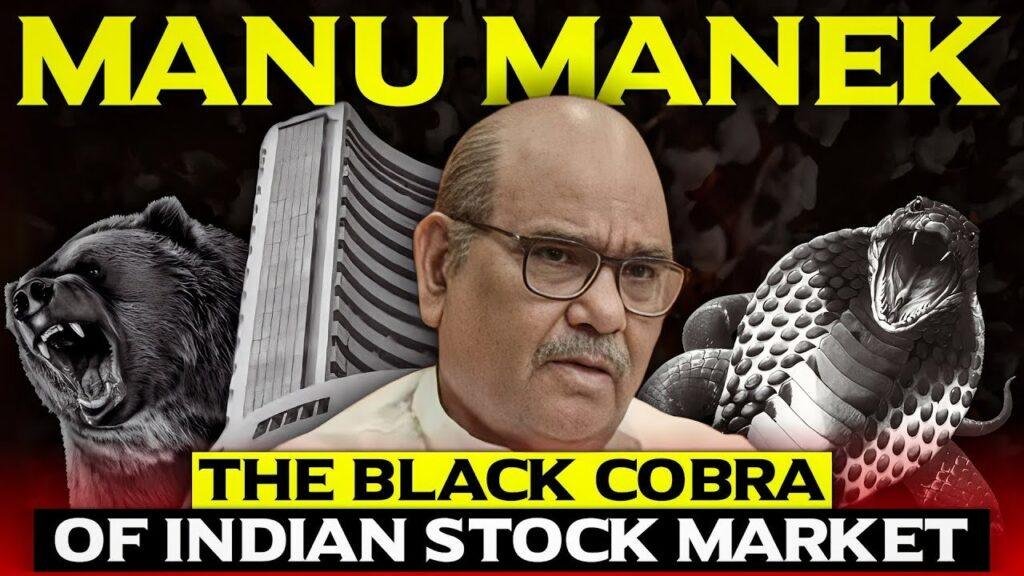
Manu Manek Mundra – The Great Short Seller of the Indian Stock Market

Manu Manek, often referred to as the “Black Cobra” of Dalal Street, was one of the most influential and feared traders in the Indian stock market during the 1970s and 1980s. Known for his bear cartel operations and aggressive short-selling strategies, Manek played a pivotal role in shaping stock market trends before the arrival of Harshad Mehta, the “Big Bull”. Who Was Manu Manek? Birth and Early Life Manu Manek was born between 1948 and 1952 in Kolkata, India, into a Marwari family. His early life remains largely undocumented, but it is believed that he completed his graduation in commerce or finance before stepping into the world of stock trading. His deep understanding of the stock market and trading mechanics soon made him a dominant figure in Bombay Stock Exchange (BSE), where he eventually formed the infamous Bear Cartel. How Manu Manek Built His Stock Market Empire? The Rise of the Bear Cartel Manu Manek controlled stock prices through short-selling techniques and speculative trades, often forcing companies to buy back their stocks at inflated prices. His group, famously called the Bear Cartel, included future stock market legends like: His strategies revolved around short-selling, a technique where stocks are sold at higher prices and bought back at lower prices, leading to massive profits. Clash with Harshad Mehta Manu Manek’s dominance over the market was challenged by Harshad Mehta, a strong bull trader who believed in inflating stock prices rather than betting against them. The clash between Manu Manek and Harshad Mehta led to some of the biggest stock market battles in Indian history. While Manu Manek focused on bringing stock prices down, Mehta countered it with market rigging and artificial price inflation. This battle eventually led to the 1992 Harshad Mehta Scam, which was exposed by Sucheta Dalal. Books & Articles Written on Manu Manek Although Manu Manek never wrote books himself, he has been mentioned in several financial books and stock market articles. Some of the most notable books include: Major Investments & Business Strategies Manu Manek was a master of short-selling and market manipulation. His major investments were primarily in: His success came from predicting stock market movements before others and using fear as a tool to gain profits. Personal Life, Wife & Family Unlike many prominent stock market figures, Manu Manek kept his personal life entirely private. There is no public record of his wife, children, or family background. Some financial analysts believe that his secrecy helped him stay ahead in the stock market, as he was not publicly accountable for his actions. Key Achievements & Legacy Even though Manu Manek was overshadowed by Harshad Mehta’s rise, his impact on stock trading strategies in Indiaremains legendary. Explore More: Top Investors of India Final Thoughts on Manu Manek Manu Manek remains a mysterious yet legendary figure in the Indian stock market. While Harshad Mehta became famous through scams and media coverage, Manek operated secretly, influencing the biggest stock trades without public attention. His strategies still influence modern-day stock traders, short-sellers, and hedge fund managers. Whether seen as a villain or a genius, his legacy in Dalal Street is undeniable. FAQs About Manu Manek Q1: Why was Manu Manek called the Black Cobra?A: He was feared for his aggressive short-selling strategies, which destroyed stock prices like a cobra’s deadly bite. Q2: Who was Manu Manek’s biggest rival?A: His biggest challenge came from Harshad Mehta, who countered his bear cartel with a bullish stock market approach. Q3: What was Manu Manek’s net worth?A: At the time of his death, his net worth was estimated to be $50 million.Q4: Did Manu Manek write any books?A: No, but he has been featured in books like The Scam by Sucheta Dalal.

cms info systems share
Blog

How to Make Passive Income: Best Passive Income Generating Strategies

In today’s fast-paced world, having multiple income streams is a smart financial move. Passive income is one of the best ways to secure financial stability and achieve financial freedom. Unlike active income, where you exchange time for money, passive income allows you to earn with minimal ongoing effort. If you’re looking for the best passive income strategies, this blog will guide you through proven methods to generate wealth effortlessly. What is Passive Income? Passive income is money earned with little to no active involvement after the initial effort. It includes earnings from investments, rental income, digital products, and more. The key to passive income is automation and scalability. Best Passive Income Strategies 1. Stock Market Investments (Dividends & Index Funds) Investing in the stock market can be a great way to generate passive income. You can earn money through: Pro Tip: Invest in dividend-paying blue-chip stocks or growth-oriented mutual funds for consistent returns. 2. Real Estate Investments (Rental Income & REITs) Real estate has always been a top choice for passive income. You can make money through: Pro Tip: Choose properties in high-demand locations for better appreciation and rental yields. 3. Create & Sell Digital Products With the rise of the digital economy, selling digital products is a scalable passive income strategy. Some profitable options include: Pro Tip: Automate sales and marketing to maximize earnings without active involvement. 4. Affiliate Marketing Affiliate marketing allows you to earn commissions by promoting products and services. Join affiliate programs like: Pro Tip: Start a blog, YouTube channel, or social media page to drive organic traffic and boost earnings. 5. Blogging & YouTube Monetization If you enjoy writing or creating videos, starting a blog or YouTube channel can generate passive income through: Pro Tip: Focus on SEO-friendly content to attract organic traffic and maximize revenue. 6. Peer-to-Peer Lending (P2P Lending) P2P lending platforms allow you to lend money to individuals or businesses and earn interest. Popular platforms include: Pro Tip: Diversify your investments across multiple borrowers to reduce risk. 7. Investing in Cryptocurrency & Staking Crypto investments can be volatile but offer good passive income opportunities: Pro Tip: Only invest what you can afford to lose and research the market before making decisions. 8. Create a Mobile App or Software If you have programming skills, developing an app or software can generate ongoing income through: Pro Tip: Target trending niches like AI tools, fitness apps, or educational platforms. 9. Dropshipping & E-commerce Automation Start an online store without holding inventory. Platforms like Shopify and WooCommerce make it easy to run automated e-commerce businesses. Pro Tip: Focus on trending products and effective digital marketing for consistent sales. 10. Royalty Income from Intellectual Property If you’re a creative person, you can earn passive income through: Final Thoughts: Which Passive Income Strategy is Best for You? The best passive income strategy depends on your skills, interests, and risk appetite.Start your passive income journey today and achieve financial freedom! 🚀

Top stock exchanges India 2025,
Blog

Top 5 Major Stock Exchanges in India in 2025: Pillars of the Financial Ecosystem

India’s financial markets have solidified their global presence, with a combined market capitalization exceeding $5 trillion as of 2025. At the core of this growth are the country’s major stock exchanges, facilitating trading in equities, derivatives, commodities, and more. In this blog, we explore the top 5 stock exchanges in India in 2025, detailing their names, major indices, establishment dates, leadership, sponsors, market caps, share prices, listed companies, broker associates, segments, daily turnovers, branches, employees, and websites. A comparison table is included to help you understand their unique roles. Whether you’re an investor or market enthusiast, dive into India’s trading powerhouses! 1. National Stock Exchange (NSE) NSE reigns as India’s largest exchange, dominating derivatives trading in 2025. 2. Bombay Stock Exchange (BSE) BSE’s legacy and vast listings make it a cornerstone of India’s market in 2025. 3. Multi Commodity Exchange (MCX) MCX leads India’s commodity trading, a critical segment in 2025. Also Read: Aniruddha Bahal- The Investigating Journalist 4. National Commodity & Derivatives Exchange (NCDEX) NCDEX remains vital for India’s agri-commodity trading in 2025 5. Metropolitan Stock Exchange (MSE) MSE caters to niche segments but lags behind larger peers in 2025. Comparison Table: Top 5 Stock Exchanges in India (2025) Criteria NSE BSE MCX NCDEX MSE Name of Exchange National Stock Exchange Bombay Stock Exchange Multi Commodity Exchange NCDEX Metropolitan Stock Exchange Major Index Nifty 50 Sensex MCXCOMDEX Dhaanya SX40 Date of Establishing Nov 1992 Jul 9, 1875 Nov 10, 2003 Apr 23, 2003 2008 Chairman / CEO G.C. Chaturvedi / A. Chauhan P.K. Banerjee / S. Ramamurthy Praveen DG / P.S. Reddy Arun Raste D. Mehrotra / S. Bhansali Sponsor Group Financial institutions Broker-driven, now diverse Financial Tech (orig.) NSE, LIC, NABARD MCX (orig.), diverse Market Cap ₹419.09L Cr (listed cos.) ₹440L Cr (listed cos.) ₹32,000 Cr (own) Unlisted Negligible Share Price if Listed N/A ₹3,900 ₹6,300 N/A N/A Companies Listed ~2,400 ~5,500 N/A (commodities) N/A (commodities) ~300 Broker Associates ~1,200 ~1,400 ~700 ~600 ~200 Major Segment Equity, Derivatives Equity, SMEs Commodity Derivatives Agri Derivatives Equity, Currency Daily Equity Turnover ₹1.2L Cr ₹8-10K Cr N/A N/A ₹10-20 Cr Daily Derivatives Turnover ₹75-80L Cr ₹2-3L Cr ₹1-1.5L Cr ₹5-7K Cr ₹100-200 Cr Daily Commodity Turnover N/A N/A Included in deriv. Included in deriv. N/A Daily Currency Turnover ₹20K Cr ₹1K Cr N/A N/A ₹500 Cr Daily Interest Rate Turnover ₹500 Cr Negligible N/A N/A ₹50 Cr Total Branches 5 6 4 3 2 Total Employees ~600 ~500 ~300 ~200 ~100 Website nseindia.com bseindia.com mcxindia.com ncdex.com msei.in Why These Exchanges Lead in 2025 These top 5 stock exchanges—NSE, BSE, MCX, NCDEX, and MSE—drive India’s financial markets with distinct strengths. Choosing Your Trading Platform Check their websites for real-time data and trading options. Conclusion The top 5 stock exchanges in India in 2025—NSE, BSE, MCX, NCDEX, and MSE—are the engines of India’s financial growth. From NSE’s derivatives dominance to MCX’s commodity leadership, they cater to diverse investor needs. Ready to trade? Explore these exchanges and tap into India’s booming markets today!

Aniruddha Bahal
Blog

Aniruddha Bahal- The Investigating Journalist

Aniruddha Bahal is a prominent figure in Indian journalism, best known as the founder and editor-in-chief of Cobra Post, a platform famous for its sting operations. He co-founded Tehelka in 1999, another investigative news outlet, before launching Cobra Post in 2005 to continue exposing corruption and wrongdoing. What Did He Achieve? Bahal’s key achievements include exposing match-fixing in cricket, conducting Operation Westend to reveal defense procurement corruption, and leading a 2005 sting that resulted in the expulsion of 11 MPs from Parliament for accepting bribes—the largest such expulsion in India’s history. His book “Bunker 13” (2003) won the Bad Sex in Fiction Award, and he also hosted “The Tony B Show” on Channel V. It’s surprising that a hard-hitting journalist like Bahal also ventured into fiction, with “Bunker 13” gaining international attention for its controversial content and winning a literary award, showcasing his diverse talents. Personal Life and Net Worth Bahal keeps his personal life, including details about his wife and family, private. His net worth is estimated at INR 5-10 crore as of 2024, reflecting his earnings from journalism and book sales. Aniruddha Bahal, often dubbed “The King of Sting,” is a pivotal figure in Indian investigative journalism, renowned for his fearless exposés and the founding of Cobra Post. This comprehensive survey note delves into his life, career, and legacy, providing a detailed analysis for those interested in media, journalism, and public accountability. Background and Early Life Aniruddha Bahal was born in 1967 in Allahabad, India, a city with a rich historical and cultural backdrop that likely influenced his later career in uncovering societal truths. Details about his early education are sparse, but it is known that he is a university graduate, which equipped him with the analytical skills necessary for his journalistic endeavors. He moved to Delhi in 1991, marking the beginning of his professional journey in journalism, initially working for publications like India Today and Outlook. Career Development and Founding of Cobra Post Bahal’s career took a significant turn when he co-founded Tehelka in 1999, alongside Tarun Tejpal, focusing on investigative journalism and sting operations. Tehelka gained fame for its exposés, such as the match-fixing scandal in international cricket and Operation Westend, which uncovered corruption in defense procurement. These operations highlighted systemic issues, earning Bahal the nickname “The Most Feared Reporter in India” by The Independent. In 2005, Bahal founded Cobra Post, continuing his mission of investigative journalism. Cobra Post has been instrumental in several high-profile breaks, including Operation Duryodhana in 2005, which exposed 11 MPs accepting bribes for tabling questions in Parliament, leading to their expulsion—the largest in India’s parliamentary history. Other notable investigations include Operation Red Spider (2013), revealing money laundering by major Indian banks, and Operation Blue Virus, uncovering IT firms using fake social media identities to boost politicians’ popularity. Literary Contributions Beyond journalism, Bahal is an author, with his most notable work being “Bunker 13” (2003), a spy thriller set in modern India. The book, featuring a complex protagonist named MM, won the Literary Review’s Bad Sex in Fiction Award, reflecting its controversial and bold narrative style. His second book, “A Taste for Trouble: Memories from Another Time” (2021), is a memoir that dives into his experiences as an investigative journalist, offering insights into the challenges and ethics of sting operations. Public Presence and Media Engagement Bahal maintains a low profile on social media, with no public X handle or YouTube channel, reflecting his preference for letting his work speak for itself. His personal website, http://aniruddhabahal.com, serves as a platform for information about his books and profile, but it does not feature educational blogs. Cobra Post, however, has its own website, https://cobrapost.com, which archives his investigative work and continues to engage the public on issues of corruption and governance. Financial Overview As of 2024, Bahal’s net worth is estimated at INR 5-10 crore, derived from his earnings as a journalist, editor, and author. This estimation, while not officially confirmed, aligns with the typical financial standing of successful journalists in India, considering his book sales and the non-profit nature of Cobra Post, which relies on donations and grants for operations. Personal Life Bahal is notably private about his personal life, with no publicly available information about his wife or family. This discretion is common among journalists who face significant public scrutiny, especially given the controversial nature of his work. His focus remains on professional endeavors, ensuring his personal life does not overshadow his journalistic impact. Key Achievements and Legacy Bahal’s achievements are numerous and impactful: His work has not only influenced public policy but also inspired a new generation of journalists to pursue accountability, making him a cornerstone of Indian media. Also Read: NPS vs Mutual Funds: Which is Better for Retirement Planning? Comparative Analysis Compared to contemporaries like Sucheta Dalal, who focused on financial journalism, Bahal’s work is more aligned with political and corporate exposés, emphasizing sting operations. His approach, often controversial, has led to legal battles, such as the defamation case with Major General M S Ahluwalia, where he and Tehelka were ordered to pay Rs 2 crore, highlighting the risks of investigative journalism. Conclusion Aniruddha Bahal’s journey from a journalist at India Today to the founder of Cobra Post exemplifies dedication to uncovering truth in a challenging media landscape. His legacy is one of courage, innovation, and impact, making him a vital figure for anyone studying journalism or public accountability in India. Table: Summary of Key Details Category Details Name Aniruddha Bahal Designation Founder and Editor-in-Chief, Cobra Post Organisation / Company Cobra Post X Handle Not publicly active YouTube Channel None Website http://aniruddhabahal.com Net Worth (2024) Estimated INR 5-10 crore Birth and Early Life Born 1967, Allahabad; University graduate Books Written “Bunker 13” (2003), “A Taste for Trouble” (2021) Major Investments Not publicly known Personal Life Private, no public details on wife or family Key Achievements Co-founded Tehelka, founded Cobra Post, exposés

nps vs mutual fund
Blog

NPS vs Mutual Funds: Which is Better for Retirement Planning?

Retirement planning is crucial to ensure financial independence and maintain your lifestyle post-retirement. In India, two popular instruments dominate this space: the National Pension System (NPS) and Mutual Funds (MFs). Both offer unique advantages, but understanding their differences is key to making an informed decision. Let’s dive into their features, compare them, and determine which suits your retirement goals. What is the National Pension System (NPS)? The NPS is a government-backed, voluntary retirement savings scheme regulated by the Pension Fund Regulatory and Development Authority (PFRDA). It emphasizes disciplined, long-term savings with a structured withdrawal plan. Key Features of NPS: What are Mutual Funds (MFs) for Retirement? Mutual Funds pool money from investors to invest in equities, debt, or hybrid assets. Retirement-focused MFs are solution-oriented schemes with lock-in periods or systematic withdrawal plans (SWPs). Key Features of Retirement MFs: NPS vs Mutual Funds: Comparison Table Feature NPS Mutual Funds Regulator PFRDA SEBI Asset Allocation Auto-adjusted based on age Self-managed or advisor-guided Lock-in Period Until retirement (60 years) 5 years (retirement funds) Tax Benefits ₹2 lakh under 80CCD(1B) + employer contributions ₹1.5 lakh under 80C (ELSS) Withdrawal Rules 60% tax-free; 40% annuity (taxable) Full withdrawal (taxable as per slab) Expense Ratio 0.09% (max) 1-2% Returns (10-Year Avg) Equity: ~14%, Debt: ~8-9% Equity: 10–12%, Debt: 7–8% Risk Moderate (auto-rebalancing) High (equity) to Low (debt) Annuity Requirement Mandatory (40% corpus) Optional Which is Better: NPS or Mutual Funds? Choose NPS if: Choose Mutual Funds if: Verdict: For risk-averse investors, NPS is ideal due to its stability, tax benefits, and forced discipline. Aggressive investors may prefer Mutual Funds for higher growth potential. A balanced portfolio combining both can leverage NPS’s safety and Mutual Funds’ flexibility. Conclusion Both NPS and Mutual Funds have distinct roles in retirement planning. While NPS offers a cost-effective, regulated pathway with tax perks, Mutual Funds provide versatility and growth opportunities. Assess your risk tolerance, liquidity needs, and long-term goals to decide—or blend both for a diversified retirement corpus.

solar sector in india
Blog

Solar Sector in India: An Ocean of Opportunity for Investors and the Environment

India’s solar energy sector is shining brighter than ever, emerging as a cornerstone of the nation’s clean energy transition. With ambitious renewable energy targets, robust government support, and rapid technological advancements, the solar industry presents a vast ocean of opportunities for investors, businesses, and the environment. As the world shifts toward renewable energy, India stands at the forefront, aiming to achieve 500 GW of renewable energy capacity by 2030, with solar power contributing 280 GW. This blog explores the growth drivers, challenges, and top companies poised to lead India’s solar revolution. Why Solar Energy is India’s Brightest Bet? India’s solar sector has witnessed a meteoric rise over the past decade, growing at a CAGR of 23%. The country now ranks fourth globally in solar power capacity, driven by: 1. Government Initiatives 2. Falling Technology Costs Solar panel prices have plummeted due to economies of scale and innovation, making solar energy competitive with fossil fuels. 3. Corporate Sustainability Goals Companies like Reliance Industries and Adani Green Energy are investing heavily in solar projects to meet ESG targets. 4. Energy Storage Solutions Advances in battery storage mitigate solar’s intermittency issues, enhancing reliability. Challenges to Navigate While the sector’s prospects are bright, challenges remain: Addressing these hurdles will be critical to sustaining growth. Top 5 Solar Companies Leading India’s Green Revolution Based on financial performance, growth metrics, and strategic projects, here are the top solar companies to watch: 1. Adani Green Energy Ltd. 2. Tata Power Solar Systems Ltd. 3. Waaree Renewable Technologies Ltd. 4. JSW Energy Ltd. 5. KPI Green Energy Ltd. Investor Insights: Balancing Growth and Valuation While solar stocks like Premier Energies (3,179% 3-year return) and Waaree Renewable Technologies show explosive growth, valuations require caution. For instance, Premier trades at a PE ratio of 2,442x, signaling overvaluation. Investors should focus on companies with: Conclusion India’s solar sector is not just an energy solution but a strategic investment avenue. With the right mix of policy support, private investment, and technological innovation, the industry is set to power India’s sustainable future. Investors should prioritize fundamentally strong companies with clear growth trajectories, avoiding overhyped stocks. As the sector evolves, staying informed through resources like Dalal Street Investment Journal will be key to navigating this dynamic landscape.

sme ipo
Blog

SME IPO: A Unique Investment Opportunity – Pros, Cons, and Who Should Invest?

Small and Medium Enterprises (SMEs) play a crucial role in India’s economic growth, and with the introduction of SME IPOs, these companies now have a dedicated platform to raise capital from public investors. SME IPOs offer unique opportunities but also come with inherent risks. In this blog, we will explore what SME IPOs are, their uniqueness, advantages, disadvantages, and who should invest or avoid them. What is an SME IPO? An SME IPO (Initial Public Offering) is when a small or medium-sized enterprise lists its shares on a stock exchange to raise funds from public investors. Unlike mainboard IPOs, SME IPOs are launched on platforms like the NSE Emerge and BSE SME exchanges, which are specifically designed for smaller companies. Uniqueness of SME IPOs Pros of Investing in SME IPOs Cons of Investing in SME IPOs Who Should Invest in SME IPOs? Who Should Avoid SME IPOs? Final Thoughts SME IPOs present a lucrative opportunity for investors looking to participate in early-stage businesses. However, they come with inherent risks that require careful consideration. If you have the expertise, patience, and risk appetite, SME IPOs can be a great addition to your portfolio. Otherwise, it’s best to stick with mainboard IPOs and well-established stocks.

Scroll to Top