• About WordPress
    • WordPress.org
    • Documentation
    • Learn WordPress
    • Support
    • Feedback
  • Log In
  • Register
  • Home
  • Courses
    • Share Market
      • One To One Mentorship
      • Chartered Stock Trading Expert
      • Technical Analysis Course
      • Advance Derivatives / FNO Trading Course
      • Algo Trading Course
      • Arbitrage Trading Course
      • Fundamental Analysis Course
      • Options Trading Course
      • Stock Market Astrology
      • Diploma in Stock Trading
      • Commodity Trading Course
      • Currency Trading Course
    • Career Oriented
      • Chartered Financial Market Expert- FMX
      • NISM Certifications Training
      • Mutual Fund Certification
      • Certified Financial Planner – CFP
      • Diploma in Banking & Finance
    • Wealth Management
      • BASIC
  • Online Courses
    • Pro Trading Course
    • Technical Analysis Course Full
    • Professional Trading Setups
    • Candlestick Bible Course
  • About Us
    • Know Your Mentors
    • Group Company
  • NISM Education
    • NISM Certifications
    • NISM Books
    • Free Financial Literacy Seminar
    • Important Links
  • Trading School
    • Live Stock Selection Sheet
    • Options Trading School
    • Trading Tools Kit
    • Stock Trading Competition
  • Training Partner
    • Training Partner Form
    • Franchise
  • Placement
    • Placement Booster Program
    • How to Make Career in Stock Market
  • Contact
  • Blog
  • +91 8882000233
  • (+91) 8168573253
  • (+91) 7015237224
  • info@isfm.co.in
  • Online Class
Facebook Twitter Linkedin Instagram Youtube
Free Demo
ISFM
  • Home
  • Courses
    • Share Market
      • One To One Mentorship
      • Chartered Stock Trading Expert
      • Technical Analysis Course
      • Advance Derivatives / FNO Trading Course
      • Algo Trading Course
      • Arbitrage Trading Course
      • Fundamental Analysis Course
      • Options Trading Course
      • Stock Market Astrology
      • Diploma in Stock Trading
      • Commodity Trading Course
      • Currency Trading Course
    • Career Oriented
      • Chartered Financial Market Expert- FMX
      • NISM Certifications Training
      • Mutual Fund Certification
      • Certified Financial Planner – CFP
      • Diploma in Banking & Finance
    • Wealth Management
      • BASIC
  • Online Courses
    • Pro Trading Course
    • Technical Analysis Course Full
    • Professional Trading Setups
    • Candlestick Bible Course
  • About Us
    • Know Your Mentors
    • Group Company
  • NISM Education
    • NISM Certifications
    • NISM Books
    • Free Financial Literacy Seminar
    • Important Links
  • Trading School
    • Live Stock Selection Sheet
    • Options Trading School
    • Trading Tools Kit
    • Stock Trading Competition
  • Training Partner
    • Training Partner Form
    • Franchise
  • Placement
    • Placement Booster Program
    • How to Make Career in Stock Market
  • Contact
  • Blog

    Blog

    • Home
    • Blog
    • Blog
    • A Smarter Way to Decide What to Do With Your Fixed Deposit.

    A Smarter Way to Decide What to Do With Your Fixed Deposit.

    • Posted by Mr. Sushil Alewa
    • Categories Blog
    • Date December 29, 2025
    • Comments 0 comment
    _WWW.isfm_.co_.in_.png December 28, 2025 343 KB 1280 by 720 pixels Edit Image Delete permanently

    With fixed deposit (FD) rates becoming attractive again, the real decision is no longer about catching the highest rate. It is about managing reinvestment risk, ensuring steady cash flow, and aligning deposits with real-life financial needs.

    After years of low returns, fixed deposits are once again drawing attention—especially from conservative investors and retirees. But instead of asking “Is this the best time to lock in?”, a smarter question is:
    How should I structure my fixed deposits so my money works smoothly over time?

    Why Fixed Deposits Are Back in Focus

    Rising policy rates have pushed bank FD rates higher across most tenures. Compared to recent years, today’s rates offer something many savers value deeply—certainty.

    For individuals who depend on predictable income, such as retirees or those planning near-term expenses, fixed deposits provide visibility that market-linked products cannot always offer. This reliability is why FDs remain a core part of many financial plans, despite changing market cycles.

    However, interest rates rarely move in straight lines. They can remain elevated longer than expected or soften gradually. Trying to perfectly time this cycle often leads to rushed or regret-filled decisions.

    The Risk Most FD Investors Ignore

    The biggest risk with fixed deposits is not booking them too early.
    It is reinvestment risk.

    Reinvestment risk occurs when your FD matures during a lower interest-rate phase, forcing you to reinvest at less attractive rates. If all your deposits mature at the same time, this risk hits your entire corpus at once.

    That’s why the real decision is not when to invest, but how much to invest and for how long.

    How to Choose the Right FD Tenure (Without Rate Guesswork)

    A practical approach is to align FD tenures with your financial timeline:

    • Short-term needs (1–2 years):
      Money required soon should stay liquid. Short-term fixed deposits or flexible savings options work best here.
    • Medium-term goals (3–5 years):
      If current rates are comfortable for you, locking in a portion for medium tenures can make sense. The objective is not maximising returns, but securing stability.
    • Long-term surplus:
      Instead of committing everything at once, spreading investments across multiple maturities reduces regret and improves flexibility.

    For deeper understanding of aligning savings with financial goals, many investors combine FDs with structured learning through programs like a
    👉 stock market investment course
    to understand where stability ends and growth instruments begin.

    Why FD Laddering Is Often the Smarter Choice

    FD laddering means dividing your money across multiple fixed deposits with different maturity dates—say 1, 2, 3, and 5 years.

    This strategy offers three major advantages:

    1. Reduced reinvestment risk – not all money matures during low-rate periods
    2. Regular liquidity – funds become available periodically
    3. Lower emotional stress – no pressure of “getting timing wrong”

    Laddering works particularly well for retirees and conservative investors who value smooth cash flow over rate speculation.

    Should You Wait for Even Higher FD Rates?

    Waiting only makes sense if:

    • You need near-term liquidity, or
    • Your money is already earning a competitive short-term return

    If funds are sitting idle or earning very low interest, waiting for marginally higher FD rates may actually reduce overall returns due to lost time.

    A balanced approach works best: lock part of your money today and keep some flexibility for future opportunities.

    For retirees, the decision is simpler. Covering essential expenses through fixed deposits provides peace of mind that no volatile investment can replicate.

    The Bottom Line

    Fixed deposits are relevant again—but only when used wisely.

    Instead of trying to predict interest-rate movements:

    • Match FD tenures with actual cash-flow needs
    • Spread deposits across maturities to manage reinvestment risk
    • Accept that certainty with “good enough” returns often beats perfect timing

    Used thoughtfully, fixed deposits remain a powerful tool for financial stability.

    FAQs

    Should I invest all my money in long-term fixed deposits now?

    No. Spreading deposits across different maturities improves flexibility and reduces reinvestment risk.

    Are short-term FDs better than long-term ones?

    Short-term FDs offer liquidity but expose you to reinvestment risk. A mix of short and medium tenures is usually more effective.

    Are fixed deposits suitable for long-term wealth creation?

    FDs are best for capital safety and predictable income. For long-term growth and inflation protection, they should be combined with other investment instruments.

    Also Read: What Are ESG Mutual Funds in India and Should You Invest in Them in 2025?

    Mr. Sushil Alewa

    Mr. Sushil Alewa (SEBI Registered Research Analyst, MBA, CFP ) having 12 year work experience in Trading, Training, and consultancy in the area of Securities / Financial Market mainly Investment management
    industry, Technical Analysis of Stock Market.
    He is Empanelled as 'Certified Trainer of Financial Education with SEBI & IICA - MCA (Securities & Exchange Board of India), the regulating authority, Govt. of India for the securities market; Involved in conducting workshops on 'Financial Literacy to various groups such as students, company executives, middle-income groups etc. Have individually conducted more than 1600+ Investor Awareness workshops on financial literacy in the last 10 years, with reputed Universities, management colleges, corporate houses and top schools.

    Previous post

    What Are ESG Mutual Funds in India and Should You Invest in Them in 2025?

    December 29, 2025

    Next post

    Daily vs Monthly vs Quarterly SIP: Same Investment, Different Result?
    December 30, 2025

    You may also like

    how to hedge your portfolio in war crisis
    How to Hedge Your Portfolio in War Crisis: Iran-US Conflict 2026 Guide
    18 March, 2026
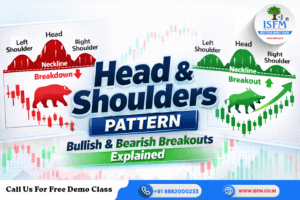
    head and shoulders pattern
    What is Head and Shoulders Pattern – Bullish & Bearish Breakouts Explained
    17 March, 2026
    Top 5 Bullish Candlestick Patterns in 2026
    Top 5 Bullish Candlestick Patterns to Spot Winning Stocks in 2026
    14 March, 2026

    Leave A Reply

    Your email address will not be published. Required fields are marked *

    Popular Courses

    Diploma in Stock Trading

    Diploma in Stock Trading

    ₹60,000.00 ₹40,000.00
    Chartered Stock Trading Expert

    Chartered Stock Trading Expert

    ₹60,000.00 ₹50,000.00
    Chartered Financial Market Expert- FMX

    Chartered Financial Market Expert- FMX

    ₹80,000.00 ₹60,000.00

    Latest Posts

    Nikhil Kamath
    Nikhil Kamath: Zerodha’s Co-Founder, Investment Mogul & Philanthropic Powerhouse
    03Jun2025
    impact of Union Budget on the Stock Market
    Impact of the Union Budget 2024 on the Stock Market: Key Highlights
    23Jul2024
    impact of Union Budget on the Stock Market
    ISFM – Best Stock Market Training School – Gurgaon is looking for Trainer Empanelment at pan India level
    04Feb2023

    Subscribe our Newsletter

    About ISFM

    ISFM has become a center for excellence of  stock market training in Gurgaon, Delhi / NCR. We have a very well designed 6 stage wise courses on securities market which covers from Equity, Derivatives, Commodity, Currency, Mutual Funds and Technical Analysis. 

    Company
    • Blog
    • About Us
    • Contact
    • Become a Trainer
    Quick Links
    • All Courses
    • Option Trading School
    • Free Literacy Workshop
    • Study Material
    Edit widget and choose a menu
    Contact Us
    • 0124-2200689
    • (+91) 8168573253
    • (+91) 8882000233
    • (+91) 7015237224
    • Email: info@isfm.co.in
    Recent Post
    how to hedge your portfolio in war crisis

    How to Hedge Your Portfolio in War Crisis: Iran-US Conflict 2026 Guide

    March 18, 2026

    International School of Financial Market – ISFM © 2025. All Rights Reserved.

    WhatsApp us