
If you’ve searched for a stock market course recently, you’ve probably seen hundreds of advertisements promising to help you “master the market in 30 days” or “become a profitable trader with one strategy.” At the same time, YouTube and blogs are filled with creators claiming that everything you need to know is available for free.
So, should you actually pay for a stock market course?
The answer isn’t simply yes or no.
A good stock market course can provide structure, practical knowledge, and guidance that free resources often cannot. However, not every paid course is worth the money, and not everyone needs one to become a successful investor.
Whether you’re planning to invest, trade, or build a career in finance, this guide will help you decide if enrolling in a stock market course is the right choice for you in 2026.
What Do Stock Market Courses Actually Teach?
A quality stock market course focuses on helping learners understand how financial markets work rather than providing stock tips or guaranteed profit strategies.
Most comprehensive courses include:
- Basics of stocks, stock exchanges, indices, Demat accounts, and brokers
- Fundamental analysis to evaluate businesses and financial statements
- Technical analysis using charts, indicators, trends, and price action
- Risk management, position sizing, and capital protection
- Trading psychology and emotional discipline
- Portfolio management and investment planning
For example, learners interested in chart-based trading often benefit from a dedicated Technical Analysis Course that provides hands-on training in reading market trends and interpreting price movements. Learn more here: Technical Analysis Course
The best courses teach a systematic process—not shortcuts or guaranteed profits.
When a Stock Market Course Is Worth It
1. You Want a Structured Learning Path
Learning through random YouTube videos can become confusing because topics are often disconnected.
A structured course follows a logical progression from the basics to advanced concepts, making learning more efficient.
If you’re just getting started, a comprehensive Stock Market Investment Course can provide this roadmap. Explore one here: Stock Market Investment Course
2. You Want to Build a Career in Finance
If you’re interested in careers such as:
- Equity Research
- Wealth Management
- Trading
- Financial Advisory
- Investment Analysis
a structured course can build practical skills that employers value.
3. You Value Mentorship
One of the biggest advantages of paid learning is access to experienced mentors.
Being able to ask questions, discuss mistakes, and receive constructive feedback can significantly accelerate your learning compared to studying alone.
4. You Learn Better with Guidance
Many beginners spend months trying different strategies without understanding why they fail.
A good mentor can help you avoid common mistakes related to:
- Risk management
- Position sizing
- Emotional trading
- Poor trade planning
Learning these concepts early can save both time and money.
5. You Prefer Curated, Reliable Content
The internet contains thousands of opinions about the stock market, but not all of them are accurate or useful.
A quality course filters unnecessary information and focuses on concepts that have long-term educational value.
When a Course May NOT Be Worth It
A paid course isn’t always the right investment.
It may not be worthwhile if:
1.) You Expect Quick Riches
No legitimate educator can guarantee profits.
Anyone promising “100% winning trades” or “daily guaranteed income” should be treated with caution.
2.) You Aren’t Ready to Practice
Watching videos alone won’t make you successful.
You must:
- Study consistently
- Review your trades
- Learn from mistakes
- Practice disciplined execution
You Only Want Long-Term Investing
If your goal is simply investing in diversified index funds through monthly SIPs, free educational resources, books, and investor education portals may be sufficient.
The Course Is Heavy on Marketing but Light on Education
Watch out for warning signs such as:
- Luxury lifestyle promotions
- Constant profit screenshots
- Pressure to “join today”
- No detailed syllabus
- Unrealistic return claims
Education should always come before sales.
Paid Course vs Free Resources: What’s the Real Difference?
| Free Resources | Paid Courses |
| Free to access | Require investment |
| Excellent for learning basics | Structured curriculum |
| Huge variety of content | Curated learning path |
| Learn at your own pace | Mentor guidance |
| Quality varies significantly | Often includes assignments and community support |
| Easy to become overwhelmed | Better accountability and consistency |
A practical approach for most beginners is to start with free educational resources and then consider a paid course once they become serious about investing or trading.
How to Choose a Good Stock Market Course
Before enrolling, use this checklist:
- Clear syllabus covering fundamentals, technical analysis, risk management, and psychology
- Experienced instructors with genuine market experience
- Focus on education instead of stock tips
- Transparent pricing with no hidden charges
- Genuine student reviews with detailed feedback
- Live doubt-solving sessions or mentor support
- Practical assignments and real-market examples
Those interested in becoming active traders may also explore specialised programmes such as the Chartered Stock Trading Expert (CSTX) course to develop practical trading skills. Learn more here: Chartered Stock Trading Expert (CSTX) Course
Alternatives to Expensive Courses
If you’re not ready to invest in a paid course, there are still many effective ways to learn:
- Read reputed books on investing and trading.
- Use free educational resources from recognised exchanges and investor education platforms.
- Practise using paper trading before risking real money.
- Invest small amounts to gain practical experience.
- Join serious investor communities focused on learning rather than stock tips.
Practical experience is one of the best teachers in the financial markets.
A Simple Decision Framework
1.) If you’re a complete beginner:
Start with free resources. Once you’re confident that you want to learn seriously, consider a structured beginner course.
2.) If you know the basics but keep making mistakes:
An advanced course focused on risk management, trading psychology, and execution can provide significant value.
3.) If you’re a long-term investor:
Books, quality blogs, and free educational resources may be enough for your needs.
4.) If you want a career in financial markets:
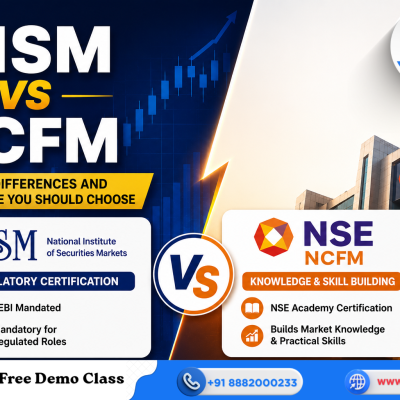
Structured education combined with recognised certifications such as NISM can strengthen your knowledge and improve career opportunities. Learn more about NISM programmes here: NISM Training
Conclusion: A Course Doesn’t Make You Profitable—You Do
So, is a stock market course worth it?
For many learners, the answer is yes—provided the course offers structured education, practical guidance, and realistic expectations. A good course can save time, reduce beginner mistakes, and help build confidence.
However, no course can replace the habits that lead to long-term success:
- Discipline
- Risk management
- Patience
- Continuous learning
- Consistent practice
Treat a stock market course as an investment in your skills rather than a shortcut to profits. Choose wisely based on your goals, learning style, and commitment to improving over time.
Frequently Asked Questions (FAQs)
1. Is a stock market course worth it for beginners?
Yes. A structured stock market course can help beginners learn the fundamentals, avoid common mistakes, and understand risk management. However, it’s important to choose a course with a practical curriculum rather than one that makes unrealistic promises.
2. Can I learn the stock market for free?
Yes. There are many free resources available through books, blogs, educational websites, and videos. These are excellent for building a foundation, but many learners eventually prefer a structured course for deeper understanding and mentorship.
3. How do I choose the best stock market course in India?
Look for a course with a detailed syllabus, experienced instructors, practical assignments, transparent pricing, genuine student reviews, and mentor support. Avoid courses that focus mainly on profit claims or lifestyle marketing.
4. Do stock market courses guarantee profits?
No. No legitimate stock market course can guarantee profits. Your success depends on your knowledge, discipline, risk management, and consistent practice in real market conditions.