

What is Head and Shoulders Pattern – Bullish & Bearish Breakouts Explained
The head and shoulders pattern is one of the most widely used reversal patterns in technical analysis India. It helps traders identify when a strong trend is likely to reverse direction. The structure looks like three peaks on a chart: a left shoulder, a higher head, and a right shoulder. Once the neckline support breaks, the trend often changes from bullish to bearish.
This pattern is commonly taught in professional technical analysis training programs where traders learn how to interpret price structures and breakout signals. Historical research in technical trading literature suggests the pattern works with around 70–80% reliability when confirmed by volume and a clear breakout.
In volatile markets such as India, where Nifty chart patterns and large stocks move rapidly, this pattern helps traders spot bullish breakout and bearish breakout opportunities with defined entry and exit levels. Many traders studying a structured technical analysis course learn this pattern as one of the most powerful reversal setups used in stock trading.
Bearish Head and Shoulders Pattern
The bearish head and shoulders pattern usually forms after a strong uptrend and signals that buyers are losing control. The pattern has three peaks:
- Left Shoulder: Price rises and then pulls back slightly.
- Head: Price rallies again and creates a higher peak than the first.
- Right Shoulder: Price rises again but fails to reach the height of the head.
The lows between these peaks create the neckline, which acts as an important support level. A bearish breakout occurs when the price closes below this neckline.
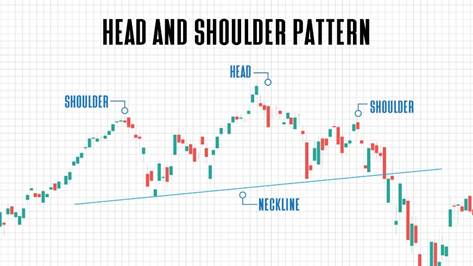
For better reliability, the head is usually about 1.5–2 times higher than the shoulders, and the neckline slope is generally less than 30 degrees. Volume also plays an important role. Volume is typically strong during the left shoulder and head formation but becomes weaker during the right shoulder.
When the neckline breaks with higher volume, the probability of a downward move increases. Understanding such breakout structures is an important part of advanced stock trading courses that focus on real market chart analysis.
A practical NSE example appeared in HDFC Bank during a topping phase. The stock formed three peaks around the ₹1700–₹1750 zone. When the neckline near ₹1650 broke, the pattern confirmed a bearish move.
Traders calculate the target using a simple rule:
Target = Distance between head and neckline projected downward from breakout
Example:
- Head level: ₹1750
- Neckline: ₹1650
- Difference: ₹100
After the breakout below ₹1650, the potential target becomes ₹1550.
Bullish Inverse Head and Shoulders
The inverse head and shoulders pattern is the bullish version of the same structure. It forms after a downtrend and signals that selling pressure is fading. The pattern consists of three lows instead of peaks:
- Left Shoulder: Price drops and then rebounds.
- Head: Price falls deeper than the first low.
- Right Shoulder: Price declines again but forms a higher low.
The highs between these lows form the neckline resistance. A breakout above this level confirms a bullish breakout.
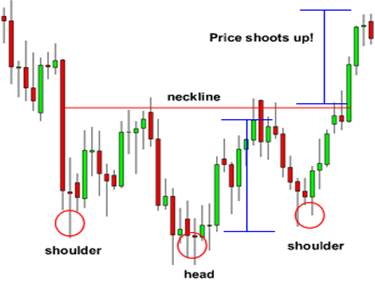
Volume behaviour strengthens the signal. Selling pressure usually decreases toward the right shoulder. When the price breaks above the neckline with increasing volume, it suggests buyers are returning to the market.
A strong example appeared in Tata Motors during a recovery phase. The stock formed an inverse head and shoulders bottom around the ₹450–₹500 range before starting a strong rally. When the price broke above the neckline near ₹520, it triggered a bullish breakout.
The upside target is calculated using the same formula used in bearish setups.
Example:
- Head low: ₹450
- Neckline: ₹520
- Difference: ₹70
After the breakout above ₹520, the projected price target becomes ₹590.
Many traders combine this pattern with derivatives strategies, which is why it is also covered in professional options trading courses and advance derivatives training programs.
Breakout Trading Rules
Trading the head and shoulders pattern requires patience and disciplined risk management. Many traders wait for a confirmed neckline break before entering a trade.
Key trading rules include:
- Enter only after a strong close above or below the neckline.
- Use stop-loss near the right shoulder.
- Calculate target using the head-to-neckline distance projection.
- Maintain a minimum risk-reward ratio of 1:2.
- Check volume expansion during breakout for confirmation.
- Some traders also wait for a neckline retest before entering. If the price breaks the neckline and later retests it successfully, the probability of a sustained move increases.
Learning how to apply these rules practically is an essential part of professional stock market courses designed for traders who want to build consistent strategies in the Indian market.
Conclusion
The head and shoulders pattern is a powerful reversal structure widely used in technical analysis India. By understanding its formation, neckline breakout, and price target calculations, traders can identify high-probability bullish breakout and bearish breakout opportunities.
Consistent practice on historical charts helps build confidence in applying this pattern effectively.
If you found this blog helpful, you may also like: P R Sundar Net Worth