

July 23, 2025

gold loan rules
Blog

RBI Tightens Gold Loan Rules: What Investors Need to Know

On June 6, 2025, the Reserve Bank of India (RBI) released updated guidelines regulating loans against gold and silver assets. The move aims to strengthen risk management in the gold loan sector by placing restrictions on what can be accepted as collateral. The key takeaway: banks and NBFCs can no longer extend loans against gold bars, digital gold, or gold/silver-backed mutual funds and ETFs. Why Did RBI Tighten Gold Loan Rules? The central bank’s primary goal is to curb credit risk and market volatility linked to highly speculative gold-based financial instruments. Assets such as gold bullion, gold and silver ETFs, and mutual fund units are susceptible to sudden price fluctuations, which pose significant risk to lenders. “Gold bullion or ETFs are fundamentally different from gold jewellery. Their value can swing sharply, exposing lenders to losses,” says Shaji Varghese, CEO of Muthoot FinCorp. These changes are part of RBI’s broader strategy to enhance the stability and transparency of asset-backed lending across all regulated financial institutions. Key Highlights of the New RBI Guidelines 🚫 Prohibited Collateral: ✅ Permitted Collateral: No Major Impact on Gold/Silver ETF Investments While investors may worry about the implications, experts clarify that this move is more about loan eligibility than investment returns. “Most investors purchase gold or silver ETFs for diversification, not as collateral,” notes Puja Singh, CEO of Manipal Fintech. The restrictions won’t affect portfolio allocation or capital gains from these financial instruments, and ongoing investments in ETFs or digital gold remain unaffected. What Happens to Existing Loans? According to Lt. Col. Rochak Bakshi, Founder of True North Finance, loans sanctioned before April 1, 2026, are grandfathered under the old rules. This means they can continue as is until maturity—no need for prepayment or changing the collateral structure. Concerns Over Financial Inclusion While the move improves regulatory oversight, some believe it could have unintended consequences. “Excluding ETFs and digital gold could reduce financing options, especially for tech-savvy retail investors who prefer holding digital assets,” says Bakshi. The lack of a centralized registry for ETFs also raises concerns about double pledging, which may have influenced RBI’s cautious stance. A Balancing Act: Risk Management vs Investor Flexibility The new rules reflect RBI’s attempt to strike a balance between risk mitigation and financial accessibility. While gold jewellery continues to be a reliable source of collateral, investors relying on digital gold or ETFs for liquidity may need to explore alternative financing options. For investors seeking to build wealth with better financial planning and training on Sovereign Gold Bonds (SGBs) or gold-related market strategies, institutions like the ISFM – Best Stock Market School offer specialized Fundamental Analysis Training and Certified Financial Planning Course to help navigate new regulations effectively. You can also explore how asset-backed instruments like SGBs can be part of your investment portfolio with ISFM’s expert-led Chartered Financial Market Expert Course — which includes both fundamental and technical analysis for smarter financial decisions. Final Thoughts The RBI’s gold loan policy revamp is a clear step toward improving credit discipline and systemic resilience. For investors, understanding these changes is key to making informed decisions around asset allocation and liquidity planning. If you’re looking to deepen your understanding of market regulations, gold-backed investments, or credit risk management, join ISFM and turn your financial knowledge into lasting success.
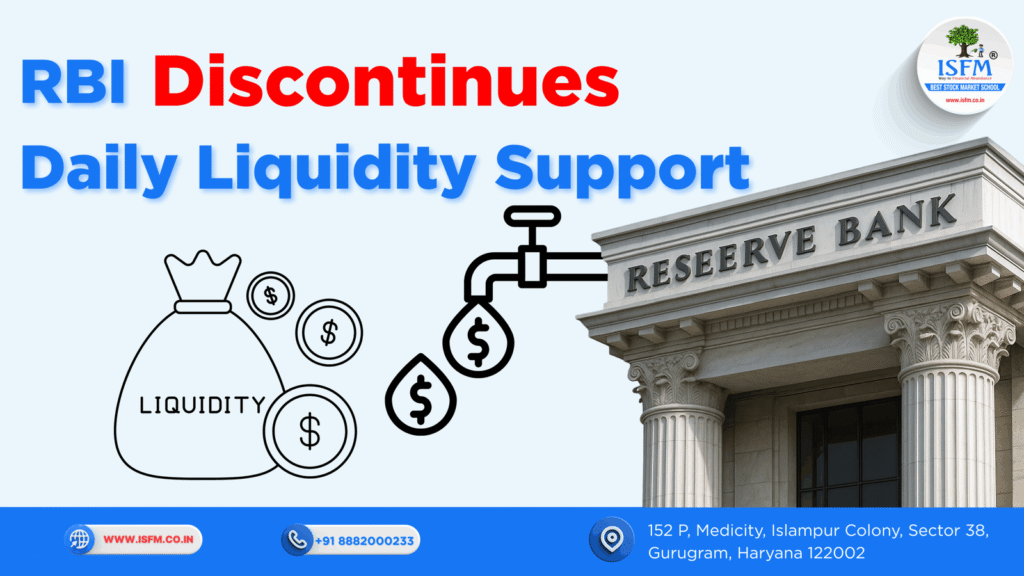

The Reserve Bank of India (RBI) has decided to discontinue its daily liquidity support through Variable Rate Repo (VRR) auctions starting June 11, 2025. This move follows a sustained improvement in banking system liquidity, which has turned into a massive surplus since April.
Uncategorized

RBI Discontinues Daily Liquidity Support: Here’s Why the Central Bank Ended Daily VRR Auctions

The Reserve Bank of India (RBI) has decided to discontinue its daily liquidity support through Variable Rate Repo (VRR) auctions starting June 11, 2025. This move follows a sustained improvement in banking system liquidity, which has turned into a massive surplus since April. Want to understand how RBI policies affect markets? Learn how macroeconomic indicators shape trading with ISFM’s Fundamental Analysis Course.  What Is Daily VRR and Why Was It Introduced? Variable Rate Repo (VRR) is a short-term monetary tool that allows the RBI to inject liquidity into the banking system when there’s a cash crunch. Banks and primary dealers bid at rates generally higher than the repo rate to borrow funds for one day. Amid tightening liquidity in late 2024—caused by tax outflows, weak government spending, and foreign portfolio investor (FPI) sell-offs—the RBI began conducting daily VRR auctions from January 16, 2025 to support banks and stabilize short-term interest rates. Want to decode how central banking tools influence interest rates? Explore ISFM’s Stock Market Investment Course for deeper insights.  How Much Liquidity Did the RBI Inject Through Daily VRR? According to RBI data, from January to June 2025, the central bank pumped a staggering ₹43.61 lakh crore via daily VRRs. These funds were overnight infusions, reversed the next day. Here’s a month-wise breakdown:• January: ₹13.48 lakh crore• February: ₹17.75 lakh crore• March: ₹8.91 lakh crore• April: ₹2.13 lakh crore• May: ₹1.07 lakh crore• June (till 9th): ₹25,899 crore  Why Is RBI Halting Daily VRR Now? RBI’s decision is rooted in significant improvements in liquidity conditions. Since April 1, 2025, a series of durable liquidity measures has resulted in a surplus of over ₹3 lakh crore. These include:• Open Market Operations (OMOs): RBI injected ₹4.84 lakh crore via 15 bond purchase auctions.• USD/INR Buy-Sell Swaps: Infused liquidity worth $25.2 billion.• Bond redemptions and interest payments, along with month-end government payouts like salaries and pensions. With these drivers, the banking system is awash with funds, rendering daily VRR unnecessary. Learn how liquidity and monetary policy affect asset prices in ISFM’s Chartered Financial Market Expert Course.  Did Daily VRR Help Banks? Yes. Daily VRR auctions were highly effective in easing short-term liquidity stress. Market participants note that these injections helped maintain overnight call rates near or below the repo rate, ensuring smoother interbank transactions during the liquidity crunch. ️ What Caused the Liquidity Shortage Before January? Between November and December 2024, liquidity in the banking sector turned negative due to:• Large tax outflows• Heavy FPI equity sell-offs• Forex market interventions by RBI to stabilize the rupee• Sluggish government spending In response, the RBI initiated daily VRR operations to offset the strain. If you want to analyze these real-world triggers using trading tools like OI, PCR, and Greeks, join ISFM’s Advanced Derivatives Training.  What’s the Outlook for Liquidity in 2025? Experts predict a continued liquidity surplus throughout the remainder of the year, driven by:• RBI Surplus Transfer: ₹2.69 lakh crore transferred to the government for FY25.• CRR Cut: A 100 basis points (bps) reduction in the Cash Reserve Ratio in June will inject ₹2.5 lakh crore between September and November. These moves are expected to further strengthen liquidity, giving the RBI room to shift away from daily support tools.  Key Takeaways for Investors and Markets • RBI’s exit from daily VRR signals robust banking system liquidity.• Markets may expect more stable interest rates in the short term.• Policy focus is likely to shift from short-term fixes to long-term liquidity management. Equip yourself with professional-grade knowledge through ISFM’s Chartered Stock Trading Expert Course, designed to empower traders and investors to interpret such macroeconomic shifts and profit from them.

Scroll to Top