
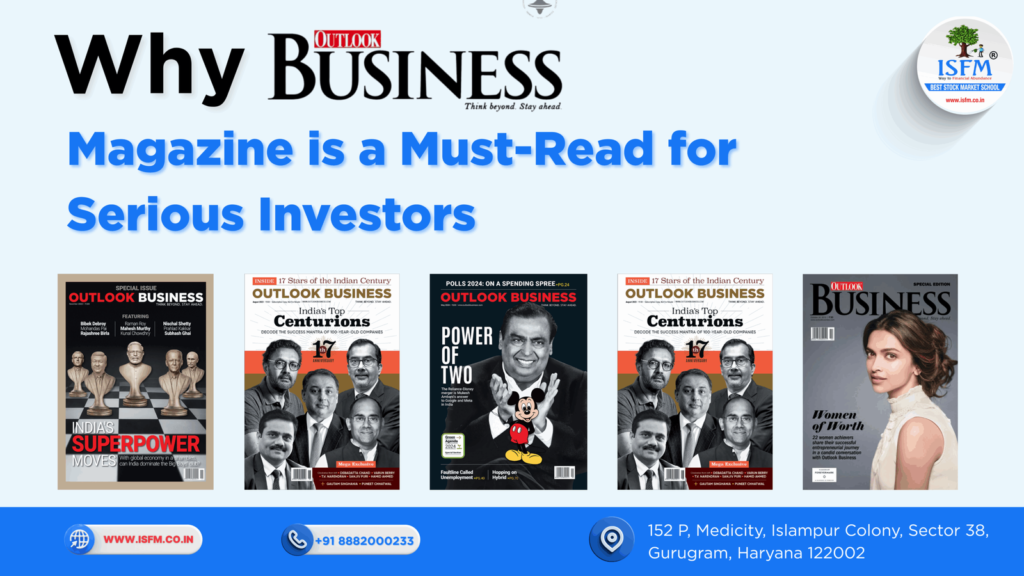
Why Outlook Business Magazine is a Must-Read for Serious Investors in India
In the ever-evolving world of finance, staying informed is not just an advantage—it’s a necessity. For serious investors in India, Outlook Business magazine stands out as a trusted source of market intelligence, corporate insights, and long-term investment perspectives. Whether you’re a retail trader, a professional analyst, or a student pursuing a stock market course, this publication offers valuable content that sharpens decision-making and enhances financial knowledge. In this blog, we explore why Outlook Business is a must-read for India’s investor community, its key features, the pros and cons, and how market participants can benefit from it. Key Features of Outlook Business Magazine 1. In-Depth Corporate Coverage Unlike generic business news platforms, Outlook Business dives deep into company profiles, management strategies, earnings quality, and industry trends. This enables investors to understand the “story behind the stock.” 2. Long-Term Investment Focus The magazine emphasizes value investing, sustainable business models, and long-term wealth creation—an ideal mindset for serious investors, not just speculators. 3. Expert Columns & Opinions Renowned analysts, fund managers, and economists share their insights regularly. These expert opinions help readers decode complex market movements and economic trends. 4. Data-Driven Research Outlook Business backs its stories with strong data analytics, financial ratios, and sector-wise comparisons, making it a great supplementary tool for students and professionals. 5. Special Editions & Annual Issues Its annual editions—like the “Richest Indians,” “Best CEOs,” or “40 Under 40”—offer high-quality curated content and interviews that showcase leadership in action. Importance for Investors in India – Informed Decision Making Investors who read Outlook Business regularly can better evaluate opportunities and risks in the Indian equity markets. Whether it’s spotting turnaround stories or avoiding overhyped IPOs, this magazine nurtures a data-centric mindset. – Understanding Market Sentiment Through sectoral analysis, macroeconomic trends, and corporate interviews, readers gain insights into market sentiment—a crucial component of timing and risk management. – Learning from Success & Failures Real-life case studies and CEO interviews provide valuable lessons on what works in business and what doesn’t, helping investors align with successful strategies. Pros of Reading Outlook Business Cons to Consider How Market Participants Can Benefit 1. Retail Traders Use the insights to build conviction in medium- to long-term trades. It helps separate noise from real opportunities. 2. Students & Learners Stock market training aspirants can use the articles for case studies, project research, and practical understanding of financial ratios and business strategies. 3. Fund Managers & Advisors Gain peer perspectives, new ideas, and macro insights to enrich portfolio strategy and client communication. 4. Corporate Professionals Understand the inner workings of industries, competition, and leadership dynamics to position themselves better in their own careers or startup ventures. Where to Access It You can subscribe to Outlook Business digitally or in print via their official website. It’s also available through various magazine platforms and libraries. For those pursuing professional training at institutes like ISFM, reading this magazine can be a recommended parallel learning habit. Final Thoughts In a country with over 100 million active Demat accounts and growing interest in equity markets, Outlook Business plays a critical role in creating financially aware and responsible investors. If you’re serious about making informed investment decisions and understanding the ‘why’ behind stock price movements, then this publication deserves a permanent spot in your reading list.