Author name: Mr. Sushil Alewa

Sushil Alewa is the Founder & Director of ISFM – International School of Financial Market, established in July 2014 with the aim of bridging the gap between academic finance and real, practical market participation. A Certified Financial Planner - CFP from US (Reg. No. IN 51734) and SEBI Registered Research Analyst (Reg. No. INH100009433) with an MBA in finance, Sushil has spent more than 16 years in the Indian capital markets. His career spans equity advisory and research at Sharekhan, India Infoline, Indiabulls and Religare, followed by HNI portfolio advisory at Anand Rathi Wealth Management — experience that shaped the practitioner-first approach ISFM is known for today. He is an active trader and researcher, and his teaching draws directly from live market work rather than theory alone. His areas of focus include technical analysis, derivatives and options strategies, equity research and fundamental analysis, and investor awareness. Sushil is currently a PhD scholar researching options trading strategies, and regularly conducts investor awareness and financial literacy programs for students, professionals and corporate audiences.

rubicon research ipo
Blog

Rubicon Research IPO — Complete Guide (Should you apply?)

Quick facts (at-a-glance) About Rubicon Research (short overview) Rubicon Research Limited is an Indian pharmaceutical company focused on specialty formulations and generics — supplying mostly to regulated markets. The company has reported robust revenue and profit growth in recent years, invests heavily in R&D (a higher R&D spend compared to many peers), and has been backed by private equity (General Atlantic was a major shareholder pre-IPO). The IPO values the company in the ~₹7,500–8,000 crore range at the stated price band. (The Week) (For a detailed look, read the company’s Draft Red Herring Prospectus on their investor page.) (Rubicon) Key management & ownership snapshot Major products / Business model Financial snapshot & growth (summary) Competitors / Industry peers What analysts and the market are saying (high level) Pros (Why investors may like Rubicon) Cons / Risks (what to watch) IPO application practicals (how much to keep ready) Our Recommendation — Apply or Not? Short answer: Apply with caution — consider 1 lot if you want long-term exposure; avoid large short-term bets unless you are comfortable with concentration risks and valuation. Why (summary):

Canara Robeco IPO
Blog

Canara Robeco (CRAMC) IPO — Complete Guide, Key Dates & Should You Apply?

Quick snapshot (at-a-glance) About the company Canara Robeco Asset Management Company Ltd (CRAMC) is a long-established mutual fund house (started in 1993) and a joint-venture between Canara Bank (major promoter) and ORIX/Robeco group (strategic partner). It manages equity, debt and hybrid schemes and has scaled its QAAUM to cross the ₹1-trillion mark (reported quarterly average AUM ~₹1,110.5 bn as of June 30, 2025). The IPO is structured as an OFS (existing shareholders selling shares). (TradingView) Key management & promoters Major products / business model CRAMC’s business is asset management: launching and managing mutual fund schemes (equity, debt, hybrid), collecting management fees based on AUM, and offering investment advisory services. Equity-oriented schemes form a large and growing share of its AUM mix, which is higher-margin than debt. The company earns recurring management fees and performance-linked fees from some schemes. (aumcap.com) Financial snapshot (high level) Competitors / peer set Listed AMCs in India include HDFC AMC, Nippon Life India AMC, UTI AMC, SBI Mutual Fund / SIDs, etc. Canara Robeco enters the public markets as one of the larger mid-ranked AMCs, offering investors access to a growing fee-earning asset manager at a valuation implied by the price band. Peer comparison (valuation multiples, AUM growth, margin profile) is important before deciding. (Moneycontrol) Pros — What’s attractive about the CRAMC IPO Cons / Risks — what could go wrong Valuation & listing expectation Recommendation — Apply or Not? (Straight answer + reasoning) Why this split recommendation? Practical applying tips if you decide to subscribe How to research further (quick checklist) Also Read: How to Use Gift Cards to Manage Spending and Save Tax in India Final takeaway Canara Robeco (CRAMC) IPO offers retail investors a chance to own a growing asset manager with stable fee income and strong promoters. Market sentiment around the IPO is positive (price band ₹253–266; raise ~₹1,326 Cr) and early market indicators show the potential for a listing premium. If you seek short-term listing gains and accept volatility, a small application may make sense. If you’re a long-term, risk-averse investor, consider waiting to buy in the secondary market after listing and clearer price discovery.

Best Railway Stocks in India
Blog

All Aboard: Best Railway Stocks in India to Watch in 2025

India’s railway sector is not just the backbone of connectivity—it’s becoming a trillion-rupee growth engine. With ambitious government-backed projects such as Dedicated Freight Corridors (DFC), Vande Bharat trains, station redevelopment, and track electrification, the sector is attracting massive investor attention. For stock market investors, railway stocks in India represent a powerful opportunity to ride this infrastructure boom. But which companies are truly driving the growth? Let’s explore the top railway stocks to consider in 2025. Why Invest in Railway Stocks in 2025? ✔ Government Capex Push: Over ₹2.4 lakh crore allocated in the Union Budget 2025-26 for Indian Railways.✔ Modernization & Digitalization: Electrification, high-speed rail, and freight efficiency initiatives fuel demand for rolling stock, EPC services, and IT infra.✔ Logistics Backbone: Railways reduce transport costs, boosting India’s manufacturing competitiveness under the PM GatiShakti plan.✔ Strong Moats: Many listed companies enjoy monopolies or government-linked contracts, making them less vulnerable to competition. Top Railway Stocks in India (2025 Edition) 1. IRCTC (Indian Railway Catering & Tourism Corp) (NSE: IRCTC) Business Model: Monopoly in online train ticketing, catering, and tourism services. 2. CONCOR (Container Corporation of India) (NSE: CONCOR) Business Model: Leader in containerized rail freight, critical for EXIM and domestic trade. 3. Titagarh Rail Systems Ltd. (NSE: TITAGARH) Business Model: Manufacturer of wagons, metro coaches, Vande Bharat components. 4. RVNL (Rail Vikas Nigam Ltd.) (NSE: RVNL) Business Model: Executes mega railway EPC projects – electrification, doubling, metros, station upgrades. 5. Texmaco Rail & Engineering Ltd. (NSE: TEXRAIL) Business Model: Freight wagons, passenger coaches, bridges, and rail infra solutions. 6. RailTel Corporation of India (NSE: RAILTEL) Business Model: IT & telecom backbone for Indian Railways with pan-India optic fiber. Investment Strategy for Railway Stocks Pros & Cons of Investing in Railway Stocks Advantages: Risks: Final Takeaway India’s railway sector is entering its golden era with modernization, electrification, and high-speed projects leading the way. Stocks like IRCTC, RVNL, CONCOR, Titagarh Rail, Texmaco, and RailTel are well-positioned to benefit.

How To Use Gift Card To Manage Spending
Blog

How to Use Gift Cards to Manage Spending and Save Tax in India

Gift cards are no longer just festive gifts – they can be powerful financial planning tools. When used smartly, they help you control expenses, earn rewards, and even save taxes. Let’s explore how you can make the most of them. Why Gift Cards Are a Smart Spending Tool Gift cards work like prepaid wallets, loaded with a fixed amount of money for shopping, dining, fuel, or travel. Once the balance is used up, you cannot overspend unless you reload it. This makes gift cards a natural budgeting mechanism, especially for those who struggle with impulse buying. By limiting spending to the preloaded amount, they help you stay disciplined with your money. Earn Rewards and Cashback Many e-commerce platforms and digital wallets offer cashback, discounts, or reward points on popular brand gift cards. For example, a ₹5,000 Amazon or Flipkart e-gift card may cost only ₹4,750 during festive sales, giving you an instant saving. You can also use cashback or reward points for future purchases, further reducing your effective expenses. 👉 Check platforms like Amazon Pay Gift Cards, Paytm, and Flipkart Gift Cards for offers. Tax Benefits of Gift Cards for Employees Gift cards aren’t just for personal shopping; they also offer tax benefits for salaried individuals. According to current Indian Income Tax rules, if your employer provides you with gift vouchers up to ₹5,000 per financial year, it is completely tax-free. Any amount beyond this will be taxed as per your income tax slab. This makes gift cards an excellent employee perk to save on taxes without adding to taxable income. Plan Purchases in Advance Think of gift cards as prepaying for future expenses. For example: This not only helps you hedge against price hikes but also ensures your money is reserved for the purchase. Prevent Misuse and Expiry Loss Gift cards come with validity periods (6–12 months). Always track expiry dates to avoid losing unused balance. A little tracking ensures you maximize benefits without losing money. Including Gift Cards in Your Budget Plan Gift cards can easily fit into your monthly budgeting strategy: This way, you’re not only controlling your expenses but also taking advantage of periodic offers.

High Dividend Paying Stocks
Blog

Reap Rewards: Top High Dividend Paying Stocks in India for Steady Income (2025)

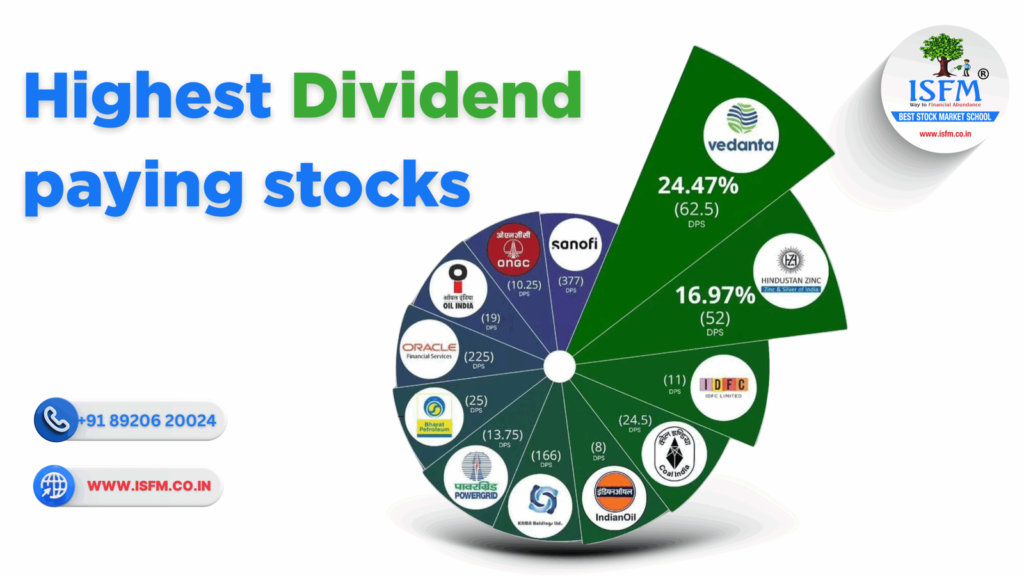
For investors seeking regular passive income along with long-term growth, high dividend-paying stocks in India act as a cornerstone of wealth creation. In a dynamic market like India, these stocks provide stability, cash flow, and resilience, making them a smart choice during volatile times. Let’s explore their importance, benefits, drawbacks, and the best dividend-paying stocks in 2025. Why High Dividend Stocks Matter Dividends are a company’s way of sharing profits with shareholders. Investing in dividend yield stocks offers: Key Features of Dividend Stocks Pros & Cons of High Dividend Stocks Advantages Limitations ✅ Steady income source ❌ High yield may indicate slow growth ✅ Lower volatility vs. growth stocks ❌ Dividends taxed as per income slabs ✅ Long-term compounding potential ❌ Dividend cuts possible during crises ✅ Hedge against inflation ❌ Capital appreciation may lag behind Smart Strategies to Maximize Returns Top High Dividend Paying Stocks in India (2025) (Yields are based on trailing 12 months; verify updated figures before investing.) Final Thoughts High dividend-paying stocks are excellent for building a passive income portfolio in India. However, balance is crucial—mix them with growth stocks to avoid being trapped in slow-moving companies. Always check fundamentals, avoid yield traps, and consider guidance from a SEBI-registered investment advisor. If invested wisely, dividends can power your journey toward long-term financial freedom.

LG Electronics IPO
Blog

LG Electronics IPO India 2025 — All You Need to Know

Key IPO Details Parameter Detail / Status* IPO Opening Date October 7, 2025 (The Economic Times) IPO Closing Date October 9, 2025 (The Economic Times) IPO Allotment Date Tentative October 10, 2025 (NDTV Profit) IPO Listing Date Tentative October 14, 2025 (NDTV Profit) IPO Price Band ₹1,080 to ₹1,140 per share (The Economic Times) IPO Lot Size 13 equity shares per lot (NDTV Profit) Minimum Fund Required for Retailer ₹14,820 (i.e. 13 × ₹1,140) (NDTV Profit) Maximum Fund Cap per Retail Investor Standard SEBI retail limit (often ₹2 lakh) — not explicitly disclosed yet Total Fund Raise by Company ~ ₹11,500 crore via Offer for Sale (The Economic Times) *These dates are subject to change — always refer to the final RHP / SEBI release. Note: This IPO is entirely an Offer for Sale (OFS) — no fresh capital is being raised by the Indian entity; the South Korean parent will sell shares. (The Economic Times) About LG Electronics India What the Company Does LG Electronics India is the Indian arm of LG’s consumer electronics, appliances, and home solutions business. Its product lines include: In India, LG has historically been strong in the offline channel and is a key player in major appliances. (NDTV Profit) Key Management Since this is a subsidiary / India arm, executive roles include: At present, publicly available sources have not fully disclosed the Indian leadership hierarchy in the RHP summary versions. Financials & Revenue Snapshot From the filings / reports: These numbers point to a well-established business, albeit the growth trajectory and margin sustainability will matter more going forward. Competitors In India, LG competes with several large players in appliances and consumer electronics: Panasonic They also face competition from newer disruptive electronics / IoT brands in supplementary segments. Strengths, Risks & SWOT View Strengths Weaknesses / Risks Opportunities Threats Summary The LG Electronics India IPO is one of the largest upcoming IPOs in 2025. While it does not bring fresh capital into the Indian operations (being an OFS), it gives investors a chance to own a piece of a well-known, entrenched consumer electronics / appliances business. The price band (₹1,080–₹1,140) implies significant valuation expectations. Given the stable business, decent profitability, and strong brand, this could be an attractive medium-term play. But because it is an OFS (meaning the company will not directly benefit or expand via this IPO), the listing gains will need to come from market sentiment and future growth potential. Recommendation: Apply or Not? Investor Type Suggested Approach Long-term / Core portfolio investors Apply, but with moderate allocation. If you believe in the Indian consumer appliances growth story, this could be a stable long-term holding. Short-term / listing gain chasers Apply cautiously. If market sentiment is strong, there’s a chance of listing premium; but if sentiment turns weak, downside risk is real. Risk-averse / low-exposure investors Avoid or allocate only a small portion. Given the uncertainties (valuation, OFS structure), it may be safer to wait and watch.

WeWork India IPO
Blog

WeWork India IPO 2025: All You Need to Know + Should You Apply?

Key IPO Details Parameter Detail IPO Opening Date October 3, 2025 (NDTV Profit) IPO Closing Date October 7, 2025 (NDTV Profit) IPO Allotment Date October 8, 2025 (basis of allotment) (mint) IPO Listing Date October 10, 2025 (The Economic Times) IPO Price Band ₹615 to ₹648 per share (The Economic Times) IPO Lot Size 23 shares (minimum lot) (Investor Gain) Minimum Fund Required for Retail ₹14,904 (i.e. 23 shares × ₹648) (Investor Gain) Upper Limit Retail / Max Cap Retail investors can apply up to 13 lots = 299 shares ≈ ₹1,93,752 (at upper band) (IPO Watch) Total Fund Raise by Company Up to ₹3,000 crore (entirely via Offer for Sale) (The Economic Times) Note: This IPO is a pure Offer for Sale (OFS) — no fresh capital is being infused into WeWork India via this IPO; the proceeds will go to existing shareholders (promoters, investors) after expenses and taxes. (The Financial Express) About WeWork India Company Snapshot Key Management Products / Services & Business Model Because this IPO is a pure OFS, no capital is being raised for business expansion; it’s mainly for listing and providing liquidity to existing shareholders. (The Financial Express) Also Read: Tata Capital IPO: Dates, Price Band, Lot Size, Financials & Should You Apply? Financials & Performance From publicly available sources (to be verified via the IPO prospectus): Risks / Observations Competitors / Peer Landscape In terms of valuation multiples, some peers have negative earnings or volatile performance, making direct comparisons challenging. (Investor Gain) Conclusion & Recommendation Summary The WeWork India IPO is a marquee listing in the coworking / flexible workspace domain in India. The pricing, branding, promoter backing (Embassy Group), and growth potential in hybrid work trends are positives. However: Recommendation: Apply or Avoid? From a prudent viewpoint, here is a suggested stance:

TATA CAPITAL IPO
Blog

Tata Capital IPO: Dates, Price Band, Lot Size, Financials & Should You Apply?

Key IPO Details (At a Glance) Status: SEBI shows the RHP filed on Sept 26, 2025; dates and band match major broker & media updates. (Securities and Exchange Board of India) About the Company Tata Capital Limited (TCL) is the diversified NBFC arm of the Tata Group, offering retail, SME and wholesale lending, along with wealth & distribution businesses (housing finance, consumer loans, personal & business loans, vehicle finance, etc.). It enjoys top-tier domestic credit ratings (AAA/A1+) and broad, low-cost funding access per broker/RHP notes. (ICICI Direct) Key Management Financials / Revenue Snapshot Valuation lens: Media reports peg the IPO valuation around ₹1.32–1.38 lakh crore at the band, with issue size ~₹15.5k cr. (The Times of India) Major Products & Segments Industry Position & Competitors Peers (NBFCs / diversified lenders): Bajaj Finance, Cholamandalam Investment & Finance, Mahindra & Mahindra Financial Services, L&T Finance, among others. Tata Capital competes on brand, distribution breadth, underwriting, and access to low-cost funding (AAA). (ICICI Direct) Use of Proceeds & Notable Updates Strengths Key Risks Should You Apply? Conclusion Tata Capital brings a rare blend of brand strength, scale, and growth—with pricing that leading outlets call reasonable versus peers, potentially leaving room for a healthy listing while still appealing to long-term investors. Issue size and breadth of franchise make it a marquee financials listing for 2025. (The Economic Times) Recommendation Quick Reference (Fill-in Sheet)

GK Energy Ltd IPO
Blog

GK Energy Ltd IPO — Should You Apply?

Quick snapshot (at a glance) About GK Energy Ltd (what they do) GK Energy Ltd (headquartered in Pune) is a renewable-energy EPC (engineering, procurement & construction) company focused primarily on solar-powered agricultural water-pump systems, including large participation under India’s PM-KUSUM scheme. The company follows an asset-light model — sourcing components from third-party suppliers and providing end-to-end installation, testing and after-sales services. As of 30 Sep 2024 GK Energy reported ~42,778 installations under PM-KUSUM, representing a meaningful market share in this niche. (Zerodha) Key management (From company disclosures / DRHP — list below are the typical load-bearing names you’ll find in the IPO documents; always check the RHP for final board & key managerial personnel.) Primary management and promoters are listed in the company’s investor / DRHP pages. For the official roster and bios, see GK Energy’s investor disclosures. (gkenergy.in) Major products & business lines Financial snapshot (highlights) Important: always read the company RHP/DRHP for the audited financial statements and notes — third-party summaries are useful but not a substitute for the prospectus. (gkenergy.in) Competitors & market context GK Energy operates in the solar EPC / renewable-energy space. Major established EPC/manufacturing peers in India (for comparison and market context) include Tata Power Solar, Sterling & Wilson (Sterling & Wilson Renewable Energy), Vikram Solar, Adani Solar, ReNew Energy, Jakson Group and others — these players vary by scale (utility-scale manufacturing vs specialized EPC for agricultural pumps). GK Energy’s niche is solar pumps under rural/agriculture schemes — a space with both large players and many regional EPC firms. (Soleos Solar Energy Private Limited) Use of IPO proceeds According to issue documents / broker summaries, the fresh issue (~₹400 Cr) proceeds are intended mainly for working capital requirements (~80%) and general corporate purposes (~20%). That means much of the money will go into scaling operations, inventory, and execution capacity rather than M&A or capex-heavy manufacturing (though company commentary suggests exploring in-house production later). (Zerodha) Strengths (what markets / analysts praise) Risks (what to watch) Grey Market / Market Sentiment Early grey-market indicators and brokers show positive sentiment — GMP reports and broker writeups pointed to listing interest (GMP reported in some sources and broker pages show upbeat demand). But GMPs are unofficial; treat them as sentiment, not a guarantee. (The Economic Times) Conclusion & recommendation — Should you apply? Short answer: Consider a small, measured application (1–2 lots) if you are a speculative or moderately risk-tolerant investor seeking potential listing gains. If you’re a long-term, conservative investor, wait for listing price and first few quarters of post-IPO results before committing a larger allocation. Why this stance (concise reasoning): Practical, actionable recommendation Regulatory / application note: Retail applications above ~₹2,00,000 may be classified into HNI categories — follow broker guidance when placing bids (this IPO’s maximum retail application reported = 13 lots ≈ ₹1,94,922 at upper band). Confirm UPI/ASBA mandate deadlines with your broker when applying. (Angel One)

Ganesh Consumer Products IPO
Blog

Ganesh Consumer Products IPO 2025 — Dates, Price Band, Lot Size, Financials & Should You Apply?

Quick IPO snapshot Minimum fund required (1 retail lot): About Ganesh Consumer Products Ltd Ganesh Consumer Products is a packaged-foods / staples company with a strong presence in eastern India. Their portfolio includes besan (gram flour), roasted gram flour, pulses, wheat flour and other packaged staples and spices under the “Ganesh” brand (and related SKUs). The company is expanding manufacturing capacity to increase packaged-product penetration in its core markets. (The Times of India) Key management & ownership notes Major products & business model Financial snapshot (as disclosed / reported) (For investor decisions, always verify numbers in the company RHP/prospectus and rely on audited financials in the offer document.) (Sharekhan) Use of proceeds Net proceeds from the fresh issue (₹130 crore) are earmarked for: The rest of the total issue (≈₹278.8 crore) is Offer For Sale (OFS) — meaning seller shareholders (promoters/investors) will be cashing out part of their stake. Competitors & market context Major listed and unlisted competitors in packaged staples and branded flours/pulses include large national FMCG players (Adani Wilmar, Patanjali Foods, Bisleri/FMCG peers in staples/spices) and many regional branded players. The packaged staples market in eastern India is growing, and companies that convert unbranded demand to branded packaged SKUs can scale quickly — but competition and pricing pressure from larger players remain material risks. (IPO Central) Valuation & key investment considerations Valuation signal: media/IPO analysis shows valuation metrics (PE) in the mid-30s region (based on FY25 earnings) — implying a premium relative to historical peers; investors should compare implied multiples to listed FMCG/CPG peers and to growth expectations. (IPO Central) Positives Risks Conclusion — Who should consider applying? Clear recommendation (my view, concise) If you are a growth-oriented/long-term investor and can accept sector risk: Apply for 1 lot at your chosen band (or use the lower-band advantage if you expect the company to deliver on growth). Avoid heavy subscription (do not apply for maximum retail cap) until post-listing performance and margins are clearer.

Scroll to Top