Why Traders Break Their Own Trading Rules?
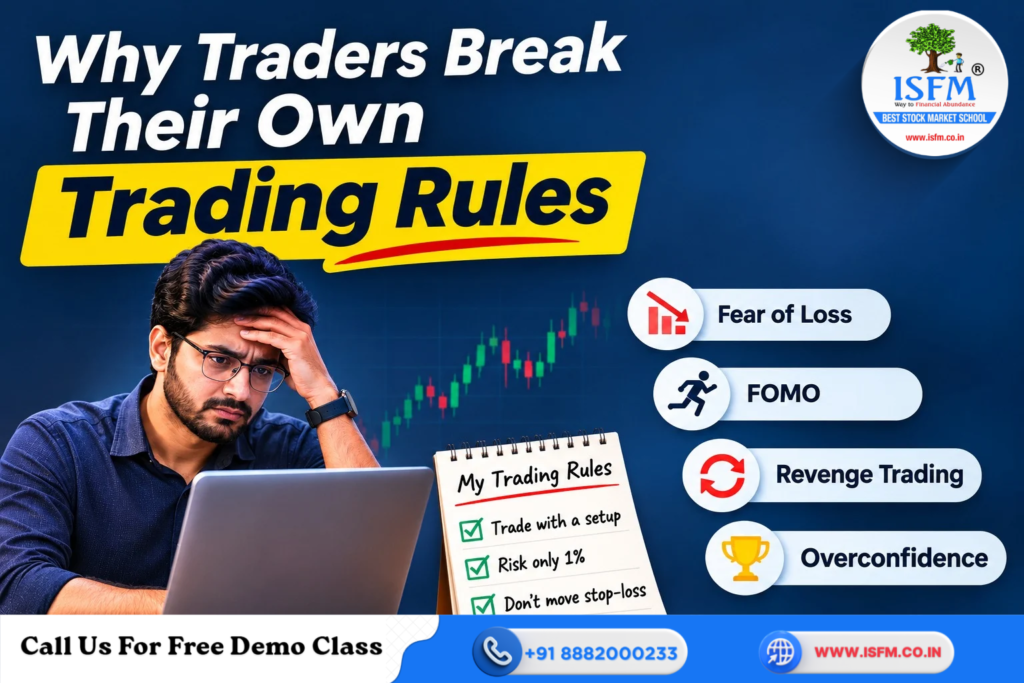
Understanding the psychology behind emotional trading, impulsive decisions, and the gap between knowing and doing. A trader starts the day with a clear plan: “I will not trade without a setup. I will risk only 1% per trade. I will never move my stop-loss.” But when the market opens, Nifty starts moving sharply, Bank Nifty becomes volatile, and stock options show sudden price movements. The trader enters late, increases position size, and moves the stop-loss when the trade goes against them. Why do traders break rules they created themselves? According to Sushil Alewa, SEBI Registered Research Analyst (INH100009433), understanding trading psychology is essential because successful decision-making requires more than technical knowledge. A trader may understand market movements but still struggle to control emotions when real money is at risk. When Emotions Meet Market Uncertainty Financial markets are unpredictable. Even a well-planned trade can result in a loss, while an impulsive decision may sometimes generate profits. A losing trade does not necessarily mean the trader made a mistake, and a profitable trade does not always mean the decision was correct. Temporary rewards from impulsive decisions can encourage traders to repeat unhealthy habits. Understanding these behavioural patterns is an important part of learning technical analysis, as trading decisions involve both market interpretation and risk management. Fear of Loss: Why Traders Move Their Stop-Loss Loss aversion means that the pain of losing money often feels stronger than the satisfaction of gaining an equivalent amount. For example, a trader purchases a Nifty call option with a predefined stop-loss. When the premium starts falling, the trader refuses to exit and moves the stop-loss further away, thinking, “It will recover.” Unfortunately, a small planned loss can become a much larger loss. Accepting that a trade has not worked is emotionally difficult, particularly for traders who associate losses with personal failure. FOMO: The Fear of Missing Out Imagine Bank Nifty suddenly moves 300 points. Social media is filled with screenshots of profitable trades. A trader who was waiting for confirmation feels left behind and immediately purchases an option at a higher premium. This is FOMO trading. Fear of missing out encourages traders to chase price movements, enter late, and take trades outside their original plans. By the time they enter, much of the move may already be over. Revenge Trading: Trying to Recover Losses Revenge trading happens when frustration after a losing trade influences the next decision. A trader loses money during the morning session and immediately enters another trade to recover it. They increase their position size, ignore confirmation, and take multiple trades within a short period. Instead of following a process, they start chasing lost money. This can turn one controlled loss into several impulsive decisions. Overconfidence After Winning Trades Winning streaks can also create problems. After three profitable intraday trades, a trader may believe they have understood the market perfectly. They increase position size, trade more frequently, and become less selective about entry points. This is overconfidence trading. Previous success can create a false sense of control, making traders forget that market conditions change and past profits do not guarantee future results. Unclear Rules and Missing Exit Plans Sometimes traders break rules because their trading plans are vague or incomplete. Compare these examples: Weak trading rule Clear trading rule Avoid overtrading Maximum three trades daily Manage risk properly Risk maximum 1% per trade Follow stop-loss Never move stop-loss away from the planned level Trade good setups Enter only after predefined confirmation A complete trading plan should include an entry trigger, stop-loss, target or exit conditions, position size, maximum daily loss, and conditions that invalidate the trade. Developing a deeper understanding of futures and options trading and advanced derivatives can help traders understand the instruments and risks involved, but practical discipline remains essential. How to Reduce Trading Rule Violations Trading discipline develops through preparation and repeated practice. Traders can adopt these practical habits: One useful technique is an implementation intention: create an if-then plan. For example, “If I experience two consecutive losses, then I will stop trading for the day.” A Practical Example: The Cost of Breaking Rules Consider a trader who plans to risk ₹1,000 per trade. After two consecutive losses, frustration takes over. The trader increases the risk on the third trade to ₹3,000, hoping to recover previous losses. Trade Planned risk Actual risk First ₹1,000 ₹1,000 Second ₹1,000 ₹1,000 Third ₹1,000 ₹3,000 Total ₹3,000 ₹5,000 The trader has taken ₹2,000 of additional risk simply by violating the original plan. The problem was not the first loss; it was the emotional decision that followed. Learning options trading strategies should go hand in hand with understanding risk, position sizing, and trading behaviour. Conclusion: Build Systems That Support Discipline Trading discipline does not mean suppressing every emotion. Fear, excitement, frustration, and uncertainty are natural human responses. The objective is to create systems that prevent these emotions from controlling trading decisions. A trading journal, clear risk limits, pre-market preparation, and measurable rules can help traders recognise repeated mistakes and improve their decision-making process. “A trading rule is not a restriction. It is protection for the version of you that made a calm, thoughtful decision before the market started testing your patience.” Frequently Asked Questions Why do traders break their own trading rules? Fear, greed, FOMO, revenge trading, overconfidence, and market pressure often influence decisions. How does loss aversion affect trading? It makes traders uncomfortable accepting losses, encouraging them to hold losing positions or move stop-losses. What is revenge trading? It is the practice of taking impulsive trades to recover money lost in previous trades. Can a trading journal improve discipline? Yes. It helps identify emotional triggers, repeated mistakes, and risk-management violations. How can beginners develop trading discipline? By following predefined rules, controlling position sizes, maintaining a trading journal, and reviewing their decisions regularly. Financial Risk Disclaimer: Trading in equity, futures, and options involves substantial market risk and may result in significant financial losses. This article is for educational purposes only and should not be considered