
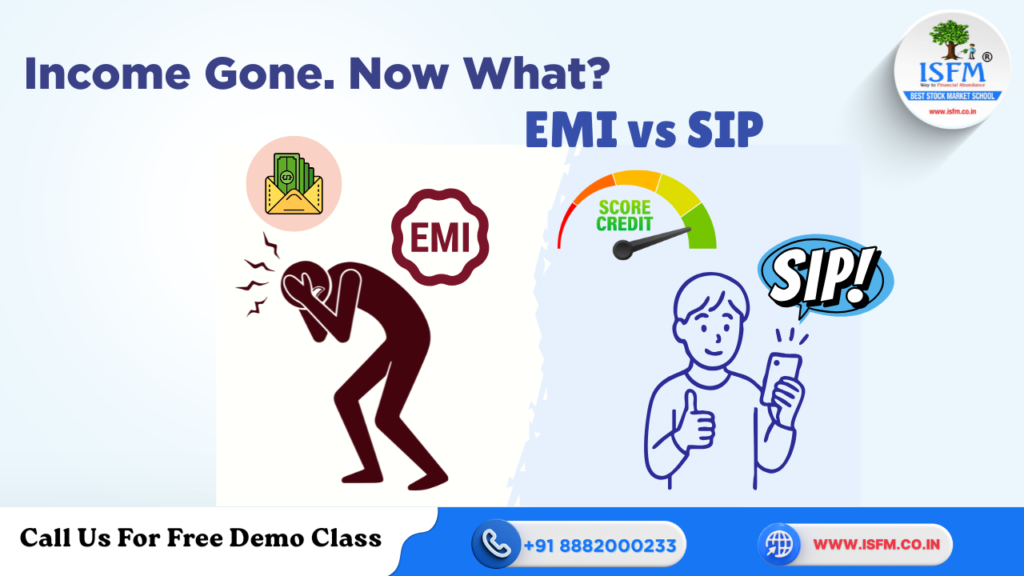
What to Do with Your EMIs and SIPs in Case Loss of Sudden Income
What the financial system expects, what flexibility you really have, and where most people get caught off guard A sudden loss of income can flip your financial priorities overnight. Expenses that once ran on autopilot—like EMIs and SIPs—suddenly demand close attention. The biggest mistake people make during this phase is assuming that everything must either continue as normal or stop completely. In reality, EMIs and SIPs behave very differently when income stops, and understanding this distinction early can protect both your cash flow and your credit history. EMIs Don’t Pause Just Because Your Income Does An EMI is a legal obligation, not a flexible expense. Whether income stops due to job loss, business slowdown, illness, or family emergency, your loan agreement remains unchanged. If you miss an EMI: This process is not discretionary. It follows lending and reporting norms regulated by the Reserve Bank of India (RBI). You can refer to RBI’s borrower protection guidelines here:👉 https://www.rbi.org.in This is why, during an income shock, EMIs must take priority over almost all other outflows. Home loans, vehicle loans, and personal loans protect your long-term credit profile. A short-term cash crunch should not turn into a permanent borrowing handicap. What EMI Relief Options Actually Exist (and What Don’t) There is limited flexibility—but only if you act early. Banks and NBFCs may offer: These options are not automatic rights. They depend on: The biggest mistake is waiting until after EMIs bounce. Once defaults are recorded, negotiating power drops sharply. Early communication keeps doors open. Silence closes them. SIPs Are Voluntary—and Can Be Stopped Without Penalty SIPs work very differently from EMIs. A SIP is an investment instruction, not a contract. You can: —all without penalties or credit score impact. Many investors feel guilty about stopping SIPs, believing it breaks discipline. In reality, financial discipline includes protecting liquidity during stress. SIPs exist to build wealth over time—not to drain cash when income has stopped. What Happens to Your Existing Investments? Stopping SIPs does not affect the money already invested. This distinction is critical. Many people panic-sell investments unnecessarily when income stops—even when they don’t need the money immediately. A smarter approach is to separate: If cash is tight, partial redemption from relatively stable funds is usually less damaging than missing EMIs and hurting your credit record. The Hidden Pressure Point: Auto-Debit Mandates Both EMIs and SIPs usually run on auto-debit mandates. When income stops, balances can fall faster than expected. If multiple debits bounce: A practical step: A failed SIP debit is not harmful—but repeated failures create unnecessary noise when clarity matters most. This Is Exactly Why Emergency Funds Exist Emergency funds are not for market crashes or “buying the dip.”They exist for income disruption. Ideally, your emergency fund should cover: —for several months. Without this buffer, people are forced into poor decisions: All of these leave lasting damage. You can read more about building an emergency fund here:👉 https://www.investopedia.com/terms/e/emergency_fund.asp How to Prioritise When Income Stops When income halts, sequencing matters more than perfection. Priority order: Risk doesn’t pause during financial stress—insurance continuity is critical. The Bigger Lesson An income shock exposes how your financial system is built. The goal is not to avoid disruption, but to ensure that when it happens, your system can bend without breaking. If your EMIs can be covered for a few months without panic, and your SIPs can be paused without guilt, you’ve built a financial structure that supports you—especially when you need it most