
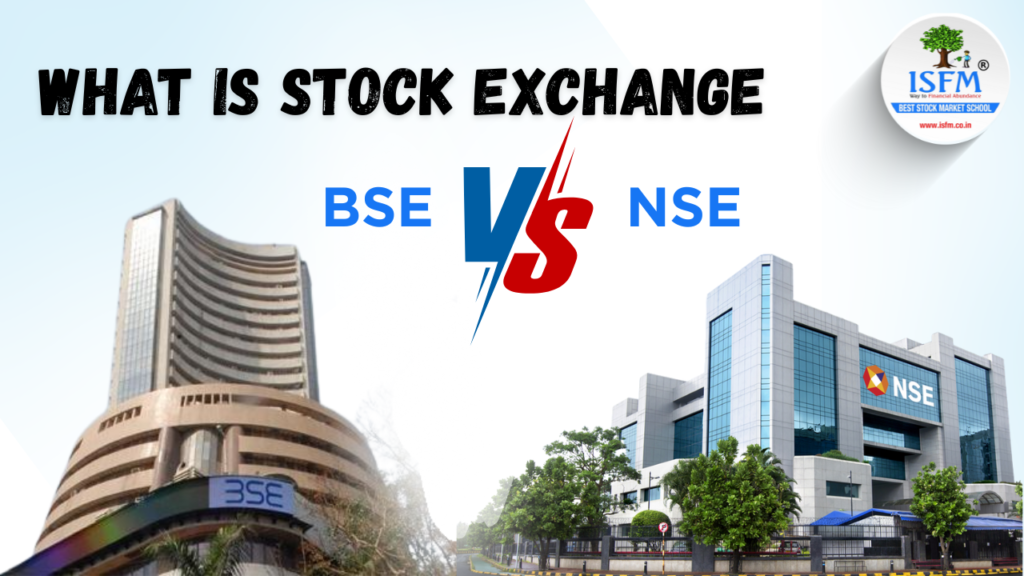
NSE vs BSE: Which Indian Stock Exchange is Right for You?
Thinking of diving into stock trading in India? One of the first questions you’ll face is: Should I trade on NSE or BSE? These two stock market giants form the backbone of India’s equity landscape. While both are credible and regulated, their differences can impact your trading experience, especially depending on your goals and strategy. In this guide, we’ll break down the core differences between NSE (National Stock Exchange) and BSE (Bombay Stock Exchange)—including market share, trading platforms, liquidity, and more—so you can choose the exchange that fits you best. Quick Snapshot: NSE vs BSE Factor Bombay Stock Exchange (BSE) National Stock Exchange (NSE) Year Established 1875 – Asia’s oldest stock exchange 1992 – Introduced to modernize Indian capital markets Main Index S&P BSE SENSEX (30 blue-chip stocks) NIFTY 50 (50 top large-cap stocks) Market Share (Equity) ~15-20% ~70-80% – India’s largest equity exchange Market Share (F&O) Limited Overwhelming leader in futures & options Trading Platform BOLT Plus (STEPS) – Stable, robust NEAT – Lightning-fast and scalable Number of Listings Higher – Especially strong in SME segment Fewer, but highly liquid large-cap stocks Liquidity Comparatively lower in small/mid-caps High liquidity across sectors and indices Debt Market Strong historical focus Present, but smaller compared to BSE Trading Hours 9:15 AM – 3:30 PM (Same for both) 9:15 AM – 3:30 PM NSE vs BSE: Pros and Cons ✅ Advantages of NSE ❌ Drawbacks of NSE ✅ Advantages of BSE ❌ Drawbacks of BSE NSE vs BSE: Who Should Choose What? Let’s decode the best exchange based on your trading or investing style: 1. For Active Traders (Intraday, Swing, F&O) 2. For Equity Investors (Large & Mid Caps) 3. For Small Cap or SME Traders / Cost-Sensitive Investors 4. For Long-Term Investors Pro Tip: Why Not Use Both? Modern trading platforms like Zerodha, Upstox, and Groww offer access to both BSE and NSE from a single dashboard. Final Verdict: NSE or BSE? Trader Type Suggested Exchange Reason Day Traders / Scalpers NSE High liquidity, fast execution Options / Futures Traders NSE Market depth, range of instruments Small Cap / SME Investors BSE Focused platform, IPO access High-Volume Cash Traders BSE Lower costs per transaction Long-Term Passive Investors Either Price difference negligible Conclusion: The Right Exchange Depends on You There’s no universal winner in the NSE vs BSE debate. The right exchange is the one that aligns with your strategy, stock focus, and cost sensitivity. As a smart investor or trader, evaluate your needs and leverage both exchanges to maximize returns.