
Technical Analysis vs Fundamental Analysis: Key Differences, Pros & Profit Strategies
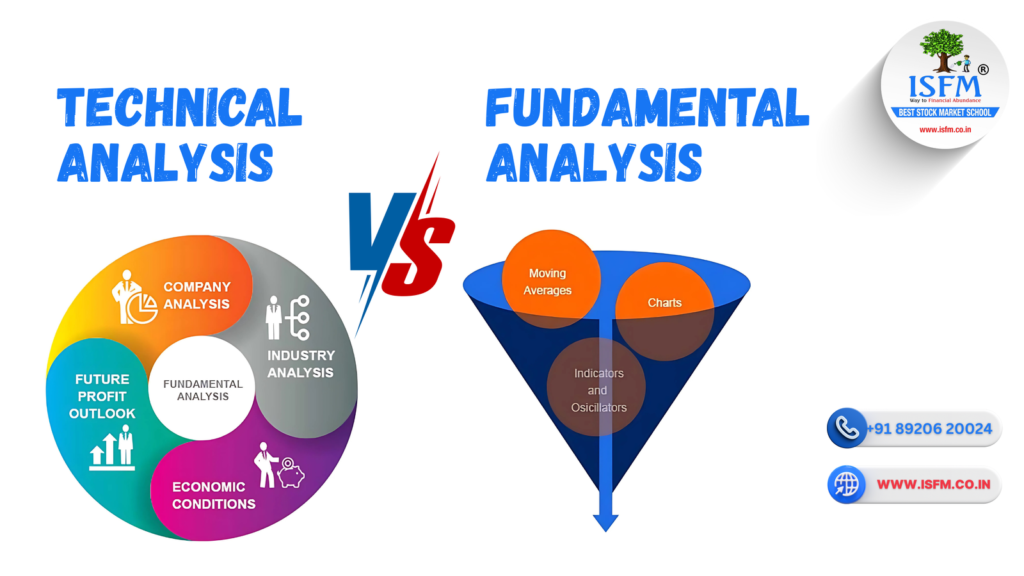
In the ever-evolving world of trading and investing, understanding market movements is essential for success. Two primary analytical methods dominate this space—technical analysis and fundamental analysis. While both aim to forecast future price movements and enhance profitability, their methodologies differ greatly. In this guide, we’ll break down the core principles, benefits, limitations, and effective strategies of both approaches to help you make smarter financial decisions. What is Technical Analysis? Technical analysis is the study of past price movements and market behavior to predict future trends, using charts, indicators, and patterns. Key Components: Advantages: Limitations: Want to dive deeper? Explore our beginner-friendly technical analysis course at ISFM. What is Fundamental Analysis? Fundamental analysis evaluates a company’s financial health, economic environment, and industry positioning to determine its intrinsic value. Core Elements: Advantages: Limitations: Looking to invest long-term? Check out our guide on value investing in Indian stocks. Profit Strategies Using Technical Analysis Learn how to master price action trading strategies in our stock market blog. Also Read: Top 5 Paper Trading Apps in India (2025): Practice, Learn & Excel Without Risk Profit Strategies Using Fundamental Analysis Can You Combine Both? Absolutely! A hybrid investing model offers the best of both worlds: Conclusion Whether you’re an active trader or a long-term investor, understanding the strengths and weaknesses of both technical and fundamental analysis is crucial. While technical tools help time the market, fundamental research helps understand what to invest in. Smart investors often blend both for better risk-adjusted returns. By learning and applying these approaches, you can confidently navigate different market conditions and build a strategy that suits your goals.