
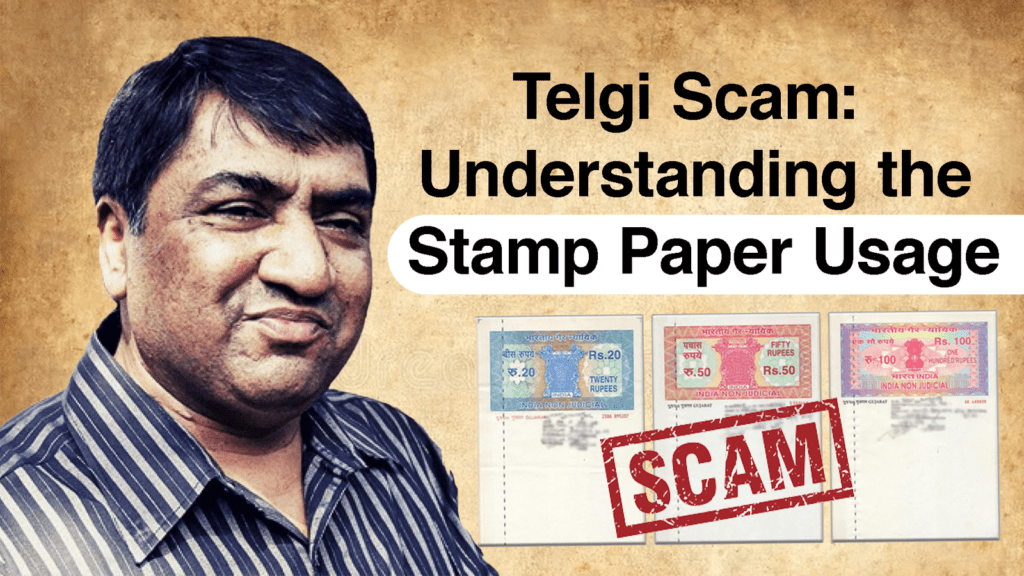
The Abdul Karim Telgi Stamp Paper Scam: A Billion-Dollar Counterfeit Empire
Abdul Karim Telgi, born in 1961 in Khanapur, Karnataka, emerged from humble beginnings to become the mastermind behind one of India’s most notorious financial frauds. Growing up in a lower middle-class family, Telgi’s early life was marked by adversity. After losing his father, who worked for Indian Railways, young Telgi resorted to selling fruits and vegetables on trains to support his family and fund his education. Despite the challenges, Telgi managed to complete his BCom from Gogte College of Commerce in Belgaum in 1984. His journey from a struggling fruit vendor to a criminal mastermind began after a brief stint in Saudi Arabia, where he likely honed his skills in document forgery. Telgi’s scam was a masterclass in exploiting systemic weaknesses and corruption. Here’s how he orchestrated this massive fraud: Unraveling the Scam: How It Was Uncovered The unraveling of Telgi’s empire began in 2000 when two men transporting counterfeit stamp papers were arrested in Bengaluru. This led to a series of events: Arresting the Mastermind Telgi’s run came to an end in November 2001 when he was arrested while on a pilgrimage to Ajmer, Rajasthan. The arrest revealed the true scale of the scam and led to further investigations implicating numerous high-ranking officials and politicians. 1. Legal Proceedings and Sentencing: In 2007, Telgi was sentenced to 30 years of rigorous imprisonment and fined ₹202 crore[8]. The legal battle was extensive, involving multiple charges across different states. 2. Current Scenario: Abdul Karim Telgi passed away on October 26, 2017, in Bengaluru due to multiple organ failure[8]. However, the legacy of his scam continues to influence discussions on corruption and financial fraud in India. Interestingly, a year after his death, on December 31, 2018, the Nashik session court in Maharashtra cleared Telgi and seven others in the Stamp Paper Scam case due to lack of evidence. This controversial decision has reignited debates about the complexities of prosecuting high-profile financial crimes in India. The Telgi scam remains a stark reminder of the vulnerabilities in India’s financial systems and the far-reaching consequences of corruption. It continues to be a case study for law enforcement agencies and policymakers in their ongoing efforts to prevent and combat large-scale financial frauds. Also Read: Top Investment Strategies for 2025: How to Identify High-Growth Themes